MP’s Rising Tiger Population Brings New Conservation, Human Conflict Challenges
Madhya Pradesh’s rising tiger population is creating fresh conservation challenges as big cats increasingly move beyond protected areas into villages in search of territory. Forest officials warn of growing human-animal conflict, while experts cite habitat fragmentation, poaching, electrocution and weak enforcement as key threats despite the state’s conservation success.

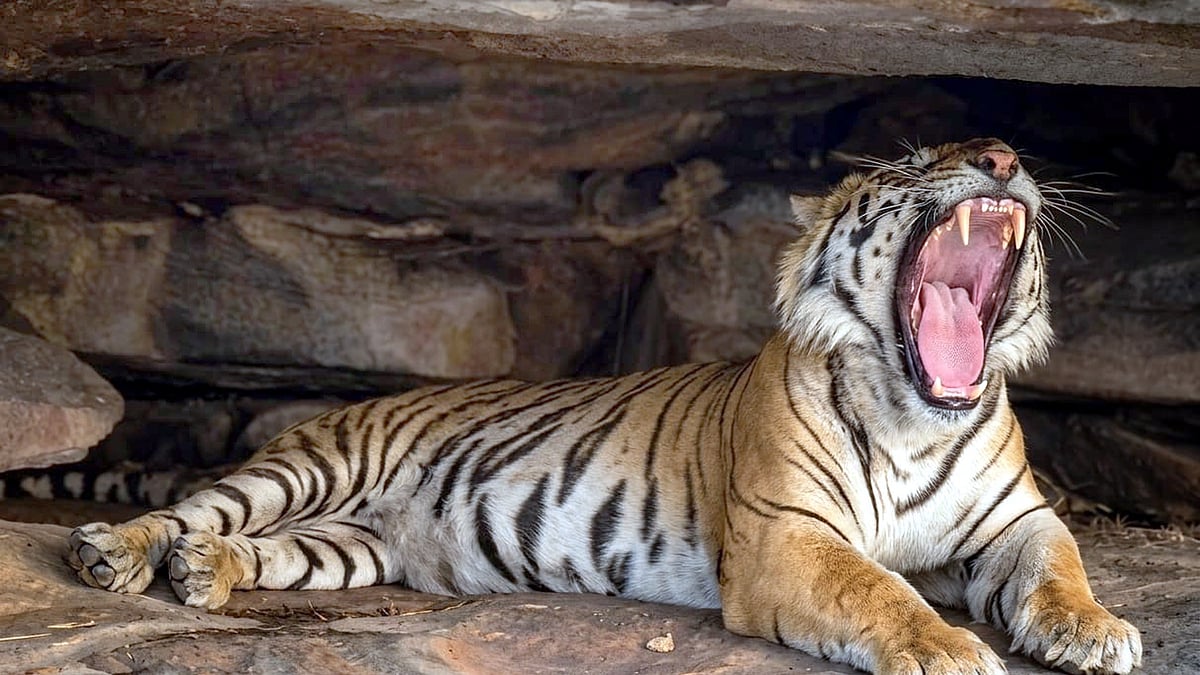
MP’s Rising Tiger Population Brings New Conservation, Human Conflict Challenges | FP photo
Bhopal (Madhya Pradesh): With a substantial increase in the tiger population in the state, the challenges of tiger conservation have also grown significantly.
The major challenge before the forest department is protecting tigers in open ranges as they disperse in search of new territories to avoid conflict with other tigers in protected areas such as tiger reserves and sanctuaries.
The dispersal of tigers into new areas, particularly near villages, is also increasing the risk of man-animal conflict. In May, a tiger from Bandhavgarh Tiger Reserve entered a village, killing a woman and injuring four others. Angry villagers attacked the rescue team, injuring several forest officials.
A woman forest officer was taken hostage by villagers. Although the tiger was rescued, it later died. The incident highlighted the growing challenge of man-animal conflict.
In another instance, a tigress has been staying at Raisen Fort, around 40 km from Bhopal, since May after moving there in search of territory.
To prevent any man-animal conflict, the forest department has stopped tourists from entering the fort.
Interacting with Free Press, Raisen district forest officer Pratibha Shukla said the tigress was continuing to stay at Raisen Fort and had not moved out.
She added that there were 12 tigers in the Raisen area, many of them roaming near villages in search of new territories. While the situation remained under control, it indicated that the tiger presence around human settlements was likely to increase.
According to the last tiger census conducted four years ago, Madhya Pradesh had 785 tigers. Since then, the population has increased significantly and officials expect the next census to record more than 800 tigers.
As tiger numbers grow, territorial fights have also increased. Several tigers have died in such conflicts, particularly in Bandhavgarh Tiger Reserve.
There have also been several instances of villagers being killed by tigers while collecting mahua or grazing cattle inside forests, especially in Bandhavgarh, adding to the challenge of man-animal conflict.
Apart from this, tigers have also died due to electrocution in areas where farmers or poachers laid electric traps, primarily meant to kill wild boar.
Expert view
Former principal chief conservator of forests (wildlife) JS Chouhan said there were several challenges in tiger conservation in Madhya Pradesh.
Tigers outside protected areas needed greater attention and funding. Habitat fragmentation and degradation, increasing conflict over shared resources, illegal wildlife trade, and inadequate community and political support were among the major concerns.
Activist's concern
Wildlife activist Ajay Dubey said the low conviction rate in tiger poaching cases was a matter of concern. He added that poaching was also increasing because of failures in the int elligence network.
RECENT STORIES
-
-
-
-
-