Why Linking Women’s Reservation To Delimitation And Lok Sabha Expansion Raises Concerns
Concerns are rising over the Centre’s plan to link women’s reservation with Lok Sabha expansion and delimitation. Critics argue the move may reinforce existing power structures, burden taxpayers, and create regional imbalance, while quotas could be implemented without redrawing constituencies.

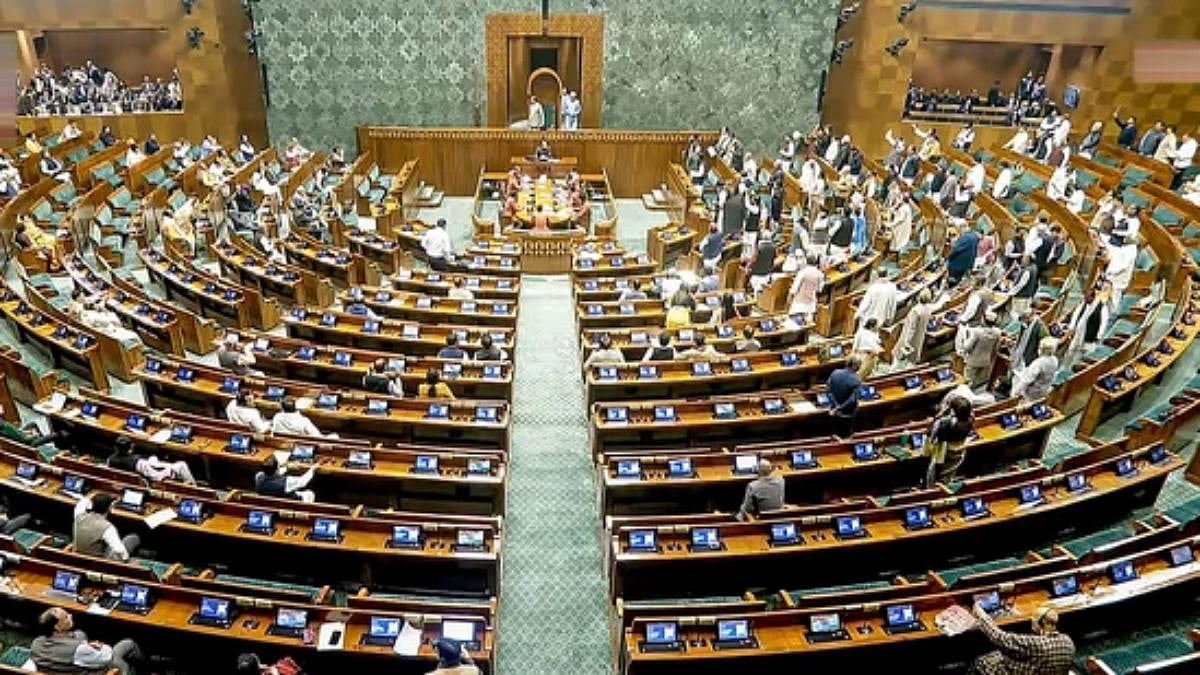
Debate grows over linking women’s reservation to Lok Sabha expansion and constituency redrawing | File Pic
The trope of ‘It’s a woman’s prerogative to change her mind’ could well be applied to the Union government in the context of the Women’s Reservation Act (2023). At the time it was passed, the Centre seemed to be in no hurry to implement the law. Now, it proposes to rejig the architecture of electoral representation to operationalise quotas for women.
Proposal to expand Lok Sabha questioned
Shock and awe greeted the three Bills circulated ahead of the special session of Parliament called to fast-track women’s reservation in legislatures. The size of the Lok Sabha is to be expanded, and a Delimitation Commission set up to redraw constituency boundaries. The underlying question is whether the quota for women is a valid reason for redrawing the electoral map of India.
Prima facie, the answer is no. Increasing the number of seats in the Lok Sabha from 543 to 850, in order to accommodate women, smacks of ‘conditional inclusion’. This is a well-known strategy whereby space is given to a marginalised section, but without disturbing entrenched power and privilege.
Simply creating fresh space for women entails no sacrifice and so will do little to subvert male entitlement. Unless men are compelled to yield ground to women and make a personal contribution to their advancement, the patriarchal mindset will not change. In effect, it positions reservation for women as a gift rather than a prerogative.
Delimitation timeline and census concerns
The implementation of quotas was to begin after Census 2027 and subsequent delimitation, but the government wants to delink delimitation and the women’s quota from Census 2027.
The justification for preponing delimitation is that parliamentary seats can be carved out for women before the 2029 general elections. That brings us back full circle: why expand the Lok Sabha?
The Congress has demanded that reservation for women be implemented without increasing the number of Lok Sabha seats. As party MP Sonia Gandhi pointed out, if quotas were to be delinked from Census 2027, they could well have been implemented back in 2023.
Nor does it make sense to undertake delimitation without a fresh census, because the whole exercise is predicated on population figures. Why draw boundaries on the basis of grossly outdated Census 2011 figures, when those of Census 2027 will soon be available?
Financial and structural implications
Besides, the additional burden of maintaining 300-plus more MPs will fall on the already squeezed taxpayer. Had there been some indication that the laundry list of perks and privileges enjoyed by MPs would be curtailed to offset the expense, the move may have been more palatable.
But that’s not the biggest problem. It’s the absence of a specific guarantee that the expanded Lok Sabha will maintain existing state-wise seat shares. Until 1971, a state’s share of seats in the Lok Sabha was linked to its population.
Realising that the ‘one vote-one value’ formula was likely to be counterproductive in terms of population stabilisation, the 42nd constitutional amendment froze the state-wise share of Lok Sabha seats at the 1972 level. Delimitation was put on hold for 30 years.
Concerns over state representation
The Vajpayee regime was faced with the imperative of a fresh delimitation after the 2001 census. It avoided the population issue by the simple expedient of extending the freeze on state-wise seat share for another 30 years, thereby delinking delimitation from population figures.
The scope of the Delimitation Commission (DC) was largely limited to redrawing the geographical boundaries of constituencies so as to even out numbers within a state. For example, the number of seats in the NCR of Delhi remained fixed at seven, but the shape of the constituencies changed to accommodate approximately the same number of voters in each segment.
In the normal course, delimitation would have been undertaken on the basis of the first census after 2026, that is, the 2031 census. Given that no decadal census was held in 2021 due to the Covid-19 pandemic, the 2027 census is the logical basis for delimitation. But the Constitution (131st Amendment) Bill, 2026, the Delimitation Bill, 2026, and the Union Territories Laws (Amendment) Bill, 2026, have altered the timeline.
Southern states flag concerns
The southern states, which have an excellent record of population stabilisation and fewer citizens, have made it clear that they will not tolerate a dilution of their share of Lok Sabha seats. If Tamil Nadu currently has 39 of 543 parliamentary constituencies, it must have 61 of 850, thereby maintaining a 7.2 per cent share of the lower house of Parliament.
Nor can the share of Uttar Pradesh be any more than 125 seats, regardless of its relentless population growth. Verbal assurances from cabinet ministers that the South will not suffer carry no weight, given the trust deficit between the South and the North, especially as the verdict of the Delimitation Commission on the distribution of seats among states is non-justiciable.
Transparency and methodology issues
Even if the ruling coalition somehow manages to win enough allies to secure the two-thirds majority it needs to pass the Bills, several vital questions remain regarding the transparency of the delimitation exercise. There is no clarity on which methodology will be used.
Multiple models are available—Quota, Webster, Jefferson, Hill, Huntington, etc. Also, provision must be made to guard against gerrymandering from ruling parties, which will seek to redraw constituency boundaries to their own benefit. Thirdly, it is not clear whether the number of SCs/STs will increase proportionately or disproportionately. In 2008, the number of reserved seats was increased by 11 to 140.
Conclusion: caution over speed
While the government’s zeal in going forward with the women’s reservation is commendable, linking it to the size of the Lok Sabha or to delimitation is unnecessary. Implementing quotas is a delicate business; getting it right is more important than getting there fast.
Bhavdeep Kang is a senior journalist with 35 years of experience working with major newspapers and magazines. She is now an independent writer and author.
RECENT STORIES
-
-
-
-
-