US-Iran Conflict: Trump Faces Tactical Setback As Ceasefire Masks Strategic Uncertainty And Iran’s Resistance
The US-Iran ceasefire after nearly six weeks of conflict highlights strategic ambiguity, with Trump facing a tactical setback as Iran resists pressure. The pause reflects rising global concerns, energy disruptions, and uncertainty over long-term outcomes.

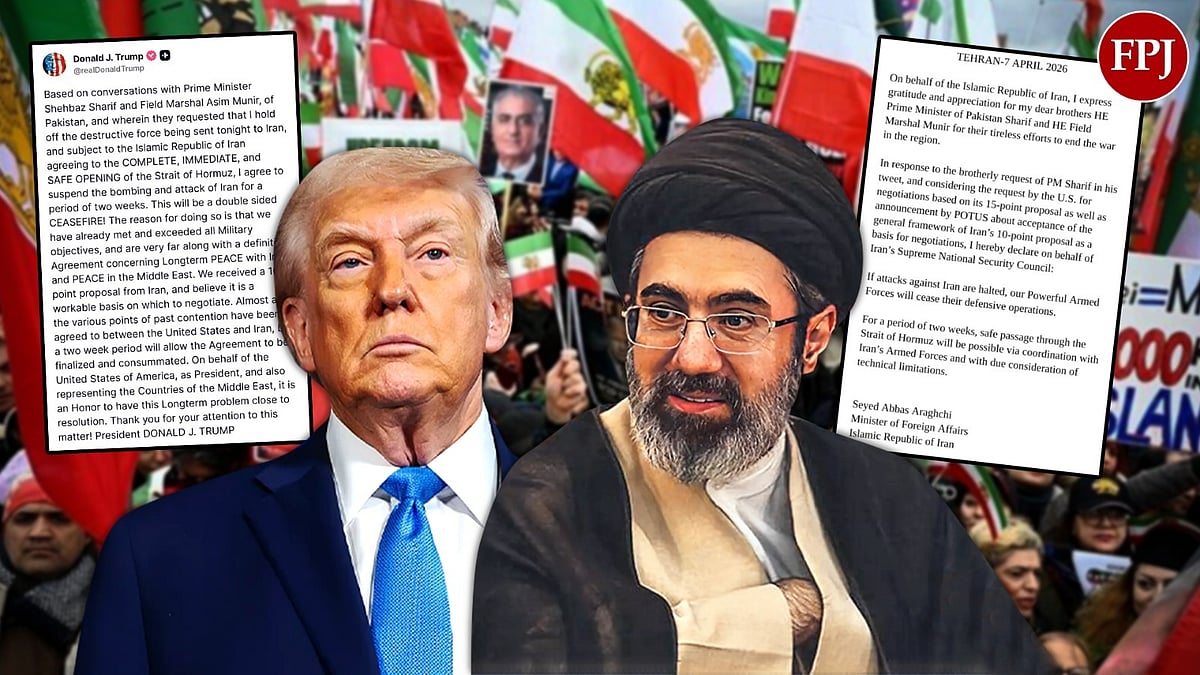
Ceasefire exposes unresolved tensions as Trump seeks exit while Iran maintains strategic resilience | Representational Image
US President Donald Trump repeatedly claimed during the conflict that the Iran war was nearly over, with most objectives achieved. Yet he continued to threaten escalation, warning of dire consequences if Iran’s leadership failed to agree to a deal within deadlines he kept extending—even while declaring the Islamic state “all gone”.
His rhetoric, alternating between claims of victory and threats of escalation, appeared aimed at coercing Iran into submission. However, Iran, despite suffering heavy blows, refused to yield. Trump’s shifting stance suggested he was seeking a graceful exit through a credible pause in hostilities.
Ceasefire and competing narratives
The deadlock broke on day 39 of the war with a two-week ceasefire. However, the pause—linked to conditions around the Strait of Hormuz and follow-up talks in Islamabad beginning April 10—quickly became a battle of competing narratives.
Both sides claimed victory, though their assertions differed sharply. Trump declared a “total and complete victory”, yet questions remain about what was agreed, who conceded what, and how the deal should be interpreted.
Questions over strategy and necessity
The US administration argues that military pressure created leverage for negotiations and opened a path to diplomacy. However, diplomacy had always been an option—one the US bypassed in opting for a costly and controversial conflict that triggered global energy disruptions and economic strain.
Was the war necessary? From Trump’s perspective, it initially aimed at regime change. When that failed, objectives shifted to degrading Iran’s military capabilities and damaging its infrastructure through sustained bombing of cities, educational institutions, research centres, hospitals, residential areas, bridges, and oil facilities.
Iran’s resilience and limits of coercion
Iran’s refusal to capitulate—even after significant losses in leadership, civilian lives, and infrastructure—highlights its resilience. For Iran, this was a battle for survival; for Trump, a campaign to enforce compliance with US strategic and economic interests in the region. Efforts to reshape Iran’s political system failed, exposing the limits of military coercion.
Legal and geopolitical concerns
In his second term, Trump has shown open disregard for international law and political norms. The conflict reflects this approach, raising questions about violations of both the UN Charter and the US Constitution. Iran has remained a central focus of US hostility since Trump withdrew from the 2015 nuclear deal in 2018 and imposed sweeping sanctions targeting its energy, banking, and shipping sectors.
Despite economic hardship, Iran has maintained its nuclear and missile programmes, resisting US pressure. Trump’s renewed military action, including the February 28 strike amid negotiations, failed to deliver quick results due to the absence of a clear strategy. Further escalation risked severe consequences for the region and beyond.
Uncertain path ahead
A fragile calm now prevails following the pause in ‘Operation Epic Fury’. However, uncertainty persists. Will Trump accept the reputational cost of the conflict? Will Israel adhere to ceasefire terms across multiple fronts? Will global powers accept Iran’s demands regarding the Strait of Hormuz?
Some analysts believe the ceasefire could lead to a negotiated settlement, while others see it as a temporary pause driven by necessity. Rising oil prices, economic pressures, and domestic political concerns—particularly ahead of mid-term elections—have pushed the US towards de-escalation.
Strategic outcomes remain unclear
After nearly six weeks of conflict, the central question remains: what has Trump achieved? Control over the Strait of Hormuz—once peripheral—has emerged as a key point of contention and a strategic lever for Iran in shaping any long-term agreement.
The writer is a senior independent Mumbai-based journalist. He tweets at @ali_chougule
RECENT STORIES
-
-
-
-
-