The Centre Needs To Review The National Urban Transport Policy, 2006, Earnestly
Two decades after its launch, India’s urban transport policy has failed to shift commuters from private vehicles to public transport. Rising congestion, pollution, and accidents highlight gaps in implementation and planning. Experts say the policy needs urgent revision to address current realities and promote sustainable mobility solutions.

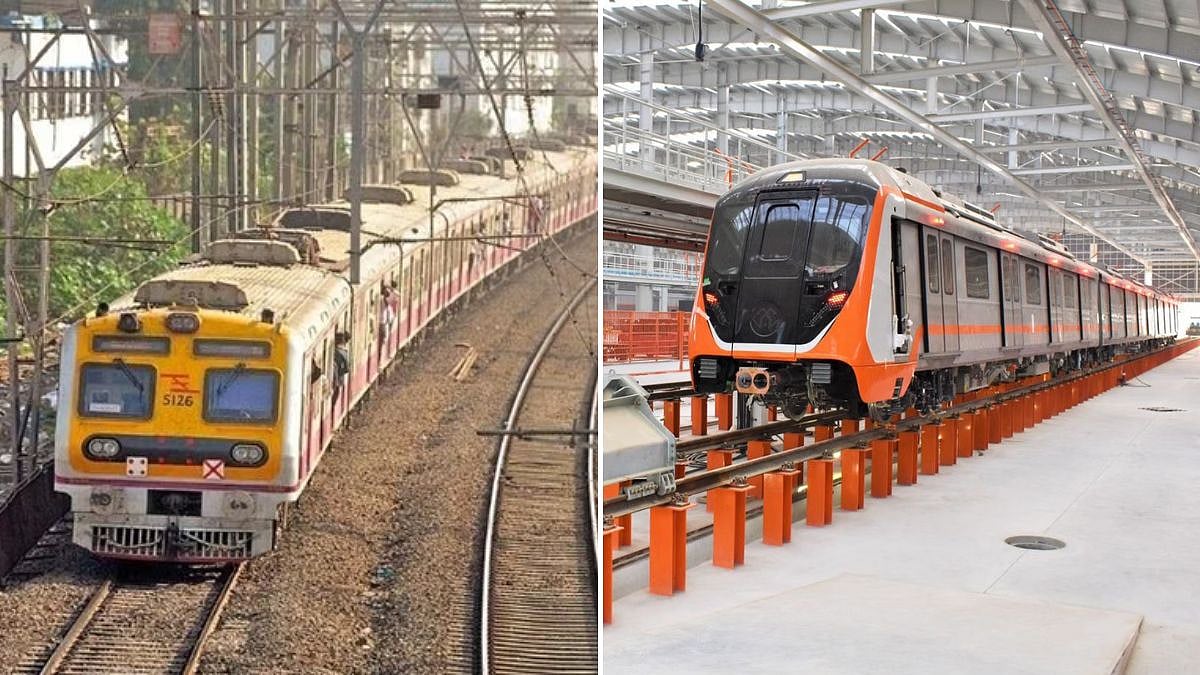
The Centre Needs To Review The National Urban Transport Policy, 2006, Earnestly | File Pic
Faced with the challenges of growing congestion, local air pollution, increasing road accident fatalities, and a rapidly rising oil import bill, India adopted a National Urban Transport Policy (NUTP) in April 2006. At its core, the policy sought to persuade a shift from the use of personal motor vehicles to greater use of public transport or non-motorised modes of travel. The expectation was that such a shift in travel patterns would help ease the emerging problems. Accordingly, it prioritised investments in public transport and safe infrastructure for walking and cycling over investments in road widening or building flyovers.
The adoption of the policy was preceded by a wide range of consultations with experts, academics, industry and government officials, and chief ministers of all the states. This was followed by a consultation with the standing committee of the ministry of urban development. By and large the policy was hailed as a good one and much needed at a time when congestion was adversely impacting the economic efficiency of cities, air pollution was impacting the health of city residents, and a rising oil import bill was affecting the energy security of the country. The policy was approved by the union cabinet on April 6, 2006.
20 years down the line, we find that the objectives have not been met. In fact, things have worsened. The shift seems to have leaned more towards personal motor vehicles than towards public transport or non-motorised modes. This is evident from the fact that the number of registered motor vehicles in the country has gone up from just 8.2 crore in 2005 to 43.1 crore in 2025. Clearly, the pace of motorisation has grown exponentially and has worsened air quality in many cities, prompting the authorities to set up a high-level commission on air quality management for the National Capital Region. Road accident deaths have gone up from about 95,000 in 2005 to nearly 165,000 in 2022, and our oil import bill has gone up from Rs 1.35 lakh crores in 2005 to a whopping Rs 12.35 lakh crores in 2025.
So what went wrong? Why has a policy, which was hailed as excellent and much needed, not delivered? Have there been gaps in the policy itself, or have there been gaps in its implementation? As often happens, the weakness seems to have been on both fronts.
Implementation of the policy: One of the positives of the policy is that the government has made significant investments in public transport. However, they appear to have been skewed in favour of building high-cost metro rail systems without a complementary investment in supporting facilities needed to enable door-to-door connectivity. Almost Rs 4.5 lakh crore has been spent in building 1,016 km of metro rail systems in 23 cities, which together carry only about 75 lakh passengers per day. This current low level of ridership does not justify the extremely high investment. The main reason for the poor ridership is that the metros were conceived as stand-alone projects and not integrated with other components of the transport system in the cities. As a result, last-mile connectivity has remained poor, and people prefer personal motor vehicles, especially two-wheelers. In order to get around this problem, the central government adopted a metro rail policy in 2017, which sought to ensure that metro rail systems are more comprehensively planned and not just sold as isolated engineering solutions. However, the compulsions of getting some new metro systems approved meant that this excellent policy was ignored.
Furthermore, investments in building safer non-motorised transport infrastructure have been scattered and inadequate. Efforts for improving bus systems by bringing in the private sector have also been inadequate, with most cities relying on their respective State Transport Corporations. As the poor social image of bus services persists, anyone who can afford a private vehicle has already shifted to it. Premium services that can attract them back, with much better quality of service, even if at a higher price, have not emerged in any big way.
Gaps in the policy itself: There are two types of gaps in the policy: One, the policy proved to be weak, as the relevant problem was not as acute at the time of its formulation. And, second, some guidelines were missing due to certain services not being available at the time.
For example, the policy has not given enough attention to urban freight systems, especially local delivery of online shopping. This is primarily because online shopping grew in the 2020s on account of the COVID pandemic. Similarly, the policy did not pay enough attention to the parking problem. Intermediate public transport, or paratransit, did not merit a fuller discussion in the policy primarily because it was not considered an important component of the transport system at the time. The emergence of new aggregator models, like Uber and Ola, had not come into the market, and the use of autorickshaws and taxis was not as widespread. The concept of Transit Oriented Development (TOD) was also not very well known in the early 2000s and, hence, did not find space for a more detailed discussion in the NUTP. A separate TOD policy was adopted much later, in 2017. TOD strategies aim to create communities that combine walking and high-quality public transit stations.
Yet another major gap in the policy was its primary focus on supply-side measures, and no attention was paid to demand-side restrictions, such as congestion charging or other methods of discouraging use of personal motor vehicles. This was done because India’s auto industry employed a large number of people and restrictions on them could have a serious impact on a significant employment base. However, the time has come to rethink this.
Given this background, it is essential to review the NUTP on its 20th anniversary and come up with a fresh policy that is more up-to-date with current realities and incorporates the recommendations of the Metro Rail and TOD policies, besides being sustainable and advocating the need for cleaner technologies more strongly.
Prof OP Agarwal, Director, ISPP Centre for Urban Transitions; Luis Miranda, Chairperson & Co-founder, Indian School of Public Policy (ISPP); Shreyesh Jangam, Research Associate, ISPP Centre for Urban Transitions.
RECENT STORIES
-
-
-
-
-