Tarique Rahman Emerges As Key Player In Bangladesh Elections Amid End Of 'Battles Of The Begums'
Former PM Sheikh Hasina won’t contest, and Begum Khaleda Zia’s passing ends the "Battles of the Begums" in Bangladesh’s elections. Tarique Rahman, Zia’s son and BNP leader, is the frontrunner despite years in exile. Analysts note his influence and a potentially pragmatic stance on India, while cautioning about closer Bangladesh-Pakistan ties amid shifting regional dynamics.

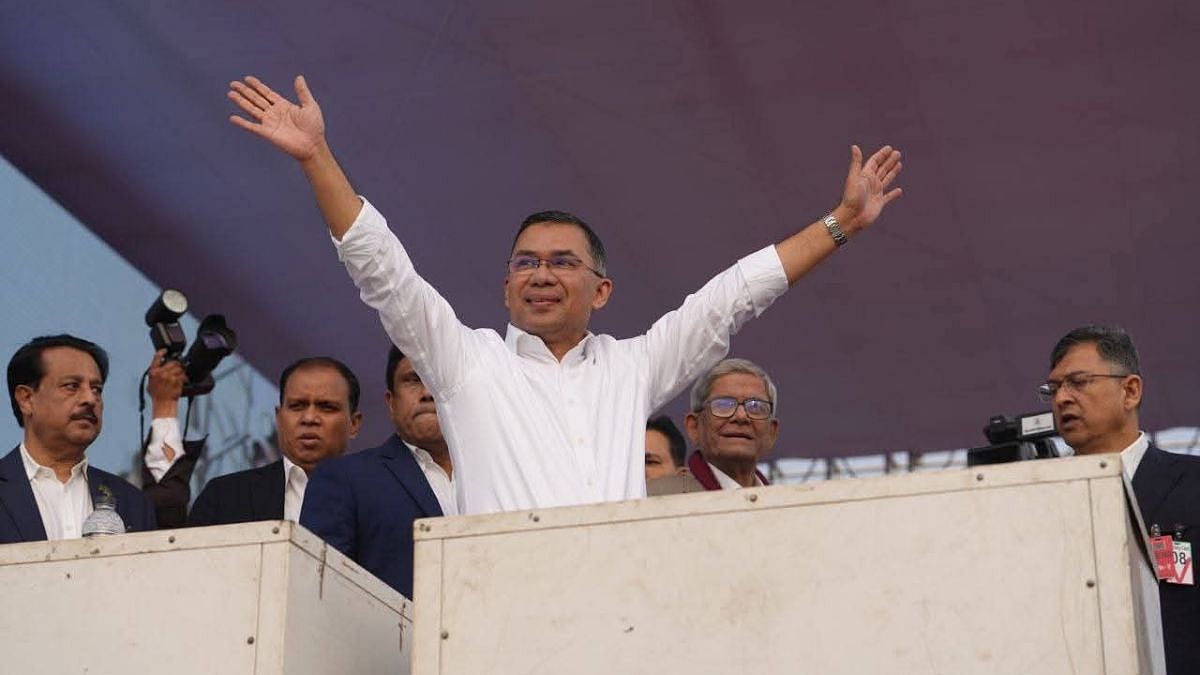
Tarique Rahman’s Return Reopens Bangladesh’s Old Fault Lines In A New Power Struggle |
New Delhi: With former PM Sheikh Hasina unable to contest, the passing away of Begum Khaleda Zia has meant that the “Battles of the Begums” will not be factors in the upcoming elections. All eyes will now be on Tarique Rahman, Zia’s son and currently the acting chairperson of the BNP. Rahman, who recently returned to Dhaka from London, where he had been living in exile since 2008, is considered the favourite to win the elections.
The question remains: given Rahman’s long exile, does he have significant control over the party? Dr Smruti S. Pattanaik, Research Fellow (SS) at the Manohar Parrikar Institute for Defence Studies and Analyses, believes so. “Tarique Rehman has been managing the party for a very long time. For all practical purposes, he was the leader, especially after she was jailed in some corruption cases. In fact, when she was in power between 2001 and 2006, many people alleged that most of the decisions were taken by her son.”
She says his return to Bangladesh is “very significant in the context of what we have been witnessing for quite some time, especially the rise of the religious right, especially the growing strength of Jamaat-e-Islami and various other political actors associated with them.” Most analysts believe that with both ladies out of the running, Rahman is likely to win the sympathy vote and become the next prime minister of Bangladesh. However, little is known about the prime minister in waiting. Could he further the anti-India rhetoric that is being enacted by interim Chief Adviser Muhammad Yunus, or could he actually act to cool tensions? Dr Pattanaik believes it could be the latter.
“The BNP position has been much more muted as far as India is concerned. In the recent past, one has not seen any kind of criticism of India by the BNP. In fact, when Hadi (student leader Sharif Osman Hadi) was killed, some parties alleged that his killers had fled to India and demanded his return. BNP did not join them. Tarique Rahman visited his graveyard after he came back to Dhaka, but he did not raise any issue with India.”
The lack of anti-India protests, however, does not mean that New Delhi can rest easy. High-profile visits by Pakistan to Dhaka has been a cause for concern. First Pakistan’s foreign minister Ishaq Dar visited in August, followed by the country’s Navy Chief Naveed Ashraf and then a naval warship – the first time a naval warship docked in the country after 50 years. Sanjay K. Bhardwaj, professor for South Asian Studies at the School for International Studies in Jawaharlal Nehru University in Delhi believes that India must accept the reality that Dhaka has become closer to Islamabad.
“In the last 18 months, diplomatic relations with Pakistani and Islamic forces in Bangladesh have strengthened in Bangladesh. Rahman will maintain this as a bargaining chip against India, and India should take note of that.” Pattanaik agrees but believes that New Delhi has already been working with the BNP and possibly with Rahman to communicate its concerns. “India has been in talks with BNP leaders at various levels. I'm sure at some level, India has been in touch with Tarique Rahman as well. He would be well aware of our concerns.”
Published on: Wednesday, December 31, 2025, 09:19 AM ISTRECENT STORIES
-
-
-
-
-