Surging Airfares A Concern? Don’t Fly Then
A Delhi-Kolkata ticket reportedly reached ₹78,694 ahead of Diwali, against usual fares of ₹10,000-11,000, an editorial said. Petitioners sought an airfare cap in the Supreme Court, but an urgent hearing was denied. The article argues that limited airline competition and dynamic pricing leave passengers vulnerable during emergencies and festive travel, and calls for stronger consumer protection.

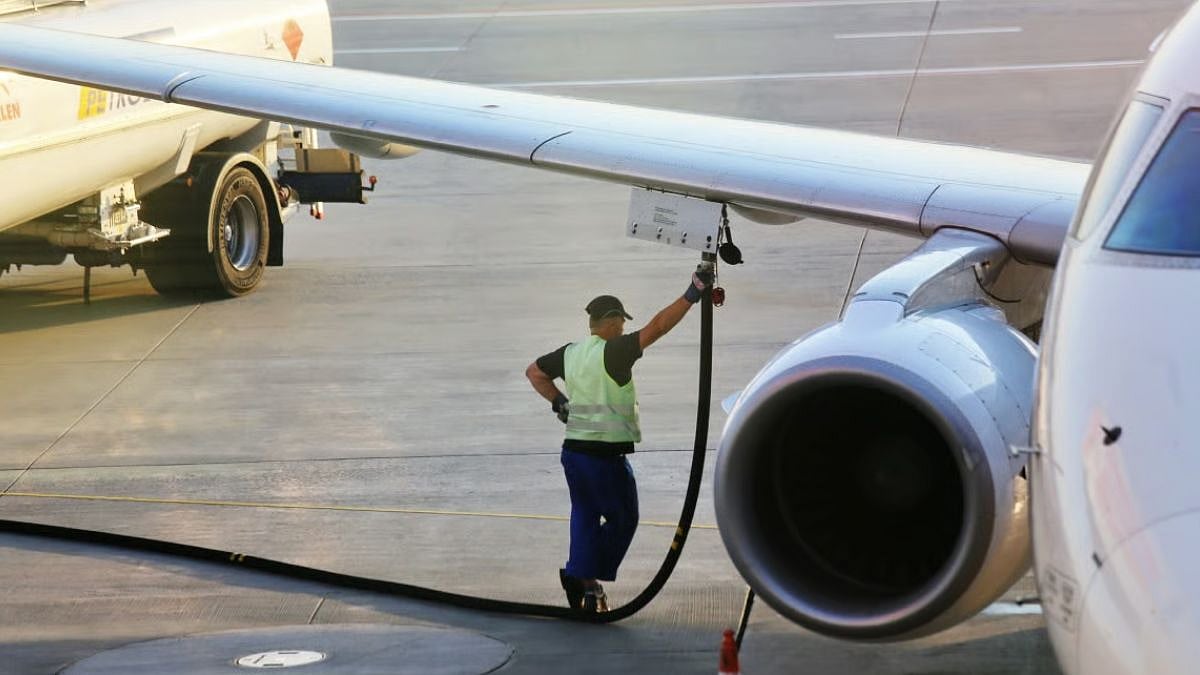
Surging Airfares A Concern? Don’t Fly Then | file pic
Marie Antoinette, the last queen of France, is famously believed to have responded to starving Parisians with the words, “Let them eat cake.” Whether she actually said those words is disputed, but over the decades it has become a metaphor for indifference to ordinary people's hardships. A similar indifference signifies the government’s approach to the skyrocketing cost of air travel in India.
Indian domestic airfares are rising at an unprecedented rate, with trunk routes up to 700 per cent, leading to the cancellation of the travel plans of scores of Indians ahead of the festive season. A Delhi-Kolkata ticket, which ordinarily costs around Rs 10,000-11,000, reportedly touched Rs 78,694. Such high airfares cannot be dismissed as a matter of market dynamics, ignoring issues of consumer protection, competition, and the government's responsibility to passengers.
Last week, a few petitioners brought this to the attention of the Supreme Court in a recent public interest litigation, seeking a cap on domestic airfares amid the Diwali festive season. The petitioner argued that air travel is an essential service and that steep fare hikes violate Article 14, which guarantees the right to equality. But the bench stated, "Don't travel by air." The court declined to grant an urgent hearing, leaving the substantive question of airfare regulation to be considered when the pending PIL comes up on November 16.
Meanwhile, India has adopted new airfare rules under the Bharatiya Vayuyan Niyam, 2026, which uphold the policy of letting dynamic market forces determine air ticket prices. The government will intervene only during "extraordinary situations" where intervention is deemed necessary in the public interest, such as natural disasters or unforeseen regional crises.
This requires a look at the root cause: Indian air travel is controlled by just two airlines—IndiGo and Air India. For a population of 17 crore passengers annually, and while growth may have stagnated during the current quarter, the concentration of market power in the hands of two players leaves consumers with very little bargaining power. Hence, while the government may claim that market forces should play out, it should ensure that licence-issuance norms are sped up to allow commercial airlines to operate. A duopoly can lead to a disastrous situation for the country. If only the privileged few have access to air travel, it can ultimately hurt economic growth.
Social issues also need to be considered. A person travelling on short notice because of an emergency situation cannot be asked to wait until the fares come down. The government might not have asked passengers to eat cake, but by claiming that market dynamics are good for the industry, it makes its intentions clear: if flying has become unaffordable, do not fly at all. In a welfare state, such abdication of responsibility can turn out to be disastrous.
RECENT STORIES
-
-
-
-
-