PCB’s Boycott Threat Over India Match Ends In Retreat, Exposing Political Grandstanding In World T20
The Pakistan Cricket Board withdrew its boycott threat against the India match in Colombo after pressure from the International Cricket Council and political intervention led by Shehbaz Sharif, ending a standoff sparked by tensions involving the Board of Control for Cricket in India and the Bangladesh Cricket Board.

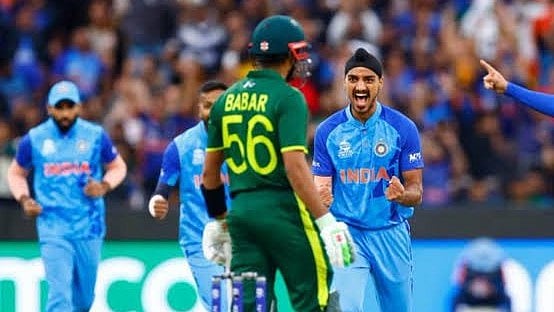
Pakistan backs down from India clash boycott as cricket bodies and governments defuse the World T20 standoff | (Credits: Twitter)
The question mark over Pakistan’s participation in the marquee match against India on February 15 in Colombo in the ongoing World T20 match reached its expected denouement on Monday. The PCB (Pakistan Cricket Board) followed the diktat of Prime Minister Shehbaz Sharif in agreeing to withdraw their boycott threat, something that was always on the cards following the PCB and Pakistan government’s political grandstanding in claiming to show solidarity with their Bangladeshi “brothers” who were dumped out of the event and replaced by minnows Scotland.
Trigger for the crisis
The crisis was precipitated last month when the BCCI bowed to political pressure in forcing KKR to break their contract with Bangladeshi pace bowler Mustafizur Rahman, who had been bought in the IPL auction in December. The spiralling anti-India atmosphere in Bangladesh, following the violent coup in 2024 that ousted prime minister Sheikh Hasina and India granting her asylum, and the murderous attacks on the minority Hindu community that followed, created a groundswell of anger here against Bangladesh.
But just as Pakistan’s cricketers had been unofficially banned following the 26/11 terrorist attacks on Mumbai, this whole farce could have been avoided had the BCCI made it clear before the auction itself that similar action would be taken against Bangladesh. The IPL, being a domestic tournament, comes under the aegis of the BCCI, and the ICC has no say in the matter.
Bangladesh board’s reaction
Having said that, the BCB’s (Bangladesh Cricket Board) demand so late in the day that their matches in India be moved to Sri Lanka, ostensibly on security grounds, was an immature reaction that was bound to fail, since the ICC’s fact-finding mission found no such threat.
Political posturing and pressure
It is clear the PCB and Pakistan government were fishing in troubled waters in showing solidarity with Bangladesh, with the PCB chairman and interior minister Mohsin Naqvi showing the way in all this. With the ICC threatening the PCB with withering fines for the lost revenue, and the Sri Lankan government also complaining over a huge loss of foreign exchange from cancelled flights and hotel bookings, it took a letter from the BCB (read: Bangladesh government) requesting the PCB to withdraw their boycott that gave wriggle room for them to agree to play the match, for which the TV revenue is reportedly $174 million.
The threat withdrawal was announced after a long meeting in Lahore involving the ICC, the BCB and the PCB, who also faced the threat of an international ban.
Collateral damage
At the end of the drama, the real sufferers are Bangladeshi cricketers, who are left seething at being manipulated by the two governments in the Great Game that is part and parcel of South Asian politics, with cricket being the collateral damage.
RECENT STORIES
-
-
-
-
-