Nepal's Gen Z Revolution: How RSP's Landslide Win Toppled Dynasts And Redefined Himalayan Politics
The Rashtriya Swatantra Party has emerged as the dominant force in Nepal’s latest elections, securing 125 of 165 first-past-the-post seats in the House of Representatives. Its prime ministerial candidate Balen Shah defeated veteran leader K. P. Sharma Oli in his home constituency, reflecting strong public support for younger leadership and dissatisfaction with traditional political parties.

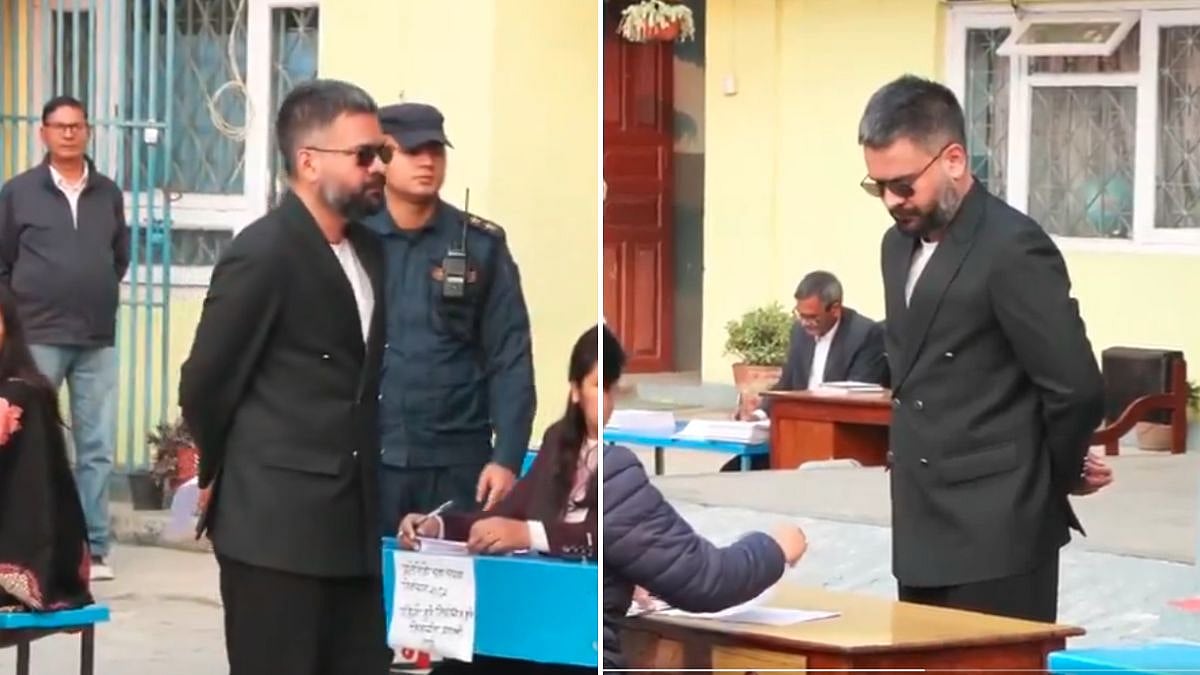
Nepal has once again displayed democratic vibrancy with a generational change sweeping its politics in the recently concluded polls. | X @ANI
Nepal has once again displayed democratic vibrancy with a generational change sweeping its politics in the recently concluded polls.
The Rashtriya Swatantra Party (RSP), a relatively new political party with Gen Z proclivity, found favour across most of the country and has secured a near two-thirds majority in the House of Representatives (125 out of 165 First Past the Post seats; the full house is of 275 with 110 being elected through a proportional slate). And its PM candidate, the former mayor of Kathmandu, Balen Shah, roundly defeated KP Sharma Oli, who has been PM several times, in Oli’s home constituency by nearly 50,000 votes.
The general view pre-poll was that the RSP would do better than the Nepali Congress (NC) and the Communist Party (UML) of Oli, but a wave appears to have overwhelmed the traditional parties, reminiscent of the AAP wave in Delhi in 2015. Elections were held in Nepal following huge street protests and three days of mobocracy in September last year. At that time, the street toppled the UML-NC coalition government of prime minister Oli and forced the dissolution of parliament. Now it appears to have decided to give the reigns of the country to a new dispensation dominated by younger people. Indeed, the only former PM to have won is Prachanda, though his party, the Maoists, too has been hugely diminished. The same is also the case with parties from the Madhesh, who were seen in Nepal as pro-India.
Interestingly, sensing the people’s mood, Gagan Thapa, a relatively young leader, toppled five-time prime minister Sher Bahadur Thapa as leader of the Nepali Congress, but that didn’t help. Gagan Thapa was trounced by Amresh Singh, a former NC MP, who had joined the RSP. Apparently, the street wanted to push out the established parties and give the new one a chance. Indeed, they strongly squared up behind the RSP, with even independents, such as former Nepal Electricity Authority head Kulman Ghishing, who had also taken on prime minister Oli, being defeated. And the, supposedly, pro-monarchy Rashtriya Prajatantra Party (RPP) has been nearly wiped out in the current polls.
Balen Shah, who is just 35, has studied engineering in India and was popular as a rapper before becoming the mayor of Kathmandu in 2022. He achieved this without the backing of any political party and often found himself at loggerheads with PM Oli and his government. In general, for the people in Kathmandu, his go-getter style saw improvements in local government, in particular sanitation and roads.
The RSP was formed by Rabi Lamichhane, a former TV anchor, who had held US citizenship. The party came into its own in the 2024 elections when it swept the Kathmandu Valley with much support from young people in the country and those overseas who persuaded their families to vote for the RSP. After being in the government initially, Lamichhane later found himself incarcerated on charges of fraud in the mismanagement of a cooperative. Balen Shah and Rabi Lamichhane have obviously turned out to be a combination of the people’s liking.
For many people, while the street protests of September may have been triggered by a social media ban and the general haughtiness of the strong UML-NC coalition government, the hand of globalisation (read: the West) was also there. For many, therefore, the RSP win has Western backing and may see a certain curtailing of the Chinese influence, though for India, the imperative must remain ‘ek la chalo re’, i.e., retaining its distinct and significant place in the hearts and minds of the Nepali people and the sinews of its government.
RSP leaders are also conscious of a perception of Western influence on them, and even in the interim government, a certain display of Nepali nationalism was evident with ministers and others pointedly dressing in the traditional Nepali daura saruwal. Indeed, nearly all photos of Balen Shah show him attired in the traditional Nepali manner.
This external identity politics in Nepal, which is essentially a differentiation vis-à-vis India, won’t go away. As India reaches out to the new leaders of Nepal, this Nepali identity consciousness in its politics needs to be accepted in India not only in formal diplomatic ties but also in the media and among people in general, no matter our roti-bete ke samband.
The recent polls were, perhaps, the first election where India was not sought to be made an issue and, instead, generational change versus experience was the dominant issue. This can only be seen as positive for India, along with a certain relief in the defeat of Oli, who was perceived as anti-India and was seen providing a segue for increased Chinese influence and play in Nepal. The latter, obviously, won’t sit well with the Chinese, but given their money power, there should be little surprise if they create equities within the new dispensation too.
ALSO READ
The people have placed their faith in the RSP, and it must deliver. But that’s easier said than done given Nepal’s inherent resource limitations and now heightened aspirations amongst the Nepali population, given their exposure to globalisation through migration. While unemployment and a slow post-COVID recovery were among the structural issues that propelled the street protests, the present conflict in the Middle East doesn’t bode well for an economy where remittances matter. While Balen Shah has demonstrated good governance on local issues, macro matters of the economy require external outreach.
Prime Minister Modi has tweeted and spoken to both Balen Shah and Tabi Lamichhane, stating India’s commitment to working closely with the new government in Nepal. This new generational beginning in Nepal is a time to take this commitment further at the level of people and economics. Hydropower is an obvious area where India’s SJVNL is taking forward its Arun projects, but a certain emphasis on the new, e.g., new tech, including AI, where young Nepalis are proving their mettle, could lead to a renewed invigoration of India-Nepal ties.
Former Ambassador of India to Nepal.
RECENT STORIES
-
-
-
-
-