MLC Election Maths: Political Myths And The Limits Of Electoral Mandates
The NDA won 16 of the 28 contested Legislative Council seats, but the results also exposed challenges for established parties. The Congress lost all four seats it contested in Karnataka, the Samajwadi Party won two constituencies in Varanasi, and Maharashtra’s ruling Mahayuti alliance failed to dominate the contest.

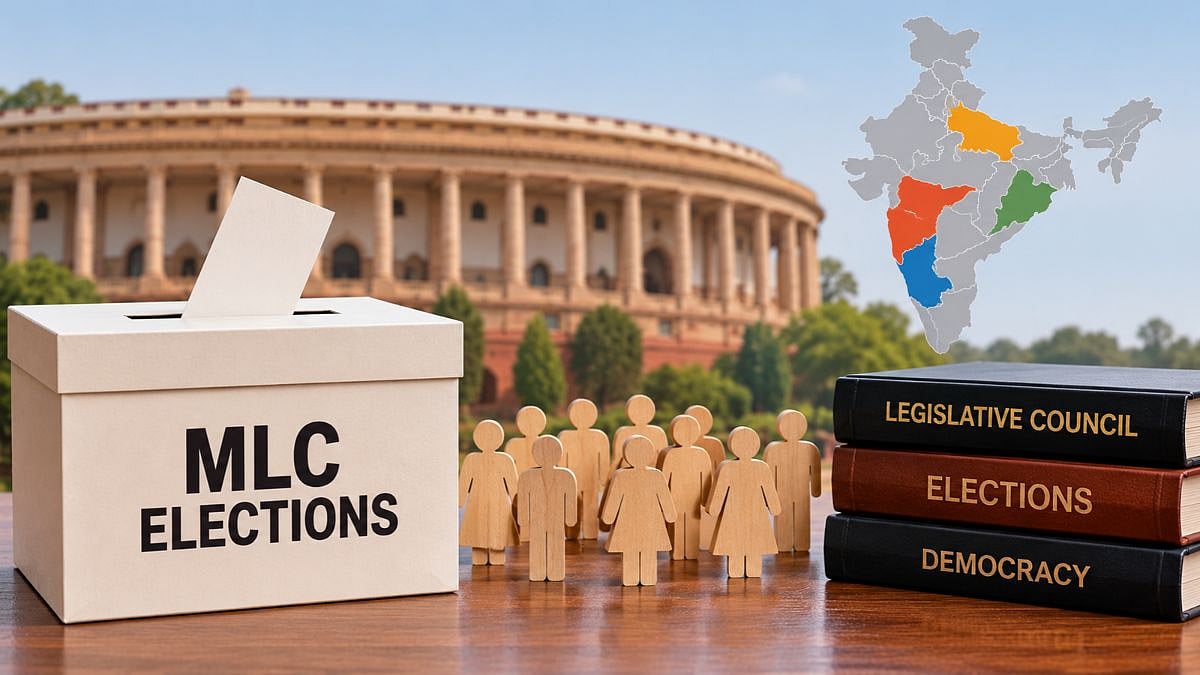
Legislative Council election results offer political parties clues about support among teachers and graduates | Representational Image
Elections to the Legislative Councils (MLCs) are quite unlike elections to the Lok Sabha or State Assemblies. The results cannot be treated as a reliable reflection of the public mood in the states where they are held. Yet they can offer political parties useful clues about their standing among particular sections of voters.
India has only six states with bicameral legislatures, where an elected Assembly functions alongside a Legislative Council. Tamil Nadu and several other states have abolished their Upper Houses, considering them expensive and of limited practical value.
In the latest round, 28 seats in Uttar Pradesh, Maharashtra, Bihar and Karnataka were contested. The National Democratic Alliance (NDA) won 16 seats, with the BJP emerging as its biggest winner. But any attempt to portray the outcome as a sweeping endorsement of the ruling party would be self-delusion. Prime Minister Narendra Modi taunted the Congress over its poor performance, pointing out that the elections were conducted using paper ballots. The irony is that the BJP, too, has reasons to be cautious.
Setbacks For The Ruling Alliances
The Congress lost all four seats it contested in Karnataka. Its sole victory in this round came from Nagpur, the headquarters of the Rashtriya Swayamsevak Sangh (RSS) and the home turf of Maharashtra Chief Minister Devendra Fadnavis.
Significantly, the ruling Mahayuti alliance in Maharashtra could not dominate the contest, while the opposition Maha Vikas Aghadi managed to wrest some prestigious seats. These results should temper the ruling coalition’s confidence.
In Uttar Pradesh, the BJP retained the number of seats it had won in the previous election. However, the Samajwadi Party made significant gains, winning both the teachers’ and graduates’ constituencies in Varanasi, the Prime Minister’s parliamentary constituency. The victories may be limited in electoral reach, but their political symbolism cannot be ignored.
Bihar presented another setback for the ruling alliance, which secured only four seats, leaving the rest to opposition parties. Prashant Kishor’s Jan Suraaj Party also made its presence felt, adding to the challenges facing established political formations.
Why MLC Polls Need Cautious Reading
The nature of these elections demands caution in interpreting the results. Unlike the first-past-the-post system used in general elections, MLC polls employ preferential voting, under which voters can indicate their first, second and subsequent choices. Candidates must meet the prescribed quota, and subsequent preferences may determine the outcome as counting proceeds through further rounds.
Moreover, only registered graduates and teachers, depending on the constituency, are eligible to vote. This limited electorate cannot represent the wider population.
Nevertheless, the results offer a straw in the wind. Neither the BJP nor the Congress can afford complacency. The verdict is not a referendum on either party, but it is a reminder that political dominance cannot be taken for granted.
To get details on exclusive and budget-friendly property deals in Mumbai & surrounding regions, do visit: https://budgetproperties.in/
RECENT STORIES
-
-
-
-
-