Matheran Pollution Debate: Horses In The Dock As Eco Body Probes Rising Particulate Matter
An EIA report has blamed Matheran’s tourist horses for rising particulate air pollution caused by dried dung along trails, triggering scrutiny by environmental authorities. Experts argue the issue can be managed through waste collection and composting, urging balanced solutions that protect livelihoods while preserving the eco-sensitive hill station.

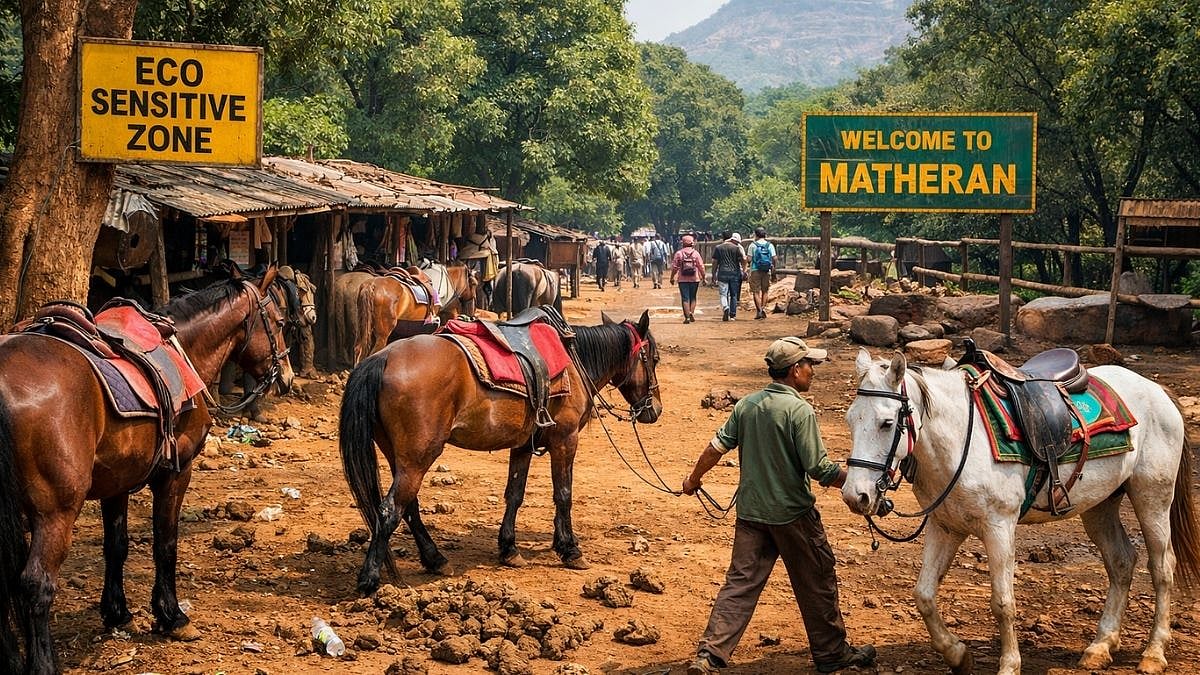
Horses ferry tourists along vehicle-free trails in Matheran, now under scrutiny for alleged contribution to rising air pollution levels | AI Generated Representational Image
It is difficult to find a vehicle-free tourist resort in these hyper-motorised times, but Matheran near Mumbai, with great views of verdant mountains, is a quaint exception. What makes this easy-to-reach resort unique is that horses and ponies ferry visitors to various viewing areas, rather than polluting vehicles.
Horses in the dock
Sadly and ironically, Matheran’s horses are now in the dock, accused of causing air pollution from particulate matter (PM) in an eco-sensitive zone, a charge that has come up before the National Green Tribunal. Horses have served man for millennia in the old world, without attracting adverse attention as polluters.
EIA flags dung and dust
An Environmental Impact Assessment (EIA) report submitted to the Maharashtra Pollution Control Board blames about 460 horses and 200 ponies, serving tourists, for collectively depositing three tonnes of dung a day in the hill station; unofficially, the number of equines is claimed to be about 800. This waste, deposited along trails, dries up and results in higher levels of particulates, including PM2.5 kicked up by hooves, as per the report.
Carrying capacity concerns
It is arguable that, like all tourist attractions in the hills, Matheran’s carrying capacity is exceeded periodically, which calls for a careful look at all possibilities to mitigate pollution. One of these is, fortunately, recommended even by the EIA report: instituting a system for active collection and treatment of dung through composting and the creation of artificial wetlands to treat monsoon run-off in controlled conditions, rather than releasing the nutrient load into the open environment.
Alternatives to reduce dust
Keeping conditions in nature reserves rugged helps preserve their integrity by making it challenging to operate vehicles. A switch to battery-powered carts may appeal to some, but this would not stop dust particles being released through resuspension by wheels, just as it happens in cities. Arguably, dry summers could be better managed using mud blocks or cobblestones on walking paths and lining paths with soil-binding vegetation to encourage more visitors to walk; these trails could cut hoof-induced dust.
Need for further study
It is important to point out that the EIA report calls for further studies through continuous air quality monitoring in Matheran to validate the thesis that horse dung is primarily responsible for higher particulate matter levels.
A matter of proportion
As things stand, India’s cities suffer from far higher levels of chronic air and water pollution, including from man-made sources such as vehicles, plastic waste and industries. This has not prompted an alacritous response. By comparison, Matheran’s horses, which are a source of livelihood for many, do not present an intractable problem.
Practical mitigation measures
A good start could be to provide them with poop bags, which are used for animals drawing carriages in western cities. Similar concerns on dung pollution and meadow degradation from horse rides were raised in Kashmir’s Gulmarg, Sonmarg and Kufri. The solutions lie in assessing carrying capacity and taking mitigation actions.
Published on: Thursday, February 05, 2026, 09:27 PM ISTRECENT STORIES
-
-
-
-
-