Manual Scavenging Deaths In India Expose Legal Failures, Caste Inequality And Lack Of Safety Despite 2013 Ban
Despite being banned in 2013, manual scavenging continues in India, with hundreds of deaths reported in recent years. The latest tragedy in Raipur highlights systemic failures in enforcing laws, lack of mechanisation and safety measures, and the persistence of caste-based labour. Experts say these preventable deaths reflect deep social inequities and demand urgent policy action and accountability.

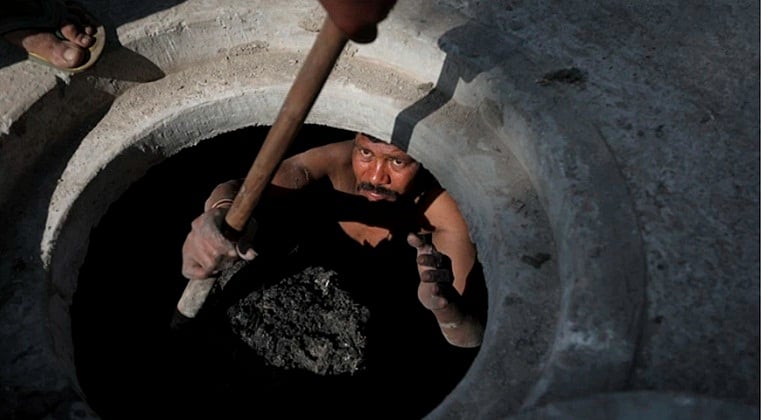
Recurring sewer deaths highlight continued manual scavenging and systemic neglect despite legal prohibition | Representational Image
Three men, all in their early 30s, went down into a septic tank in the Ramkrishna Care Hospital in Chhattisgarh’s capital city of Raipur last Sunday to clean it, each assured by the contractor of a Rs 7,000 payment for the work. The tank, nearly 20 feet deep, 15 feet in length, and 10 feet wide, had at least three feet of semi-solid waste that they had to clean. None of them came out alive.
These are only the latest in an unending stream of deaths that have continued to occur across India—a matter of deep shame for the country even as it preens on the world stage as the fourth-largest economy. In the Rajya Sabha, on a question raised by Left MP John Brittas last week, the nation learnt that as many as 315 people had died between 2021 and 2025 while cleaning sewers and septic tanks.
Maharashtra and Haryana topped the list. The two states, along with Uttar Pradesh, Delhi, Gujarat, and Tamil Nadu, were responsible for over 77 per cent of such deaths.
Law exists but implementation weak
Manual scavenging was outlawed in December 2013, when the ‘Prohibition of Employment as Manual Scavengers and their Rehabilitation Act’ was brought into force. It not only prohibited the employment of people as manual scavengers in the construction and cleaning of sewers and septic tanks but also mandated their rehabilitation with skill development and financial assistance; offences were made punishable with imprisonment up to two years or fines up to Rs one lakh, or both.
It is critical to remember this because there are hardly any records of the law being implemented, especially in the states that have counted deaths of manual scavengers in the past few years.
Let alone the elimination of this slavish and shameful practice, urban local bodies and the local police, where the deaths have occurred, are guilty of not mechanising the process and not implementing safety compliances. Clearly, the Swachh Bharat Mission has meant little to the lives of manual scavengers.
Caste realities and systemic failure
This points to the inescapable truth that the governments and society avoid acknowledging: caste-based and discriminatory occupation patterns. Manual scavengers are, overwhelmingly, Dalits or ati-Shudras, the lowest of castes, but a caste-based count of deaths is not available.
Their marginalised social status is, undeniably, a factor in the continued practice of manual scavenging, sending them down into sewers for a pittance, and society not fussing over their deaths.
These deaths are not mere accidents; they are entirely preventable if only governments are willing to enforce the existing legal obligations and responsibilities, adopt modern and mechanised cleaning processes, and rehabilitate those who have been historically condemned to this work.
Some of the ancient texts of the Indian subcontinent list manual scavenging as the “least desirable and defiling occupation” to be done by the lowest in the hierarchy. There is simply no justification for modern India to continue this dehumanising practice.
Published on: Thursday, March 26, 2026, 09:17 PM ISTRECENT STORIES
-
-
-
-
-