Kingston 1976 ‘Bloodbath’: The Test That Forced Cricket To Confront Its Darkest Tactics
The 1976 Kingston Test, known as the ‘bloodbath’, saw West Indies unleash a brutal pace attack that left several Indian players injured. The match sparked global outrage and led to rule changes on bouncers and beamers, marking a turning point in cricket safety.

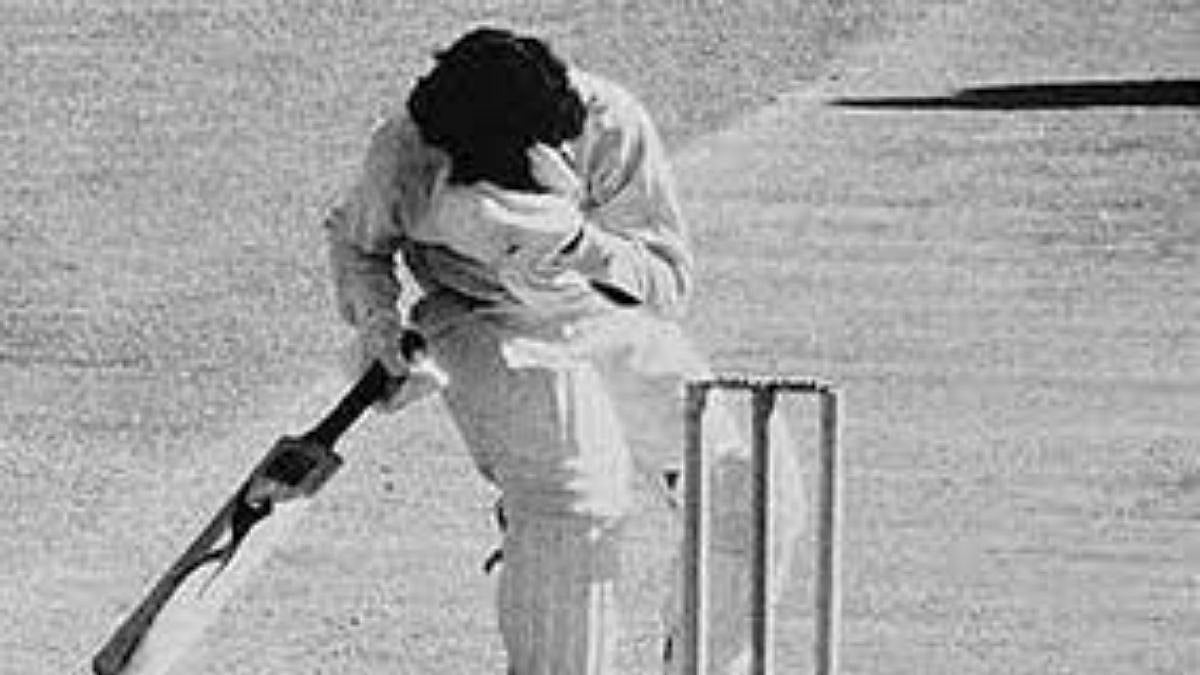
The 1976 Kingston Test remains a turning point as brutal fast bowling tactics reshaped cricket rules | Facebook
“April is the cruellest month,” wrote TS Eliot in his poem The Waste Land. Fifty years ago, April 1976 to be precise, it certainly proved to be the cruellest month for India’s cricketers under late captain Bishan Singh Bedi.
Backdrop of the 1976 series
The West Indies had just returned from a fearful battering in Australia, more specifically by the ferocious duo of Dennis Lillee and Jeff Thomson, and were crushed 5-1 in the Test series.
Captain Clive Lloyd’s job was on the line. But the Indians were seen as pushovers as Lloyd’s men looked to recoup before the tour to England that summer. India were crushed in the opening Test at Bridgetown, Barbados, and looked on the way to a thrashing.
However, they bounced back in the second Test at Queen’s Park Oval, Port of Spain, Trinidad, where they had won in 1971 and where the track favoured spin bowling. There was a large population of Indian-origin citizens, which meant the venue was more like a home ground. India had much the better of the draw.
Historic chase and turning point
Then came a twist of fate. The third Test was to be played at the Bourda Oval in Georgetown, Guyana. But due to a torrential downpour, the ground was turned into a mini lake. The decision was taken to shift the venue back to Port of Spain—it was akin to ghar wapsi for the Indians.
With a substantial first innings lead of 131 runs, Lloyd declared his second innings at 271 for 6, setting the Indians the seemingly impossible task of 403 runs to win the Test. They had an unusual three specialist spinners and, with India batting last, would have expected them to run through the batting.
Instead, with Sunil Gavaskar and GR Vishwanath recording centuries and Mohinder Amarnath 85, the Indians shocked everyone, including themselves, by cantering to victory by six wickets.
They thus became only the second team after Don Bradman’s Australians in 1948 to score 400-plus to win. It led to a furious Lloyd’s famous rhetorical question to his spinners: “Gentlemen, I gave you 400 runs to bowl at… How many runs must I give you in the future…?”
Kingston Test turns violent
Now the calls rang out for Lloyd’s sacking. The final Test at Kingston, Jamaica, was a make-or-break match for the under-siege captain. Lloyd went for an all-out pace. The Sabina Park pitch was rock hard with wide cracks in it, making the ball fly at odd angles.
Hometown boy Michael Holding was joined by debutant fast bowler Wayne Daniel, backed by Vanburn Holder and Bernard Julian. Once Gavaskar and Anshuman Gaekwad gave India a good start, Lloyd instructed them to bowl round the wicket, giving the batsmen little wriggle room, and bounce consistently at their heads and bodies. It was an all-out attack, with every over peppered with bouncers and even beamers.
Remember, this was the pre-helmet era, and three Indian batsmen received injuries, the most serious to Gaekwad, who was struck a fearsome blow on the left ear by Holding, which sent his spectacles flying and brought him to his knees, blood flowing onto his shirt. It was a life-threatening injury, and Gaekwad (who died in 2024) required two surgeries back home.
Aftermath and controversy
The medical facilities at Kingston were inadequate, and the hospital staff were shockingly unsympathetic. Both Gavaskar and Bedi appealed to the umpires to step in and restrict the bouncers. But the crowd was baying for blood, and they were terrified of violence from the volatile fans. One of the abiding myths is that Bedi declared the second innings at 97 for 5, requiring the home side just 13 runs to win, which they did with ease.
The canard that has been spread is that the Indians were scared. But the fact is five of the players were injured, including two while fielding, and so the innings was closed with these five marked ‘absent hurt’. On the rest day, Bedi and manager Polly Umrigar condemned the tactics as “war”, not sport. It became known as “the bloodbath at Kingston”.
Holding expressed remorse years later, admitting he was following orders to target the batsmen; Lloyd never did. The match was telecast live only within the Caribbean, and the highlights were shown a week later in India on Doordarshan, which I watched in horror as a schoolboy in Kolkata at the home of famed all-rounder Dattu Phadkar.
Impact on cricket laws and legacy
It was in the third Test at Old Trafford, Manchester, when the West Indies toured England that summer, that the eyes of the cricket world were finally opened, with Holding, Daniel, and Andy Roberts unleashing a fearsome assault on England’s veteran openers Brian Close (45) and John Edrich (40). Lloyd’s explanation? “Our boys got a little carried away.”
From then on, Lloyd and those who followed him maintained a four-pronged fast bowling attack that left in its wake a trail of broken bodies and wounded psyches, despite the advent of helmets from 1977-78. It was not till Australia defeated them in the Caribbean in 1995 that they were beaten in a Test series in 15 years and at home since 1973. The last 30 years, though, have seen the steep decline of a once mighty cricket team.
The Kingston and Manchester Tests of 1976 had far-reaching consequences. Bedi’s vocal condemnation of the tactics, in particular, brought in legislation restricting the number of bouncers per over and banned the beamer altogether. With the advent of neutral umpires and match referees, never again will cricket witness the awful scenes that unfolded fifty years back at Kingston, Jamaica. That is the legacy of Bishan Bedi—and Clive Lloyd.
The writer’s 20th book, ‘First Tour: The Indian Team’s Historic Maiden Test Visits: England 1932 to Bangladesh 2000’, is to be shortly released by Sachin Bajaj’s Global Cricket School.
RECENT STORIES
-
-
-
-
-