It Is Not Always The Authorities’ Fault, We Too Are Irresponsible
India’s road safety crisis requires better infrastructure and greater civic responsibility. Dedicated ambulance lanes, priority traffic signals and stricter enforcement can improve emergency access, but motorists must also immediately give way to ambulances. Clearing the road quickly can make the difference between life and death for patients in urgent need.

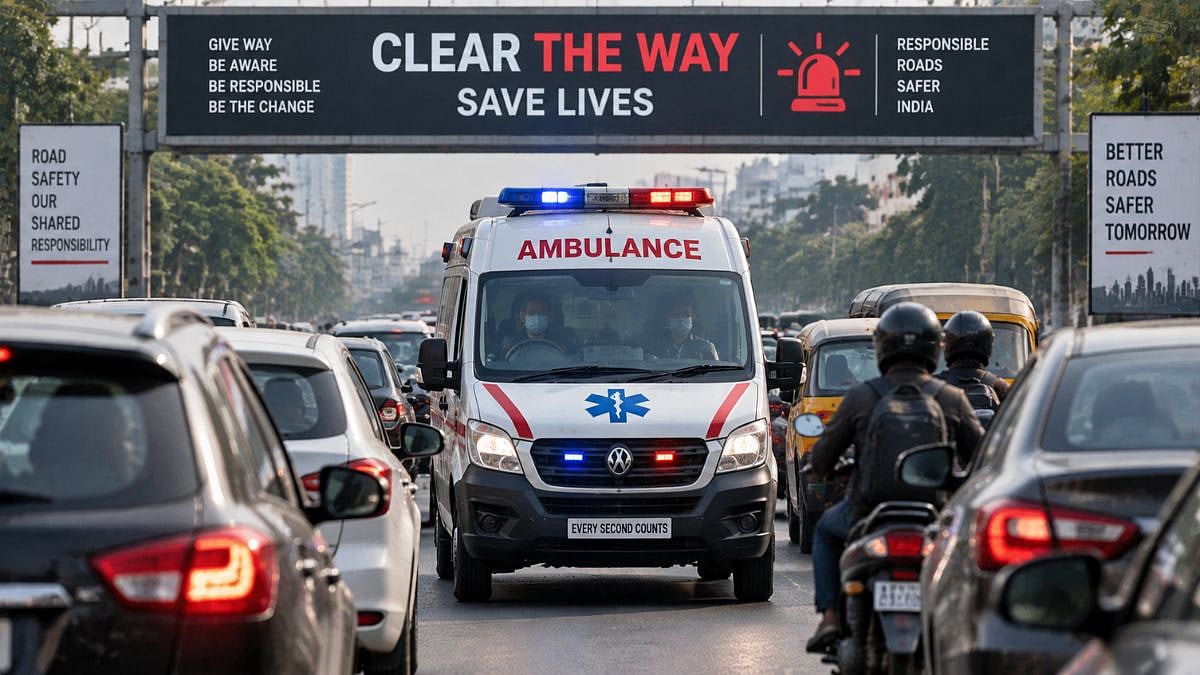
Traffic congestion and indifference towards ambulance sirens can delay emergency care, making safer roads a shared responsibility | AI Generated Representational Image
Outside Bollywood's caricatures, the excitement involving life and death is rarely appreciated. Yet, Indian roads have become dangerous—potholes, wrong-way drivers, buses stopping unpredictably, two-wheelers squeezing through tight gaps, and motorists disregarding lane discipline have turned daily travel into a test of endurance. During heavy rains and peak congestion, this isn't just inconvenient; it’s a public safety crisis. Union minister JP Nadda released a highly ambitious plan for the EMT (Emergency Medical Technicians) to reach the healthcare facilities within 20 mins in June 2026. Ambulance services are vital in emergency medical response, providing pre-hospital care, stabilisation, and transportation to healthcare facilities. The Operational Guidelines aim to standardise quality and accessibility nationwide. But where are the dedicated lanes for these ambulances to ensure rapid response and effective service?
Ambulances Struggle Through Chaos
Ambulances struggling through this chaos often face obstruction and indifference. Instead of being respected as emergency vehicles, they are seen as hindrances. Drivers delay, fumble, or ignore the siren. Some fail to realise the urgency; others think their few seconds matter more. Many follow ambulances to clear traffic for themselves. It is not merely infrastructural failure; it is a civic attitude problem. The cost of this chaos is tragic.
Government statistics show that two lakh people died in 2025 as a result of traffic accidents alone. Most victims were between 18 and 60 years old—parents, workers, and students—whose loss would have affected families and the economy. The financial toll is immense; the World Bank estimates traffic accidents cost India 5-7% of the GDP annually. For poor households, accidents lead to medical expenses, debt, lost income, and long-term hardship. The true cost extends beyond hospital bills; it includes lost productivity and emotional trauma and the impact on families.
Citizens Must Bear Responsibility
When an ambulance arrives late, or not at all, lives are lost which, otherwise, could have been saved. When roads fail or accidents happen, we tend to blame institutions such as the government, traffic police, and municipal authorities. While reforms, such as better design, stricter enforcement, and disciplined public transport are needed, citizens also must bear responsibility. We often consider traffic and safety issues as others’ problems until tragedy strikes our own loved ones. We complain about traffic, reckless driving, and delays but frequently contribute to the chaos ourselves.
When an ambulance tries to pass, we are often the obstacle—talking on phones, listening to music, ignoring the siren, even taking photos of the scene. We fail to recognise that those precious seconds can save life. This civic indifference must change. India must prioritise dedicated ambulance lanes on major roads connecting hospitals and busy areas. These lanes should be clearly marked, monitored by cameras, and enforced strictly. Traffic signals must give priority to emergency vehicles, and intelligent transport systems should facilitate quick passage through junctions. Infrastructure alone isn't enough; public awareness and discipline are crucial too. When an ambulance's siren sounds, drivers must immediately move left, clear the way, avoid overtaking, and not block or watch.
Ambulance Lanes Need Protection
In countries like Britain and America, yielding to an ambulance is standard—an act of civic duty rather than a favour. Indians see these acts on TV but neglect to practise them on the roads. Instead, we carry on conversations, listen to music, text, or watch videos, ignoring the suffering behind the siren. Despite access to constant communication, we overlook what matters most: helping someone fighting for his life. This attitude must shift. Dedicated ambulance lanes are essential, especially in urban centres. They must be protected from parked cars, delivery vehicles, and hurried drivers.
Proper markings, surveillance, and enforcement are key. Traffic signals should prioritise emergency vehicles, and intelligent systems must clear junctions proactively. But infrastructure is not enough; public awareness is vital. Citizens need to internalise the importance of those lanes.
Collective Responsibility Saves Lives
When they hear a siren, they should move aside immediately, creating a clear path. This involves simple acts: turn left, give way, do not stop, do not follow, and do not overtake. Taking responsibility is paramount. The person in that ambulance could be someone’s loved one, fighting to survive. Yet, the harsh reality is that many perceive ambulance passage as someone else’s problem until it is someone of our own. The tragedy is that the true value of an ambulance lane isn’t just about traffic flow; it’s about lives, livelihoods, and families.
A delay in clearing the way can mean the difference between life and death. It’s a moral failure reflective of our civic values. Society must recognise that roads are not just for moving vehicles but for safeguarding lives. Ensuring quick ambulance access requires collective effort—better infrastructure, stricter enforcement, and most importantly, responsible behaviour from every driver. Dedicated ambulance lanes, clear markings, technology, and priority signals are necessary, but they depend heavily on public consciousness and discipline.
It is time to move beyond complaints and towards responsible action, ensuring that when the siren wails, the way is clear for those who need it most. Lives depend on us, on our civility, our discipline, and our collective commitment to change. Only then can our roads truly serve their purpose: safe passage for all, especially in moments of urgent need.
In conclusion, India’s roads demand urgent reforms in infrastructure and civic behaviour.
RECENT STORIES
-
-
-
-
-