India Withdraws COP33 Bid: Missed Opportunity To Lead Global Climate Agenda And Showcase Green Transition
India has withdrawn its bid to host COP33 in 2028, missing a key opportunity to showcase its climate leadership. Despite strong commitments to emissions reduction and renewable energy, the decision raises concerns over priorities and global positioning.

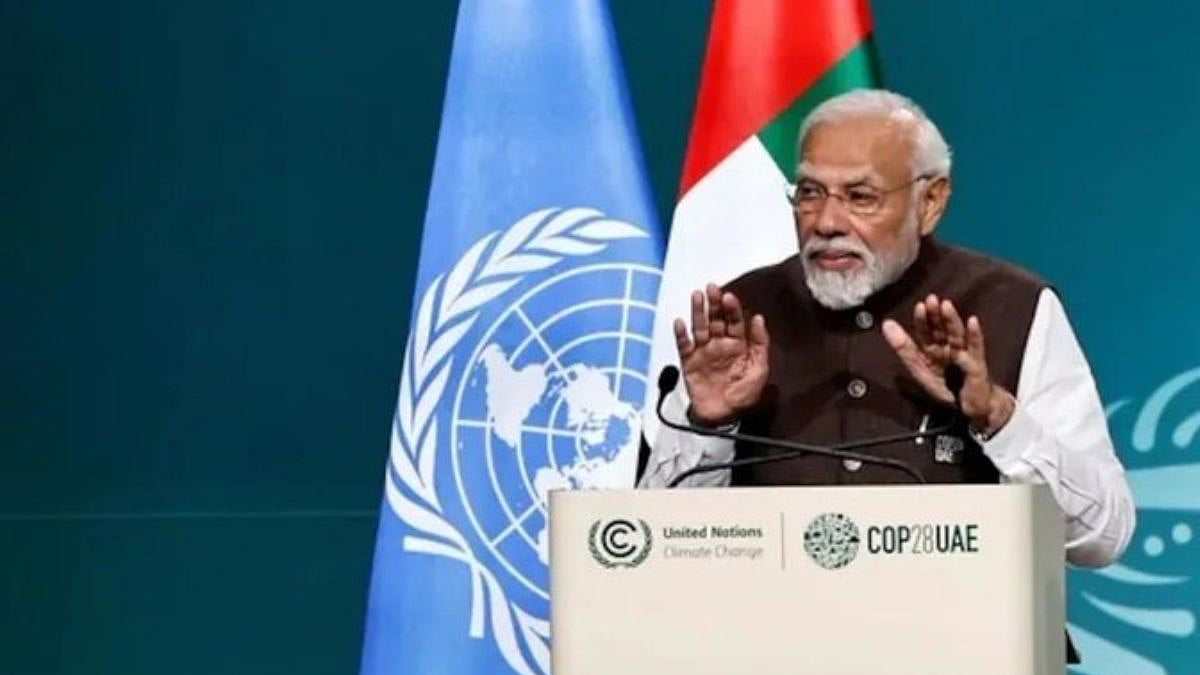
India steps back from hosting COP33, raising questions over climate leadership ambitions | X
UN climate conferences bring prestige for the host country, which is expected to use its diplomatic skills and produce a consensus on global goals. When India offered to host the 2028 COP33 conference of the UN Framework Convention on Climate Change (UNFCCC), it was seen as a natural pitch by a fast-growing emerging economy that is striving to cut its greenhouse gas emissions.
In a submission to the UNFCCC, the country said its commitment on emissions reduction made at the Paris climate summit has been fulfilled 11 years ahead of deadline, and it has twice raised its ambitions since. Most recently, it decided to cut the emissions intensity of GDP by 47% by 2035, up from the previous 45% target.
It comes as a disappointment, therefore, that the bid to host COP33 has now been withdrawn by the Union government. With this move, the mantle of climate leadership may fall on South Korea, and ahead of that, on Turkiye and Ethiopia.
Currently, India is the third-largest emitter of greenhouse gases, after China and the US, the latter a climate sceptic under Donald Trump; Indian per capita emissions are half the global average, and only a third of China’s 10.8 tonnes in 2024.
Hosting the COP would have given the government an opportunity to buttress its credentials as the most populous nation striving for a green transition based on equity and climate justice.
There surely are many gaps in policy — such as a serious contradiction between afforestation to create an expanded carbon sink and deforestation for grand projects like the Great Nicobar plan — but a COP is an opportune moment to recalibrate. The Iran war has exposed heavy reliance on imported fossil fuels too.
Withdrawal raises questions over preparedness
It is difficult to believe that the national bid to host COP33, announced by Prime Minister Narendra Modi in Dubai in 2023, was made without a detailed assessment.
Besides the prestige conferred by the annual climate event, a COP helps upgrade the chosen city’s infrastructure for a global gathering of thousands, including heads of government, scientists, national delegations, civil society groups, and journalists.
Also, as the headquarters of the International Solar Alliance, India was expected to highlight achievements in the renewables sector, notably solar photovoltaics and solar thermal installations.
In an ambitious move recently approved by the Union Cabinet, India plans to have 60% cumulative electricity production from renewables by 2035. Moreover, international visitor arrivals would be an opportunity to promote heritage and nature tourism.
It is a puzzle, therefore, that the Narendra Modi government decided to quietly drop its bid for the event. The move has provoked speculation that the demands of the 2029 parliamentary election and 2030 Commonwealth Games in Ahmedabad led to a rethink. Ultimately, though, India can wield international influence only by creating true capacity to host global events in multiple cities.
RECENT STORIES
-
-
-
-
-