Illegal Sand Mining Crisis: Chambal Violence Exposes Governance Failures And Urgent Need For Sustainable Alternatives
The killing of a forest guard in Chambal highlights growing lawlessness linked to illegal sand mining. Despite Supreme Court warnings, weak enforcement and high construction demand continue to fuel mafia activity, underscoring the need for sustainable alternatives.

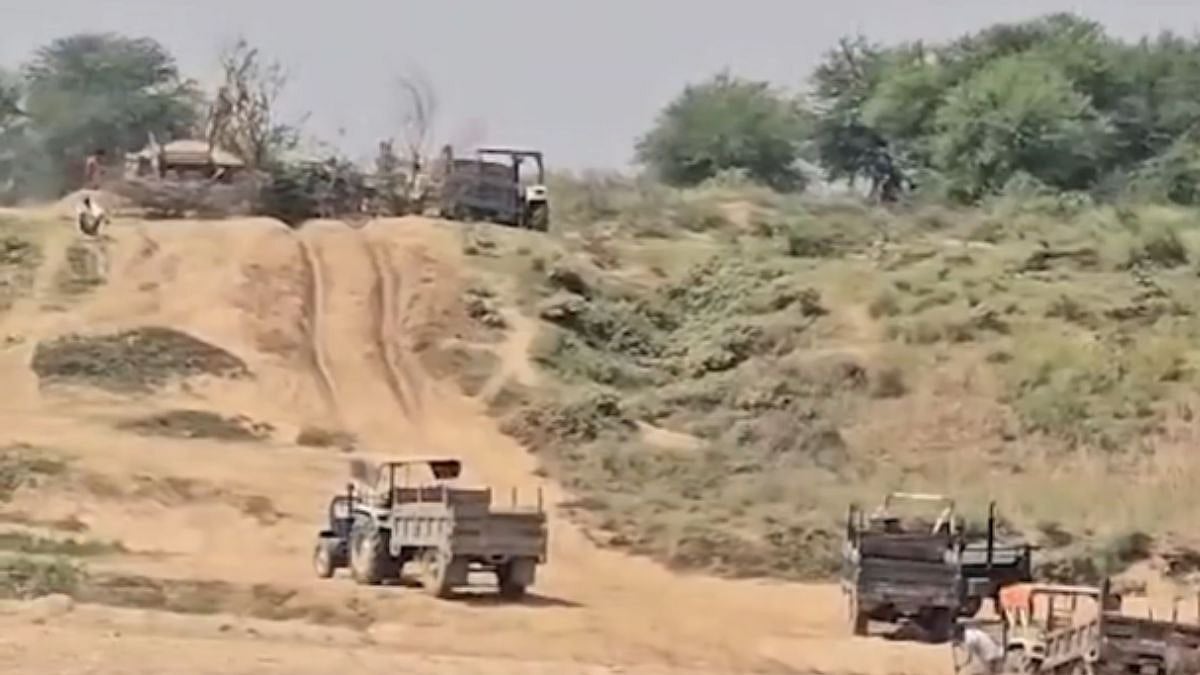
Illegal sand mining in Chambal region raises law and order concerns after fatal attack on forest guard | X
The murder of a forest guard in Morena in the Chambal National Sanctuary region of Madhya Pradesh, reportedly when he tried to stop illegal sand mining, is further evidence of the lawlessness that characterises the region.
It appears to matter little to the state government that the Supreme Court has taken suo motu cognisance of the environmental destruction wrought by sand miners in the sanctuary that straddles MP, Rajasthan, and Uttar Pradesh and hosts precious wildlife like the gharial. The court even suggested using stringent legal provisions such as preventive detention against the smugglers.
Officials of the state governments have been warned by the court in the past of vicarious liability for the illegal activity. Only a few days ago, SC justices Vikram Nath and Sandeep Mehta stayed a notification issued by the Rajasthan government without the court’s permission, denotifying 732 hectares of sanctuary area.
Clearly, the attitude of the state governments amounts to contempt and calls for strong strictures. The respective administrations were warned about ongoing theft of mineral wealth in 2020 by a three-judge bench led by the then Chief Justice of India, S.A. Bobde.
Breakdown of governance and targeted violence
What is more, the report of the amicus, Nikhil Goel, refers to targeted killings of Sub-Divisional Magistrates, police, and forest officials in Rajasthan, and the failure of state governments to submit action taken reports to the National Green Tribunal in spite of specific inputs being provided. All this represents a deplorable breakdown of law and order.
Widespread illegal sand mining and policy gaps
Illegal sand mining across many states is the subject of litigation in various courts, but the demand for sand as an aggregate material in construction is so high, and the response of governments to come up with green alternatives so indifferent, that riverine areas have been overrun by mafias.
The SC has called for details from Tamil Nadu on all FIRs registered in connection with alleged theft of Rs 4,730 crore worth of sand in a petition seeking a CBI probe. Judicial oversight into the theft of a precious mineral under the nose of the government is necessary to compel states to act.
Need for sustainable alternatives and reforms
A parallel review of failed initiatives to recycle construction and demolition (C and D) waste would have a salutary effect on reducing demand for fresh sand. In fact, an updated set of regulations for waste recycling, the Environment (Construction and Demolition) Waste Management Rules, 2025, became operational on April 1.
But there is insufficient capacity to produce recycled material across the country and even less awareness. Public projects consume vast quantities of sand and should lead the way by emphasising recycling, circular environmental practices, and quality production.
Studies in Tamil Nadu indicate that recycled secondary materials in construction are not favoured due to quality concerns. Ending unsustainable river sand extraction should be matched by new supply streams of recycled materials.
RECENT STORIES
-
-
-
-
-