GST Reforms Should Boost Trust
Proposed GST reforms aim to ease compliance, reduce enforcement-related anxiety and strengthen trust between businesses and tax authorities. Key measures include raising the prosecution threshold from Rs 1 crore to Rs 5 crore, lowering the maximum general penalty from Rs 25,000 to Rs 10,000, streamlining refunds and registration, and restricting physical checks of goods in transit.

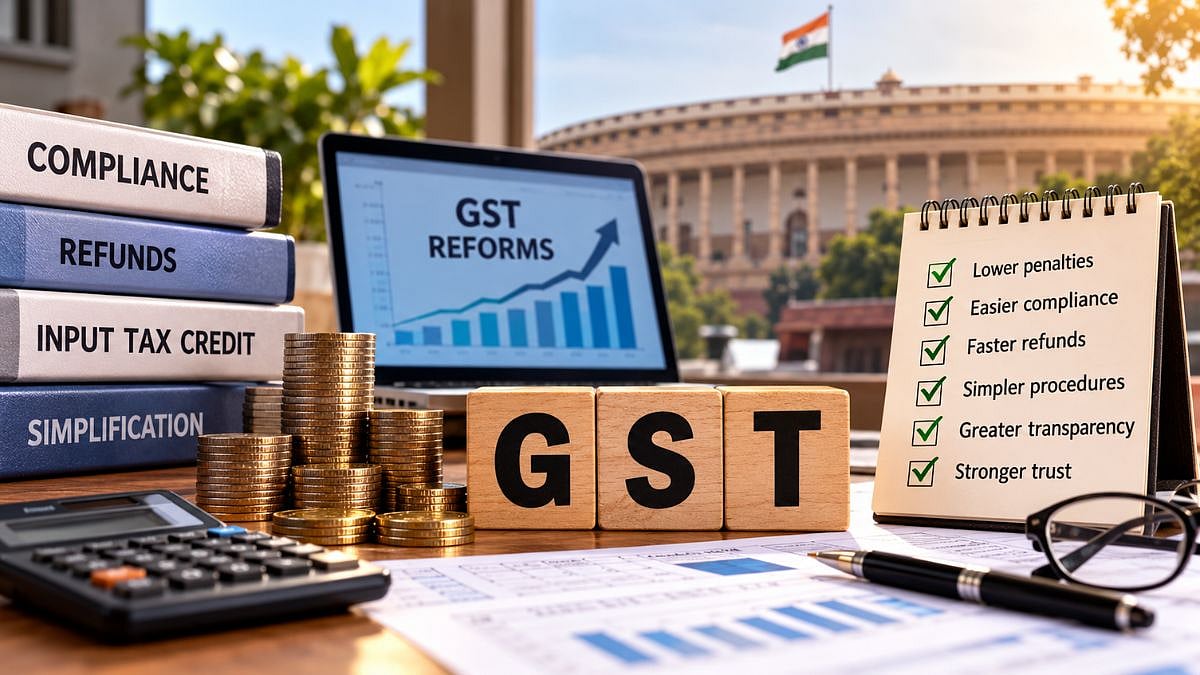
Proposed changes to GST enforcement, refunds and compliance procedures seek to make tax administration more transparent and business-friendly | AI Generated Representational Image
Last week, the Finance Minister announced a series of measures to relax several GST provisions, and many of them are indeed laudable. Businesses across the country have repeatedly complained about the complex compliance requirements, delayed refunds, disputes over input tax credit, and an enforcement regime that can make even procedural lapses costly. The key proposals in the recommendations of the recently concluded 57th GST Council are to remove arrest provisions under GST and raise the prosecution threshold from ₹1 crore to ₹5 crore. The maximum general penalty has also been reduced from ₹25,000 to ₹10,000, making enforcement more proportionate. Together, these measures should address the anxiety and fear that grips businesses.
Easing Compliance And Business Anxiety
A thin line separates wilful defaulters from genuine errors on the part of businesses. When enforcement is perceived as excessive, business owners spend more time managing tax disputes and less time running their operations. Therefore, a regime should encourage voluntary compliance so the relationship between taxpayers and the authorities remains healthy. The reforms relating to refunds and input tax credit are equally important, and any delay can lock up working capital, forcing companies to borrow to finance routine operations and even working capital requirements. The council has approved a range of measures to reduce the paperwork and friction involved in GST registration and return filing. These changes reduce tax cascading and ease financial pressure on businesses. The proposed simplification of registration and compliance procedures is particularly relevant to smaller enterprises.
Changes To Goods Transit Checks
Another hallmark of the proposal is that the council has also changed the rules governing physical checks of goods in transit. A vehicle can now be stopped only on specific intelligence, with prior authorisation from an officer not below the rank of Joint Commissioner; instead of being open to checks in each state, it will now be checked only at the origin and destination.
Transparency And Accountability Needed
These steps are welcome, but it is surprising that the GST council did not consider the ground realities of the series of measures it has taken since it was set up in 2017. Nevertheless, even though they have been slow to arrive, they will bring significant relief to businesses across the country. More importantly, people will expect much more transparency from those who execute policies. Businesses must know when refunds are withheld, input tax credit is blocked or registration applications are rejected. The tax authorities should use technology to make their administration more transparent and accountable.
Building A Trust-Based Tax Regime
The GST has matured considerably since its launch. The next stage of reform should focus on making compliance easier and treating taxpayers fairly. The latest announcements point in the right direction. Their success will depend on whether the administration embraces the same principle of trust that the reforms seek to establish. However, the proposed changes will come into effect in April 2027, leaving businesses with a long wait to see how they turn out.
RECENT STORIES
-
-
-
-
-