Global South Needs Bold Strategies As India And China Redefine Power Balance In A Shifting World Order
As rising powers like India and China reshape global influence, the Global South is urged to move beyond symbolism toward transformative strategies that strengthen multilateralism, challenge Western dominance, and build a non-hegemonic world order rooted in shared development and collective progress.

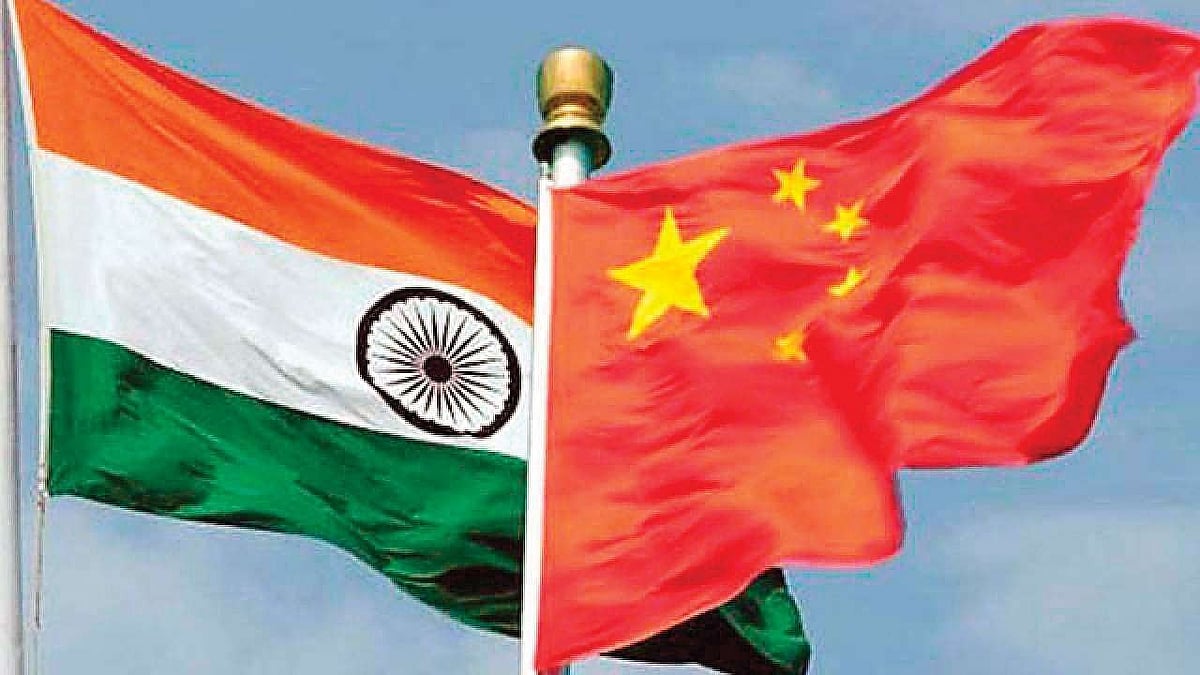
Developing nations seek new leadership models as India and China expand influence across the Global South | Representational Image
The journey of the Global South from the 1955 Bandung Conference to the 1966 Tri-Continental Conference in Havana onwards has been as much ideological and epistemic as political and aspirational.
Despite decolonisation, countries of Asia, Africa and Latin America fell into what leading theorist of globalisation studies Arjun Appadorai calls “the European epistemological traps of modernisation and development”. The agenda of the Global South also became part of the post-colonial epistemic discourse, which challenged the hegemonic ontologies of the West.
The Global South brought together scores of organisations from social and global justice movements and embraced the struggles of many indigenous peoples and exploited workers and poor communities around the world.
Is Global South just a buzzword?
Has the term ‘Global South’ become a fashionable buzzword? The buzzwords tend to become fuzzwords, but words also make worlds. As German polymath Goethe says, “When ideas fail, words come in very handy.”
Sceptics like Alan Beattie, former international economy editor of The Economist magazine, dismiss the Global South as a “pernicious term that needs to be retired”. Kwame Nkrumah admonished the Western pundits when he proclaimed after Ghana’s independence, “We face neither East nor West; we face forward.”
Nietzsche has famously said that “all things are subject to interpretation: whichever interpretation prevails at a given time is a function of power and not truth.” Global South, howsoever terminologically inaccurate, offers us a sanctuary, a home and a sense of togetherness. It is the most credible platform that is making efforts to shape, contest and redirect the trajectory of global governance.
A platform, not a place
The Global South is not a geographic location. It is a platform to build a non-hegemonic world order. It is what cultural anthropologist Walter Mignolo calls “a metaphor that indicates regions of the world at the receiving end of globalisation”. It is a place, adds Mignolo, “where another way of life is burgeoning”.
Rise of developing economies
The developing countries are, today, serious players thanks to the economic performance of China and India. British journalist Martin Jacques’ book When China rules the world: The end of the Western world and the birth of a new world order announced the loud arrival of China, the sleeping giant, on the global scene.
Slogans like ‘India shining’, ‘Brazil takes off’, ‘Mexico on the rise’ and ‘Africa rising’ sought to recalibrate, reconfigure and redefine who they were, who they could become and where they could go. Some scholars even began to theorise about the Global South. Alternative theories of development, growth, technology, coloniality, and indigenous cosmovision and epistemologies emerged.
India and China: Competing visions
India and China, two whales in the global ocean, are both staking claims to lead the Global South in their own image. In fact, in their struggle for ideological leadership of the Third World, India and China were at odds even at Bandung. It was there itself that China reached a strategic understanding with Pakistan founded on their convergent interests vis-à-vis India.
Both India and China asserted their anti-imperialist credentials and sought to build solidarity and gain prestige among the Third World nations. India had a head start by hosting the first Asian Relations Conference in Delhi in 1947. At Bandung, the ideological competition between the two countries became evident.
China’s approach to the Global South
China sees Bandung as a major reference point for its engagement with the Global South in terms of what it calls “Chinese knowledge transfer”. It asserts how the developing world benefits from China’s experience of its development trajectories. It sees development as a bridge between the Belt and Road Initiative and the Global South and flaunts the “China solution” as an alternative model of development.
China has championed the cause of the Global South and built a strong constituency through its economic diplomacy and its strategic engagement. Critics, however, point to China’s own imperial past and its aggressive postures towards its neighbours. Of course, Beijing has become a global player, but its message “if China can make it, other developing countries too can” is simplistic, if not naïve.
Its territorial claims and large-scale infrastructure projects in Southeast Asia and the Indian Ocean are often seen as enhancing its military and geopolitical influence. Be that as it may, China has increased its global stature.
An international survey by the European Council on Foreign Relations across 21 countries, including 10 EU member states, expects China’s global influence to grow over the next decade. That is not to say its outreach is not without financial risks. In recent years, China has scaled back the BRI from large, capital-intensive infrastructure projects.
India’s outreach and contradictions
In January 2023, India hosted the ‘Voice of Global South’ Summit. It sought to focus global attention on the priorities, perspectives and concerns of the developing world. Last year, Prime Minister Modi unveiled the Mutual and Holistic Advancement for Security and Growth Across Regions—Mahasagar.
It is a vision aimed at enhancing security, trade and development co-operation. India’s outreach has often suffered from a lack of consistency. In 2015, India organised the India-Africa Forum Summit with much fanfare. Many such initiatives have been one-off jamborees. Can India claim to be the “voice of the Global South” and yet seek to become the US’s strategic ally? Does the Global South want to become a grouping of great powers’ concert or a new pole?
Triumphalist narratives are uncalled for. It follows a timid policy on Ukraine and Gaza. As Washington abandons the multilateral order in favour of unilateral economic measures, the Global South must grapple with the implications of this shift. It is time to reimagine the Global South.
Reimagining the Global South
The Global South needs no pearl-catching strategy. It would be a fool’s errand to attempt coherence among the Global South. It must be seen to be working for reinvigorated multilateralism and rebuilding a broken world. It must become a collective waking dream and a radical and transformative space for possibility. The Global South also must fight what Argentine-Mexican philosopher Enrique Dussell calls “geopolitics of knowledge”.
Call it the Global South or the Global Majority, its thunder is good and impressive. But as Mark Twain said, “It is lightning that does the work.”
The author comments on global affairs.
RECENT STORIES
-
-
-
-
-