From Defence Pacts To Environmental Security: Why India Must Broaden Its Southeast Asia Engagement Beyond Traditional Threats
Experts have urged ASEAN and India to prioritise environmental security amid rising climate threats such as El Niño-induced droughts, water stress and energy shortages across India and Southeast Asia. They argue that climate risks are becoming security challenges and call for joint action on early warning systems.

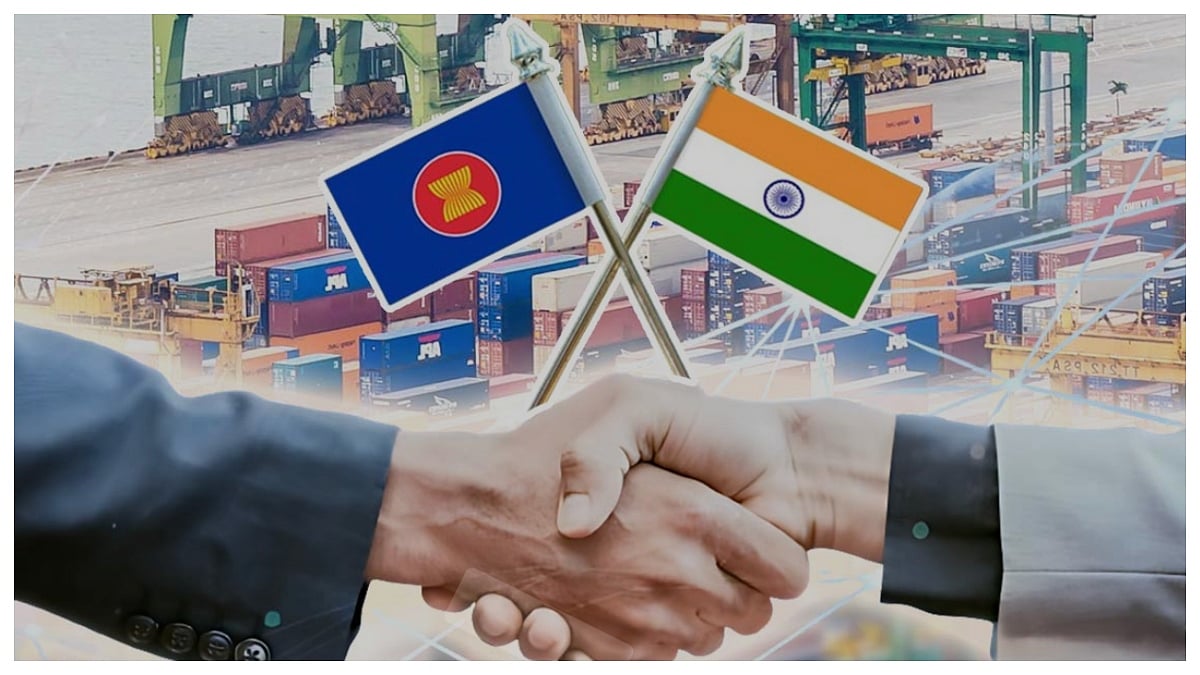
From Defence Pacts To Environmental Security: Why India Must Broaden Its Southeast Asia Engagement Beyond Traditional Threats |
The core drivers of ASEAN-India relations are dominated by hard defence procurement, counter-terrorism, and maritime security. High-profile developments—like India selling BrahMos cruise missiles to the Philippines or conducting the ASEAN-India Maritime Exercise in the South China Sea—routinely overshadow challenges like climate change. The definition of "security", however, is expanding. Environmental issues, often siloed under “development” or treated as secondary rather than core “security” multipliers, could exacerbate resource conflicts, migration, or instability.
The looming threat of El Niño offers a timely reminder of the expanding environmental dimension of security in India and Southeast Asia. As India’s southwest monsoon arrived late in Kerala this June under a strengthening El Niño, anxious farmers in Maharashtra and the Gangetic plains scanned parched fields, while reservoir levels near Mumbai hovered critically low. Across Southeast Asia, similar unease grips the Mekong Delta.
A business case exists for making environmental security—the resilience of water, energy, food, and health systems against climate-amplified shocks—a critical pillar of engagement between India and ASEAN.
As S Nanthini, Associate Research Fellow in the Humanitarian Assistance and Disaster Relief (HADR) Program at the S Rajaratnam School of International Studies (RSIS), Singapore, argues: “Maritime security has traditionally been a key area of cooperation for ASEAN and India. Considering the sizeable coastal regions and maritime domains of Southeast Asia and India, climate change is likely to have significant implications for them. ASEAN and India could build on pre-existing maritime mechanisms, such as the ASEAN Defence Ministers’ Meeting Plus (ADMM-Plus) Experts’ Working Groups (EWGs) on maritime security and track II level interactions, to use as an avenue to share knowledge and enhance cooperation on climate change.”
Recent forecasts in India point to a below-normal monsoon, heightening risks of water stress, groundwater depletion, and agricultural distress in rain-fed regions. In Southeast Asia, El Niño typically brings hotter, drier conditions, straining hydropower-dependent grids in Laos, Vietnam, and Cambodia, and raising haze risks from fires in Indonesia and Malaysia. These are not isolated national problems. Reduced rainfall disrupts shared monsoon dynamics; energy shortfalls cascade through regional supply chains; transboundary haze affects public health across borders. The poor, small, and marginal farmers, urban migrants, and women bear the brunt, deepening inequality.
Recent World Meteorological Organisation (WMO, June 2026) and UNESCAP analyses also explicitly link the developing El Niño to severe drought risks in Southeast Asia, reinforcing calls for enhanced regional coordination on early warning systems, data sharing, transboundary management, and capacity building to manage drought risks across agriculture, energy, and ecosystems. Far from abstract, these 2026 updates emphasise that siloed responses heighten vulnerability and inequality.
The South Asian section of the WMO, which stretches from Oman in the west to Thailand in the east, can improve data sharing on all climate-related phenomena. Southeast Asia and India need to collaborate on developing innovative clean energy finance mechanisms, which can reduce dependence on Western loans and grants, say experts. “This can include developing Renewable Energy Certificate markets and green bonds, de-risking of green investments, and enhancing the transparency of climate finance data. As two regions with enormous levels of ethnic and linguistic diversity, Southeast Asian countries and India can engage in discussions and knowledge exchanges on strengthening the capacities of grassroots organisations and local governments to actively participate in and contribute to the transition process. This will be key for promoting wider public engagement in renewable energy initiatives, which is a pillar for a just energy transition,” noted Dr Mirza Sadaqat Huda, Lead Researcher at the ISEAS-Yusof Ishak Institute, Singapore, in an essay in a special edition brought out by the Institute of Strategic & International Studies (ISIS) Malaysia on India’s Act East Policy in the second decade. The collection, edited by Dr Yanitha Meena Louis of ISIS, offers perspectives from Southeast Asia and India on the impact and trajectory of the Act East Policy (AEP).
India possesses strengths ASEAN countries can draw upon: in renewable energy, in large-scale reservoir management experience, in expanding climate-resilient infrastructure under initiatives like Jal Jeevan Mission, and in advanced forecasting capabilities. Conversely, Southeast Asian countries offer lessons in community-level adaptation, transboundary river governance via the Mekong River Commission, and innovative urban heat responses.
Yet, these insights remain under-leveraged because environmental security sits on the margins of strategic dialogues. Prioritising it would add strategic depth: joint satellite-based early warning platforms, co-developed drought-resistant technologies, pilot cross-border water-energy resilience projects, and inclusive adaptation funds targeting vulnerable communities. Such moves align with existing mechanisms. For example, climate finance was a major focus of the discussions at BIMSTEC’s 4th Joint Working Group on Environment and Climate Change meeting (held January 2026 in Thimphu, Bhutan). Officials explored practical options to mobilise international and regional climate funds. The ASEAN-India Plan of Action 2026–2030, with its emphasis on disaster management, HADR, and climate adaptation, already touches on climate. Within that, environmental security can be elevated.
Clearly, mechanisms exist but are not being used to their full potential, leaving environmental security peripheral rather than central. Shared vulnerabilities demand shared solutions. In a warming world, true regional security will be measured not just by naval patrols but by how well we shield millions from thirst, blackout, and heat. The window for action is narrow. As reservoirs dip and temperatures rise, policymakers in Delhi and ASEAN capitals should recognise that environmental security is no longer an add-on. It is the next frontier of meaningful South-by-Southeast partnerships.
Patralekha Chatterjee is a writer and columnist who spends her time in South and Southeast Asia, and looks at modern-day connects between the two adjacent regions. X: @Patralekha2011
RECENT STORIES
-
-
-
-
-