Decoding The BJP’s Bengal Sweep And Saffron Surge Across India
BJP’s sweeping victory in West Bengal has sparked debate over the changing political landscape in India, with factors such as Hindutva politics, polarisation, welfare outreach, and organisational expansion seen as key drivers. The outcome has also intensified concerns regarding voter deletion, exit poll credibility, and the neutrality of democratic institutions.

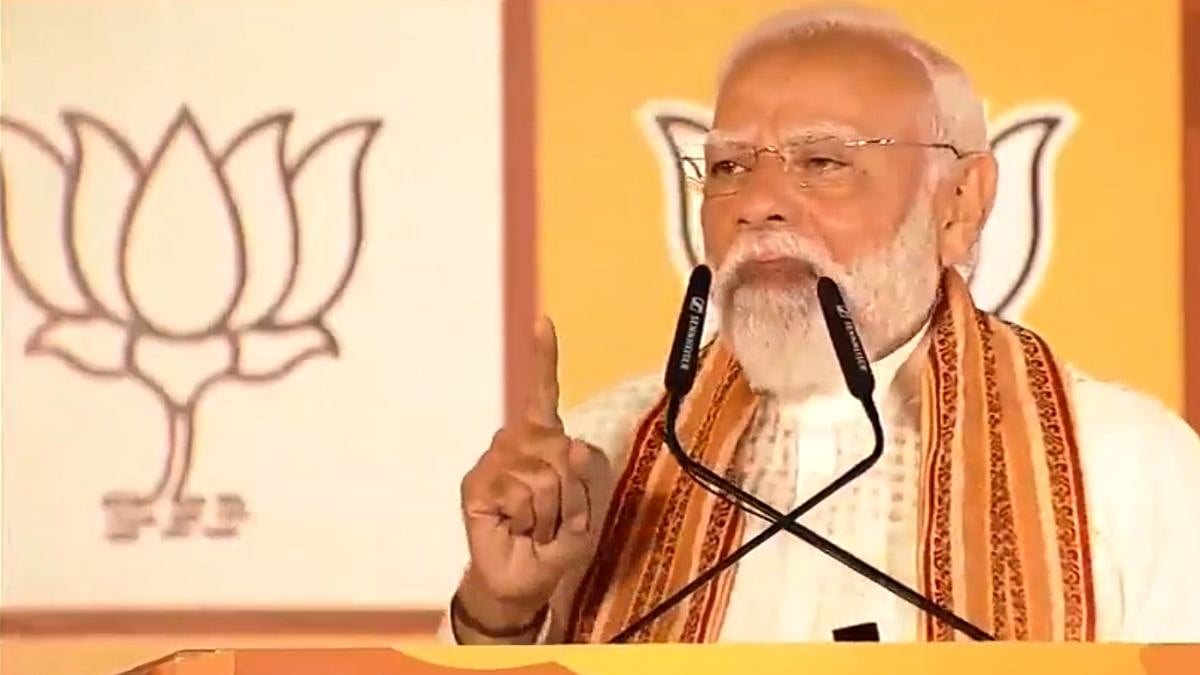
PM Modi | ANI
Not long ago, exit polls in India were treated as a sort of reliable post-poll indicator, not precise forecasts. But lately, they have become an election-night drama and a narrative-building exercise. Instead of capturing the pulse of people regarding who they have voted for and what shaped their vote choice, exit polls have hit such lows that they are no longer credible analyses of poll data and voting preferences, but blatantly biased, unreliable and speculative exercises. An obvious bias towards the ruling party at the Centre was seen in the 2024 Lok Sabha exit polls and practically in every election since then, including the latest round of elections in West Bengal, Assam, Tamil Nadu, Kerala and Puducherry.
Questions raised over credibility of exit polls
What is disconcerting is not just the lack of confidence in exit polls but also the media’s silence on the cloud of suspicion over the voting process and the credibility of the Election Commission. The BJP’s big win in West Bengal is a major boost for the party and its electioneering style. But the question is, what caused the Trinamool Congress’s debacle? Of the five Assembly polls, West Bengal was the high-stakes battle for the BJP and its rival TMC. Neither the former was anticipated to sweep Bengal nor the latter was projected to lose so badly. At best, it was a tight contest that could have gone either way, though the TMC was expected to hold its ground. So, what caused such a tectonic shift in Bengal’s political landscape?
BJP’s Bengal sweep seen as political turning point
The seismic shift has not only come as a stunning surprise, but the scale of the BJP’s sweep is difficult to fathom, given that there were no visible signs of a massive saffron surge in a state which has voted for left-of-centre political parties for over five decades. There is certainly no single factor responsible for this paradigm shift, but an array of issues and reasons — three-term anti-incumbency, widespread corruption, organisational fatigue, shifting voter priorities besides SIR, mass deletion of voters, massive polarisation, and a poll body that is not perceived as a neutral institution. It is too simplistic to link Bengal’s turn to Hindutva politics as a logical extension of the BJP’s expanding footprint in the country. It is true that since 2014, the BJP’s footprint has seen an amazing expansion from seven to 22 states, which include eight states run by its allies. But for the BJP, the sun still rises in the Hindi heartland.
BJP’s national expansion and political strategy
Even then, in terms of population, the shift is equally striking — in 2014, the BJP/NDA-governed states accounted for 27 per cent of the population; now that figure accounts for 78 per cent. In contrast, Congress and allies are down from 14 to six states, while regional and other governments are down to three from seven.
But these numbers ignore complex details, nuances and other factors that have made the Hindutva party’s surge so remarkable. For instance, the BJP’s “no-holds-barred” approach to politics, prioritising electoral victory and ideological goals through aggressive, high-stakes strategies. This approach, marked by a highly aggressive, centralised and ideologically driven style of governance and campaigning, has resulted in a formidable electoral machine that critics argue undermines the Opposition and democratic institutions.
Critics question use of state machinery
A lot of growth in the BJP’s ideological influence and political footprint, critics argue, is not just organic but comes from defections, mergers, acquisitions and enticement. Intimidation of political opponents with the help of central agencies and institutions, leveraging state machinery, and social polarisation have played a key role in its growth.
Using technology to directly reach beneficiaries and creating a strong voter base, while also being accused of using administrative, investigative and regulatory institutions for political gains, have been crucial in expanding the BJP’s electoral reach to new regions and states where it has challenged established regional parties.
Hindutva politics and populist narrative
The BJP’s biggest advantage is its Hindutva politics — weaponisation of religion to expand the voter base — intertwined with ideological nationalism; cultural identity that frames the party as the champion of Indian values; national security as its political priority; and a strong leader narrative for both internal and external security, contrasting it with a portrayed weakness of Opposition parties.
Around the world, all populist right-wing leaders have used religion, race, ethnicity and fear of the “other” (migrant population) as a distraction from weak economic growth, rising unemployment, declining wages and falling living standards to capture political power. They have all been accused of using undemocratic means to perpetuate their rule. India is no exception to this paradigm shift from centrist to populist politics that has swept the European continent and is symbolised by Donald Trump in the US.
Opposition faces challenge of creating alternative agenda
The advantage the BJP has is that in the right-of-centre political space, it is the only party that has a monopoly over right-wing politics, which it effectively combines with a welfare model, while the left-of-centre political space is crowded with too many players. This makes the BJP’s vote bank far bigger than any other party on both sides of the political divide.
The major challenge before the Opposition, therefore, is how to counter the BJP while setting an alternative national agenda to consolidate a dedicated support base. There are no easy answers, more so when secularism, constitutional values, rule of law and political morality have limited appeal amid the sweeping reach of religion, religious politics and polarisation.
Concerns raised over Bengal electoral process
Coming back to Bengal, how did Mamata Banerjee lose so decisively? The 2026 Assembly election was a complete outlier from the other four states that went to polls along with Bengal. It goes without saying that the SIR was common to all, but the Bengal SIR was far more contentious — 90 lakh voters were deleted, of which 27 lakh were denied voting rights because of logical discrepancies. Media reports suggest that the SIR may have tipped the scales in the BJP’s favour. But even if it has not, the looming concerns over democratic exercise, disenfranchisement, voter deletion and a fair electoral process remain.
Excessive polarisation because of the SIR, which the BJP is said to have used to consolidate support for itself, the TMC’s corruption and three-term anti-incumbency, and the erosion of Mamata’s moral authority, especially on women’s issues and safety, may have been the decisive factors behind Bengal’s historic shift to saffron politics. But the BJP’s big sweep and saffron surge across the West, North and the East do raise some key questions on democracy and process.
The writer is a senior independent Mumbai-based journalist. He tweets at @ali_chougule.
RECENT STORIES
-
-
-
-
-