Cockroach Party Was A Good Comeback To CJI’s Angry Remark But Its Future Is Preordained To Be Evanescent
The rapid rise of the Cockroach Janta Party, a satirical online movement, highlights social media's ability to shape public discourse and attract widespread support in a short span. While it gained millions of followers amid controversy over remarks attributed to the CJI, virtual popularity alone may not be enough to build lasting political influence or electoral success.

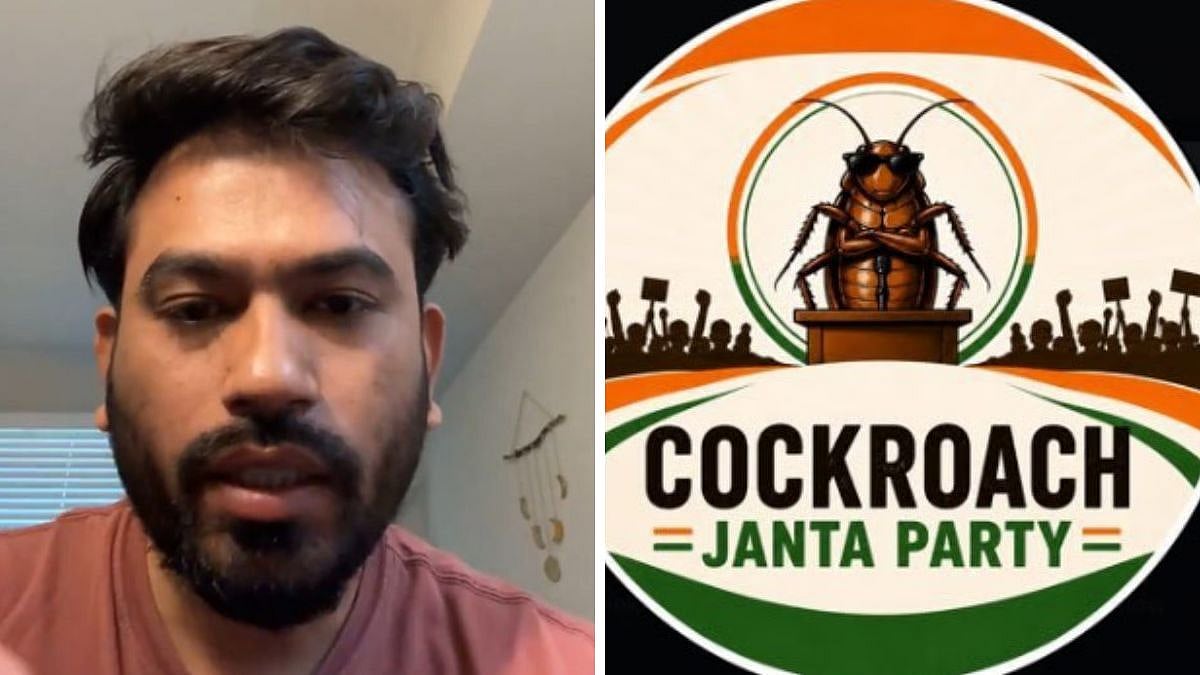
The rapid online popularity of the Cockroach Janta Party has sparked debate over the influence and limits of social media-driven political movements | File Photo
Not even in his wildest dreams would Chief Justice of India Surya Kant have imagined that his drawing a parallel between unemployed youth and cockroaches would trigger a satirical riposte and then assume the proportions of a deluge in the virtual world. The CJI, with due respect, was allowing himself to be carried away. As the noted lawyer Harish Salve said, judges should measure their words and avoid hyperbole. The Supreme Court’s likening of the CBI to a caged parrot, far from having a chastening effect on the powers that be and the CBI itself, has had the counterproductive effect of lowering the image of the nation’s premier investigative agency in public perception. People hang on to the lips of their lordships, which is why they must be circumspect in their utterances, including when passing off-the-record or off-the-cuff remarks called obiter dicta during hearings.
To be sure, the rapid fame of 30-year-old Abhijeet Dipke and his virtual-world Cockroach Janta Party (CJP) would be evanescent, as most social media initiatives are. That it clocked more than 23 million online adherents in a matter of days before it was blocked by X is indeed a record of sorts, but in the virtual world, especially on social media, the bandwagon effect is more pronounced, and commitment to stay on is woefully lacking. Netizens want fun without responsibility and sharing the total cost and are free with their likes, follows and thumbs-ups. The BJP, on the other hand, has a 14-crore presence on the terra firma, many of them foot soldiers of the party and ardent supporters of the Hindutva cause. So, not much should be read into the 30 seconds of fame of the stillborn CJP. After all, social media caters as much to the wannabes as to the well-heeled ones like Sridhar Vembu, Elon Musk and Anand Mahindra of the world, who have a take on everything going on under the sun. Wannabes have a lot to say but get no space in the mainstream media and, therefore, jump in with their two cents in a sense of “me too” with their views, which are often simplistic and impulsive. Their emojis, too, are impulsive and made just to be counted.
In his interaction with Reuters from the United States, where he has lived for the past two years, Dipke described sleepless nights creating social media content and doing media interviews. “The Indian government has declared me a national security threat,” he said by telephone from Chicago, in reference to the Indian government’s knee-jerk reaction in blocking him on X, which the Delhi High Court hasn’t unblocked, so to say. “They are trying to defame me. But democratically, within our constitutional rights, we will do what needs to be done.” Perhaps the Indian government is chary of his ties with AAP, of which he was an intern during its salad days. But then AAP was born out of mass protests on the terra firma. Be that as it may.
Online Popularity Does Not Translate Into Political Power
An online party has no body to be kicked and no soul to be damned until it descends on Mother Earth, where it often has to engage its rivals with fisticuffs and verbal jousts. Its members often feel secure because of the anonymity conferred by the virtual world until they are hounded by sleuths, smoked out of their virtual cocoons and have their identities revealed. To be sure, social media can create public opinion the way it desires, as happened to a substantial extent in the victory of TVK, the new kid on the block in Tamil Nadu politics, which captured power in its maiden attempt. The youth of today carry no baggage and are not besotted with history and historical injustices meted out in the past. They are focused on the here and now—employment, rising prices and hassle-free living. Naturally, they sneer at the traditional parties of yore, rooted in caste and regional politics and priorities, including freewheeling freebies. But they need a political outfit like TVK on the ground, whose bandwagon they must board.
AAP wasn’t a virtual party, though its boasts of being virtuous, in the sense of being holier than thou, have been its undoing. Though a young party with young leaders, it contradicted itself repeatedly. It set out to take vile politicians to the cleaners but ended up (its top functionaries) being at the cleaners themselves. Online yakking is one thing, but working for people on the ground without lulling them with freebies is quite another.
Virtual Support Has Limits In Electoral Politics
Online connections and relationships are as tenuous as online dating. Online dating soothes the nerves and eases the pressure at the end of the day, even if both know nothing of each other beyond sweet nothings and endearments. Online parties cannot even raise funds through crowdfunding unless they mark their presence by registering with the Election Commission of India (ECI). In 2010, Parliament amended the law to permit eligible NRI voters (those holding Indian passports and estimated at 15 million) to cast their votes by travelling to their voting centres in India. But that right has been sparsely exercised, if at all. No NRI comes to India merely to exercise their franchise unless they can tag it to some family function, such as the marriage of a relative, especially when they are living in far-off countries such as the USA or Canada. Postal ballots or voting at Indian embassies, high commissions and consulates are options but, for curious reasons, are shunned. Online voting is feared because of its hacking potential. Therefore, online supporters of a movement or party achieve nothing beyond influencing their parent-voters back home unless they are ready to hotfoot it through the chaotic Indian electoral landscape.
S. Murlidharan is a freelance columnist and writes on economics, business, legal and taxation issues.
RECENT STORIES
-
-
-
-
-