Charlotte Brontë’s Jane Eyre Revisited: Why The Classic Still Resonates In A Modern Feminist Lens
Charlotte Brontë’s Jane Eyre continues to resonate with modern audiences, blending themes of independence, identity, and gender roles. As a new adaptation nears and her legacy is revisited, the novel remains a powerful reflection of women’s struggles and evolving feminist discourse.

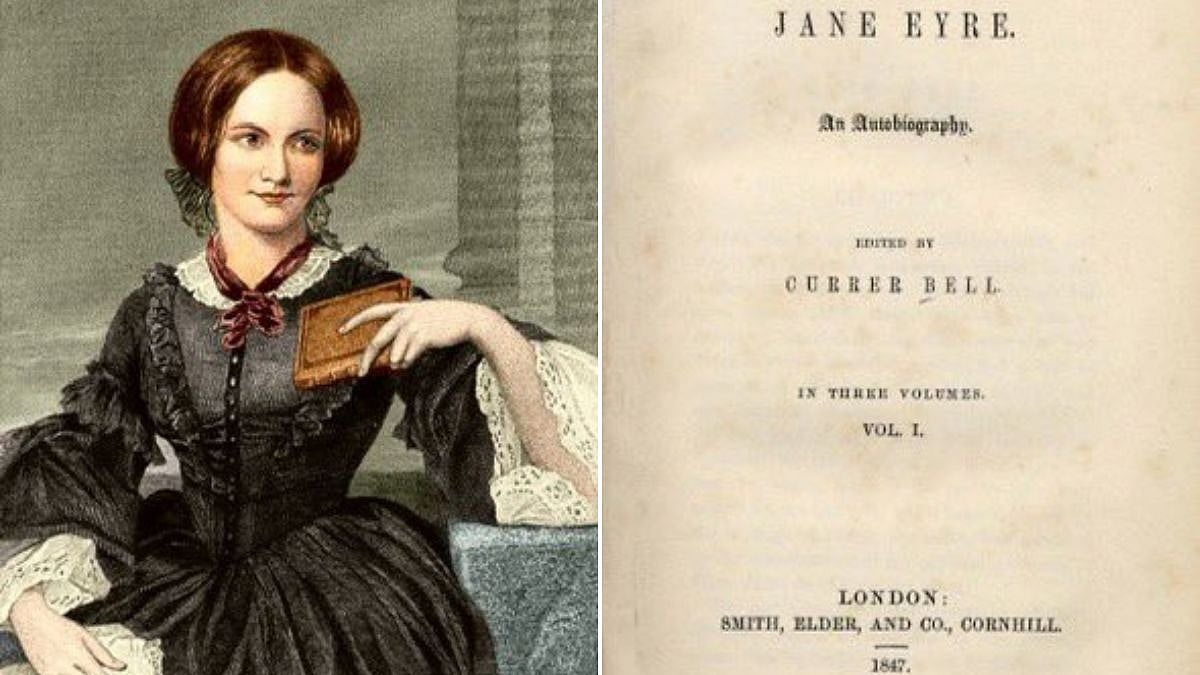
Charlotte Brontë’s legacy endures as Jane Eyre continues to inspire modern conversations on identity and feminism | X
The news is that there is a television adaptation of Charlotte Bronte’s Jane Eyre in the works to be released in time for the 180th year of the novel’s publication. This is the latest in the list of several screen projects based on the book, both faithful versions and modern-day retellings. The 210th birth anniversary of the author of this classic novel was on April 21, and it is interesting to explore why the writer and her best-known book have survived the test of time.
Enduring appeal of Jane Eyre
The complicated love story between Jane and the much-imitated brooding hero, Rochester, has enthralled readers and viewers for decades. At a time when female independence was unthinkable, Bronte’s heroine declared, "I desired liberty; for liberty I gasped; for liberty I uttered a prayer; it seemed scattered on the wind then faintly blowing."
Jane Eyre was one of the most influential books of its time, published under the male pseudonym Currer Bell, because women were not encouraged to write. “The novel received phenomenal critical acclaim, causing a sensation among Victorian readers,” writes Lucy Rahim in bookishly.co.uk.
“Most notable was the insight Brontë provided into the soul of her protagonist; her visceral examination of human emotion which influenced the modern English novel and the concept of the self. More generally, the novel is famous for the romance between the smouldering, Byronic Mr Rochester and the innocent, moralistic Jane, who share an explosive and agonising passion, a relationship that has set the blueprint for many a fictional couple ever since.”
Debate on feminist interpretation
She also quotes an acclaimed study by Sandra Gilbert and Susan Gubar highlighting the text’s ‘rebellious feminism’. “They saw Jane as a woman fighting against the social constraints of her era, refusing to comply with contemporary expectations of her gender, asserting that ‘women feel as men feel’. Jane is eloquent and forthright, curious and heroic: she survives mistreatment at the hand of her relatives, fights through starvation and poverty and even saves Mr Rochester from being burnt to death. But does that make her a feminist? Yes, Jane asserts her independence by refusing to marry Rochester when she discovers (spoiler!) that he keeps his wife locked up in the attic. But she does not then go on to a life of study or political activism but comes home, forgives him, and spends the rest of her days nursing him. This can be a bitter pill to swallow for us modern, feminist readers, who would like nothing more than for Jane to raise the banner for women’s rights in Westminster. Nonetheless, if Brontë does not give us the conclusion we desire, we should not ignore the encouraging assertions of female feeling made throughout the novel, proving that Jane does still have something to contribute to the conversation about equality.”
A fictional character, who does not conform to social rules for women, would also get some criticism. A reviewer in The London Quarterly Review wrote that “Jane Eyre was the personification of an unregenerate and undisciplined spirit, and that the character of Jane was destitute of all attractive, feminine qualities.”
The Brontë family and influences
Charlotte was the elder sister of Emily, Anne, and Branwell—an exceptionally talented family of writers and poets. Emily wrote the equally famous Wuthering Heights, and Anne penned Agnes Grey. Theirs wasn’t a particularly happy childhood—three of their siblings died young—but their father, Patrick Bronte, encouraged all his children to read widely, to take an interest in current affairs, and to enjoy music, art and poetry. She worked as a teacher and governess herself—two careers open for women at the time; the experience provided gist for her books.
Literary voice and social critique
Mellissa Lowes comments on victorianweb.org, “Without a doubt, Charlotte Brontë was progressive in her beliefs. In a time when women were considered little more than social adornments and bearers of offspring, Charlotte Brontë bravely contradicted society through her writing. Her novels speak volumes for the oppressed woman, thus establishing Charlotte Brontë as one of the first modern women of her time. To refer to Charlotte Brontë as a feminist would, however, be an insufferable misrepresentation. Unlike George Sand, who by appearances and her standard of living epitomised the nineteenth-century feminist, Charlotte Brontë withdrew from a society that would not entirely accept her and expressed her stifled ideals through her words. Slight in size, perpetually modest, it was Bronte’s suppressed spirit that gave way to her literary fantasies. She often likened herself to others in her oppressed situation—the ugly daughter or poor spinster, which she equated to slaves imprisoned by circumstances beyond their control.”
Her Jane was a fictional representation of herself and a barely concealed criticism of the way Victorian society oppressed women. “In the character Jane, Charlotte Brontë created a slight woman who was, in all respects, plain, modest, morally strong and intelligent. Like the author, Jane's isolation created her persona, providing her with the necessary survival skills. Jane does not need a man to make her feel worthy; instead, she carries her self-worth in her mind and determination. Through Jane, Brontë exhibits resentment toward a society that has scorned her, while maintaining a detachment toward humanity as a whole.” Lowes writes, citing Ellen Moers’s book, Literary Women. “Like Jane, Charlotte herself was determined to marry a man she respected. In fact, she refused several offers of marriage that would have afforded her a life of ease simply because the offers did not come from men she deemed her equal, or rather, she felt them intellectually and morally deficient. She believed that a good woman, like any decent man, could not live without self-respect. She believed passion a temporary emotion that could easily give way to disgust or, worse, indifference.”
Legacy and modern relevance
By today’s standards, Charlotte Bronte and her sisters may not be perceived as feminists, but they were rebellious for the times, and their novels have been inspirational. “Over the years, many have embraced the Brontës as proto-feminists—citing their portrayals of women’s experience in a flawed patriarchal society,” comments Ceris Ashton on theskinny.co.uk.
“Yet while the sisters’ novels can be seen as critiquing society’s treatment of women, Brontë scholar RB Martin once observed that there is no hint in Jane Eyre ‘of any desire for political, legal, educational, or even intellectual equality between the sexes’—a claim applicable to the other Brontës’ works. However, in their literary defiance of social convention, in their acknowledgement of women’s passion and sexuality, and in the independent heroines who forge their own destinies, the modern feminist might find much to admire.
Deepa Gahlot is a Mumbai-based columnist, critic and author.
RECENT STORIES
-
-
-
-
-