Budget 2026 And Its Political Significance For Poll-Bound States
Budget 2026 will be closely scrutinised for political messaging as four states head into elections. Beyond fiscal discipline and growth targets, the Union Budget may signal targeted incentives for poll-bound Tamil Nadu, West Bengal, Kerala and Assam, underscoring how economic policy and electoral strategy remain deeply intertwined.

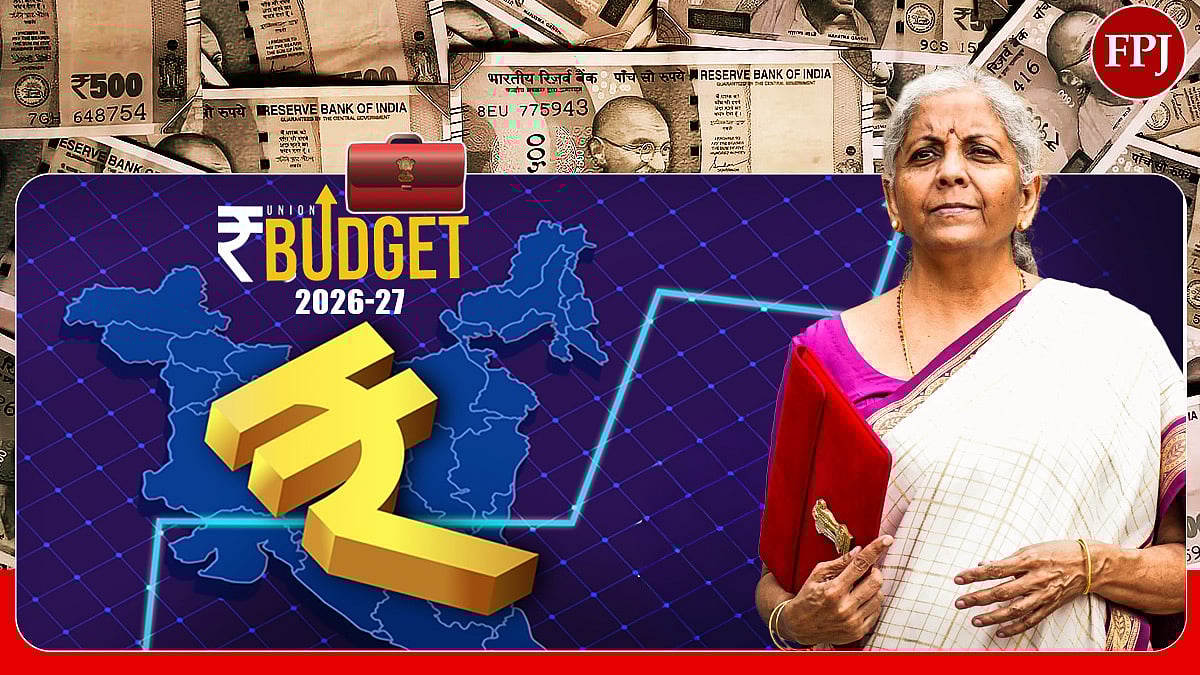
Union Budget 2026 is keenly watched for political signalling as Tamil Nadu, West Bengal, Kerala and Assam head into assembly elections | Representational Image
The Union Budget is the backbone of governance in a large and diverse country like India, where economic disparity varies considerably from one region to another and from one state within a region to another. The Budget outlines how the government plans to raise and spend public money in a financial year, and is crucial for converting policy promises into action and managing finite resources to drive economic growth and social welfare. However, beyond tax changes and spending announcements, the Budget document is never only about economics. The political dimension of a Budget can never be ignored. Precedents indicate that fiscal priorities are influenced by elections or other considerations to send a clear message to the electorate.
Focus on poll-bound states
Because the political dimension has a significant correlation to the annual accounting exercise, this year’s Budget, scheduled for Sunday, will be closely watched for signs of targeted allocations or policy incentives for four states going to polls in the next few months—Tamil Nadu, West Bengal, Kerala and Assam—even as the government stresses fiscal discipline and the Viksit Bharat narrative. Except for Assam, the other three poll-bound states have non-NDA governments. Political observers and analysts do not rule out electoral compulsions for the finance minister to announce targeted inducements for these states or signal responsiveness to regional demands, though prudence and not populism should be the underlying theme of the Budget.
Precedents of budgetary signalling
In recent years, the central government has been accused of overtly using budgetary signalling to influence poll narratives. For instance, the interim Budget in 2019 read like the BJP’s election manifesto for the Lok Sabha election held two months later. Another prominent example is Bihar, which went to polls in November and was a centrepiece of last year’s July Budget, with emphasis on agriculture, tourism circuits and infrastructure corridors. While political incentives or poll-driven “sops” cannot be ruled out entirely, economic experts stress that the government will be under pressure to manage the fiscal deficit at around 4 to 4.5 per cent of GDP. This implies that the scope for election-driven largesse devoid of economic justification will be limited, necessitating measured expansion in capital outlay rather than headline-grabbing handouts.
Balancing fiscal prudence and electoral strategy
It will be interesting to see whether politics dominates economics amid continuing uncertainty driven by global headwinds, Donald Trump’s trade war and the delay in the India–US trade deal. What will be closely watched is whether Union Finance Minister Nirmala Sitharaman announces new development measures for West Bengal and Kerala, where the promise of ushering in an era of rapid development aligns with the government’s Viksit Bharat narrative and could become the BJP-led NDA’s key poll plank. Stressing the message of a “double engine” government could help the BJP increase its vote share in Kerala and bolster its prospects in Bengal.
Tamil Nadu and West Bengal dynamics
Tamil Nadu presents a somewhat different case. It is the second-largest state in terms of GDP, trailing Maharashtra, with strong industrial output and a 9 per cent contribution to national GDP. It also ranks high in per capita income. Politically, however, the Hindutva party remains on a weak footing in both Tamil Nadu and Kerala, though its influence has been steadily growing. In West Bengal, the BJP has emerged as the principal challenger to the ruling TMC after its strong showing in the 2019 Lok Sabha polls and the 2021 Assembly election. Bengal is a state where the BJP has invested considerable political capital over the past decade in the hope of forming its maiden government, but the TMC has so far mounted a determined resistance.
Challenges in Bengal and Assam
Portraying the BJP as an “outsider” while accusing the Centre of “punishing” the state by choking financial resources, TMC chief and Bengal Chief Minister Mamata Banerjee has played the local card effectively. A tit-for-tat street fighter, she is no pushover, though she faces anti-incumbency in her fourth consecutive term. Announcements of large social and infrastructure projects could help the BJP set a development narrative based on the “double engine” argument in Bengal, but dislodging the TMC will remain a formidable challenge. In Assam, however, where the BJP has been in power for the past decade, the party may not require major project announcements to retain control, with the Congress-led opposition unlikely to pose a strong challenge.
Regional identities and welfare politics
Both Bengal and Tamil Nadu have vibrant political landscapes and strong regional identities. In the run-up to elections, experts expect an intensification of welfare programmes by respective state governments that could influence poll outcomes. In Kerala, fiscal constraints arising from high debt and social commitments may limit the state government’s ability to pursue populist measures. Still, as a fledgling political player in the state, the BJP may see some improvement in vote share if central incentives resonate locally. In Assam, with substantial central assistance already in place through flagship schemes, analysts expect the Union Budget to fine-tune incentives according to regional priorities.
Budget as an electoral instrument
Over the years, subsidies and welfare schemes have played a key role in state politics, with the Union Budget often setting the tone during election years. That tradition is unlikely to be broken on February 1, as the Budget will be presented well before the Model Code of Conduct comes into force. Despite ongoing debates over the fine line between genuine welfare and “freebies”, economic policy remains inseparable from political strategy. Given the turbulent relationship between the BJP-led Centre and the three poll-bound non-NDA states, Budget 2026 offers multiple levers to soften the Centre’s image, particularly in Bengal, where the discourse of “dues”, “funds” and “rights” under fiscal federalism dominates public debate.
Looking ahead
Considering the importance of the upcoming Assembly elections for the BJP, and the reality that fiscal policy is as much about politics as economics, it would not be surprising if the Budget features a slew of promises, scheme enhancements, project-linked funding and infrastructure support for the poll-bound states.
The writer is a senior independent Mumbai-based journalist. He tweets at @ali_chougule.
RECENT STORIES
-
-
-
-
-