Be It Dhol Or DJ, It's The Decibels That Matter
Noise pollution remains a complex issue involving law, culture and public rights. Courts have ruled that excessive noise is not protected as a fundamental religious practice and have upheld regulations limiting sound levels. While festivals and traditional performances remain important cultural expressions, authorities must ensure they do not violate citizens’ right to peace and health.

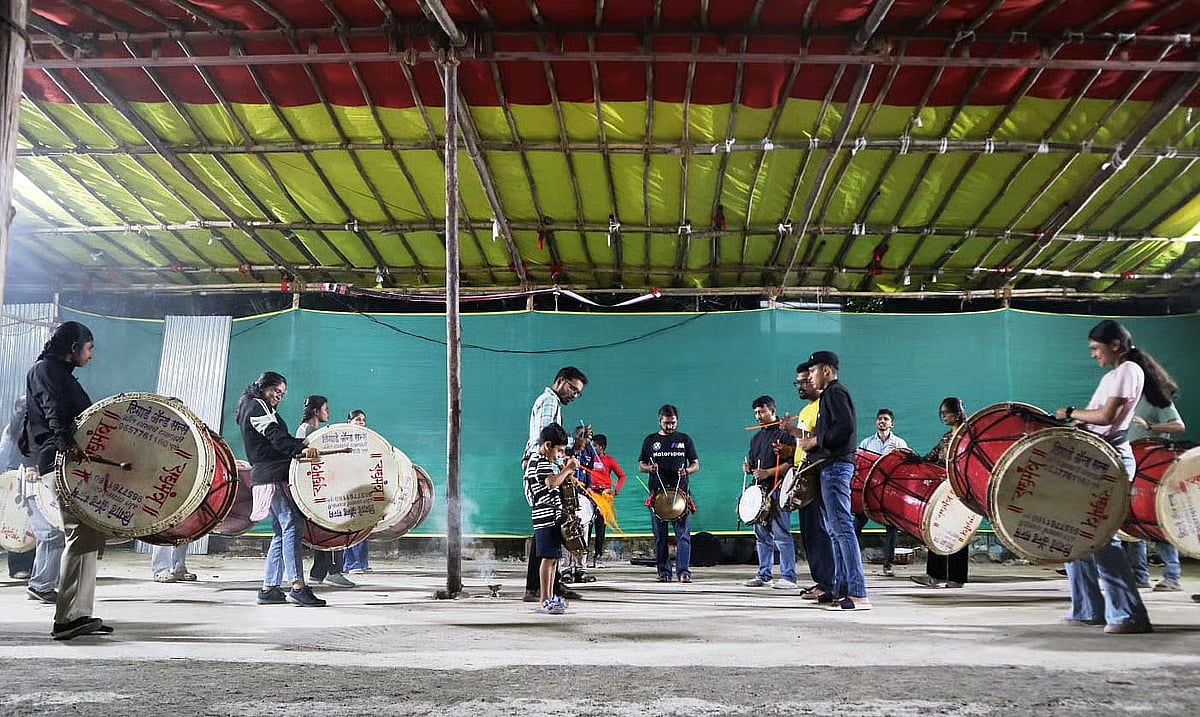
Be It Dhol Or DJ, It's The Decibels That Matter | File Pic
Noise is subjectively irritating, not objectively so. While the same debate is often framed as one between DJs and dhols, either form is integral to culture, if not religion. Its selective use, therefore, becomes a question of cultural comfort, equal opportunity and the livelihood of artists.
In Dr Mahesh Vijay Bedekar, the Bombay High Court dealt with the failure to implement the Noise Pollution Rules, 2000. It held that the culture of noise is not protected under Article 25 of the Constitution. The court further held that noise is also an air pollutant and directed that a toll-free number, including 100, be provided for complaints.
At the same time, the challenge to Rule 3, which was incorporated into Rule 5 and permitted the use of loudspeakers between 10 p.m. and midnight on or during cultural or religious festive occasions of limited duration, not exceeding 15 days in total in a calendar year, did not survive as a consequence of the decision in Noise Pollution (VII).
In the Dr M. Ismail Faruqui case, the Apex Court held that Article 25 of the Constitution does not extend to a right to worship at any and every place. In Church of God (Full Gospel), it held that courts may issue directions to control noise pollution even when such noise is a direct result of, and connected with, religious activities. In Om Birangana Religious Society, the Apex Court recognised the right to silence, sleep and freedom from unwanted sound.
Last year, Chhatrapati Sambhajinagar witnessed a DJ-free Ganesh immersion procession, following Solapur.
The Collector, Chairman, Member Secretary or Regional Officers of the Maharashtra Pollution Control Board have been authorised under Section 15 read with Section 19(a) of the Environment (Protection) Act to file complaints.
Noise pollution is both a scientific and cultural issue. The Rules prescribe ambient noise limits of 75/70 dB(A) Leq for industrial areas, 65/55 for commercial areas, 55/45 for residential areas and 50/40 for silence zones, during the day/night respectively. Silence zones extend at least 100 metres around specified institutions.
Rules 5(4) and 5(5) further provide that, even with permission, loudspeakers and public-address systems at public places cannot exceed 10 dB(A) above the prescribed ambient standard or 75 dB(A), whichever is lower. Privately owned sound systems at private places cannot exceed 5 dB(A) above the prescribed ambient standard at the boundary.
Noise pollution can also be dealt with under Sections 270, 292 and 293 of the BNS.
In the Dr Kalyani Mandke case, the NGT held that the total capacity of loudspeakers in a pandal should be limited to 100 W unless the pandal is more than 40 metres in length. It further directed the Police Department to ensure that the total number of Dhol Tasha Zanj members in each troupe during the Visarjan procession does not exceed 30.
The cultural experiment around noise is not called for.
Niranjan Deshpande is an advocate in the Bombay High Court
RECENT STORIES
-
-
-
-
-