Bangladesh Election Results: BNP Returns To Power As Awami League Collapses And Jamaat Emerges Strong Challenger
Bangladesh’s latest elections brought the Bangladesh Nationalist Party back to power, pushing the Awami League into political collapse while Bangladesh Jamaat-e-Islami made historic gains, signalling a major shift in the nation’s political landscape under Tarique Rahman as Sheikh Hasina remains in exile.

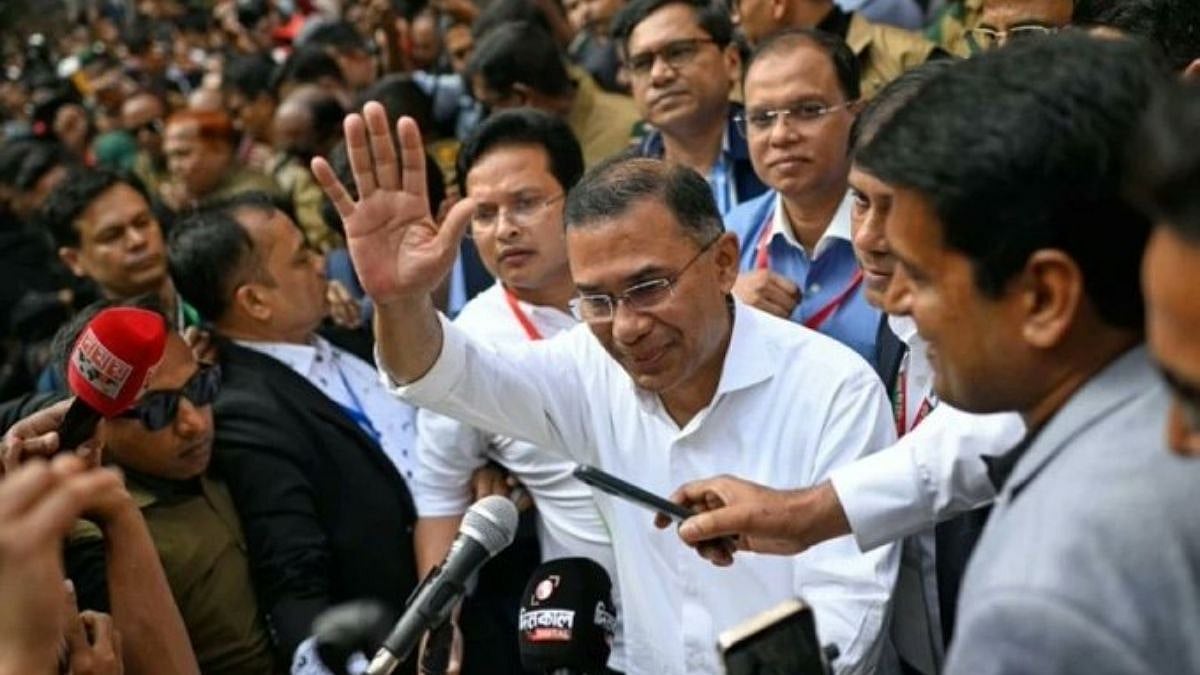
Bangladesh enters a new political phase as opposition forces reshape power after a landmark national election | X
As the Bangladesh Nationalist Party (BNP) prepares to steer the nation for the next five years, it inherits a landscape that is both hopeful and deeply restive. After nearly two decades of political stifling, the recent elections have been hailed by South Asian observers as a landmark moment for the country’s democratic health. However, the victory is merely the beginning of an arduous journey. For the BNP and its primary ally-turned-competitor, the Bangladesh Jamaat-e-Islami (JeI), this is a generational opportunity to consolidate their bases. For the exiled Awami League (AL), the horizon is bleak, yet a tiny window of resurgence remains, as BNP Chairperson Tarique Rahman has consistently signalled his commitment to a level playing field for all political actors.
A mandate of credibility
The success of the recent polls cannot be overstated. Michael Kugelman, a resident senior fellow at the Atlantic Council, characterised the election as "relatively peaceful", noting the absence of major rigging allegations and a solid voter turnout. Similarly, Thomas Kean of the Crisis Group remarked that this represents the first truly credible election in 17 years. For a nation that has endured eighteen months of visceral street violence and systemic instability, the mere act of a peaceful transition is a victory in itself. Yet, as the dust settles on the polling booths, the reality of governance begins to loom.
The Herculean economic task
The BNP’s primary challenge lies in the "harder part" of the job: economic resuscitation. The legacy of the previous administration is a paradox of high growth on paper but deep structural rot in reality. Bangladesh currently grapples with a soaring rich-poor divide, rising youth unemployment and a poverty rate that threatens to erase a decade of progress.
Investor confidence remains brittle, and while foreign currency reserves have shown marginal improvements recently, they remain wobbly. Rahman has promised to instil "fiscal discipline"; however, his poll promises were built on heavy welfare commitments. Specifically, the BNP has pledged cash and commodity support to roughly four million hyper-poor families. While socially necessary, this creates an immense burden on the national exchequer. Without a clear roadmap for revenue generation or a boost in the GDP—which has dipped significantly from its six per cent peak during the Awami era—the BNP risks a fiscal crisis within its first two years of governance. It expects to take the GDP rate over 5%, which is a seriously uphill task.
The geopolitical tightrope
Foreign policy will be the ultimate test of Rahman’s diplomatic acumen. He must engage with an Indian government that has historically viewed the BNP with scepticism—largely owing to the BNP’s uneasy relationship with Delhi between 2001 and 06, when it last ruled Bangladesh—and which currently hosts his primary rival, Sheikh Hasina. The stakes are immediate: the 30-year Ganga River water-sharing agreement is set to expire next winter. If a renewal is not secured, Bangladesh, as a lower riparian state, faces a catastrophic water shortage that would devastate its agricultural backbone, further damaging the economy.
The complexity is compounded by the Pakistan factor. There is a growing perception that resentment against Delhi’s perceived interference is pushing Dhaka toward Islamabad. Rahman must navigate this tightrope carefully. He needs to secure water and visa concessions from India while managing the domestic sentiment that favours a pivot toward Pakistan. In South Asian politics, this is a zero-sum game that rarely allows for a middle ground, yet the BNP’s anxiety may reduce if they can figure out a workable relationship.
The secular identity crisis
Perhaps the most virulent and invisible challenge lies in the ideological sphere. The past year and a half has witnessed the proliferation of extreme violent online campaigns. Certain factions have openly celebrated the rise of Al Qaeda-backed radicalism in the region, advocating for a Sharia-compliant regime and opposing the participation of women in public life.
Tarique Rahman has been vocal in defending his party’s secular credentials while being caught between a rock and a hard place. The 2024 July movement demanded a change in the system and the constitution, leading to a proposed referendum. While the BNP views this as a democratic necessity, there are fears that such a referendum could inadvertently weaken the secular fabric of the state, benefiting the religious right in the long run. Rahman may have to figure out a strategy that honours the revolutionary spirit of the July movement without surrendering the state’s pluralistic identity to extremist forces. This will restrict his main opposition, Jamaat-e-Islami, which is an emerging religious force, in coming years.
The rise of Jamaat-e-Islami (JeI)
While the BNP won the mandate to lead, the JeI-led alliance has emerged as the moral victor in the context of performance. Delivering its best-ever performance in history and led by the energetic chief Shafiqur Rahman, JeI has positioned itself as the true alternative to the secular status quo.
The JeI’s strategy is sophisticated. The cadre-based party has successfully marketed the idea that since Bangladesh has been ruled by two secular parties (Awami League and BNP) with mixed results, a "religious value-based" system deserves a trial. Many believe that JeI’s ‘golden age’ is just beginning, and it could be positioned to capture power outright within the next decade. Many diplomats too are of the view that JeI has a fair chance to capture power in the next five to ten years depending on its performance over the next five years.
Their current challenge is about transition. Traditionally a party of the streets, JeI now occupies 25% of the parliamentary seats—the highest in its history. It must now learn the tricks of parliamentary politics and legislative manoeuvring. If it can maintain its core ideological value system while proving to be an effective, disciplined opposition within the House, it will emerge as the primary threat to the BNP’s centrist-right platform.
Awami League’s prospects
The fate of the Awami League (AL) remains the most contentious variable in the new Bangladeshi political equation. Following the February 2026 polls, the party’s leader and former prime minister, Sheikh Hasina—currently residing in exile—has dismissed the election as a "farce". However, political analysts suggest that the AL and its leadership must move beyond rhetoric to survive.
The opportunity for the Awami League is rooted in a thumb rule of South Asian politics: anti-incumbency usually sets in within the first two to three years of a new mandate. As the BNP begins the difficult task of governing a restive nation, it will face the daunting challenge of managing a resurgent Jamaat-e-Islami (JeI). Despite its past alliances, the BNP is not a non-secular party by design; it is a nationalist entity that must now compete for the same right-of-centre and centrist votes that JeI is rapidly absorbing.
To counter the JeI’s growing influence—which saw the Islamist party secure a staggering 25% of seats—the BNP will eventually find it strategically necessary to allow, or even encourage, the presence of other secular and liberal parties. This is where the Awami League’s potential lies. Rather than retreating into exile-induced irrelevance, the party needs to assess if it can relaunch itself as a reformed, moderate force capable of grabbing the secular space that the BNP will be forced to concede.
A nation at the crossroads
Ultimately, the growth of Islamist parties indicates that the Bangladeshi electorate is no longer as averse to religious politics as it once was. Whether this is a permanent ideological shift or a temporary reaction to the perceived ‘secular authoritarianism’ of the previous regime remains to be seen. For Tarique Rahman and the BNP, the next five years will be a trial by fire. Their mandate is not merely about managing a crumbling economy, fixing the rich-poor divide or navigating the expiration of the Ganga River water-sharing treaty; it is about proving that a democratic, secular state can provide ‘bread, water and dignity’ that its people so desperately crave.
Bangladesh stands at its most critical juncture since 1971. The decisions made in the hallowed halls of Parliament over the next five years will determine if the country remains a pluralistic democracy or moves toward a new, religion-led political paradigm. The BNP has the mandate, the JeI has the momentum and the Awami League has the memory of power. How these three forces interact will define the future of South Asian geopolitics for a generation.
The writer is a senior journalist.
RECENT STORIES
-
-
-
-
-