'We Will No Longer Hold Elections': Nicaraguan President Daniel Ortega | VIDEO
Nicaraguan President Daniel Ortega said the country will no longer hold elections, arguing they could allow the opposition to regain power. Speaking during the Sandinista revolution anniversary event, he also announced plans for new laws to prevent political challengers, drawing further scrutiny over Nicaragua's democratic future.

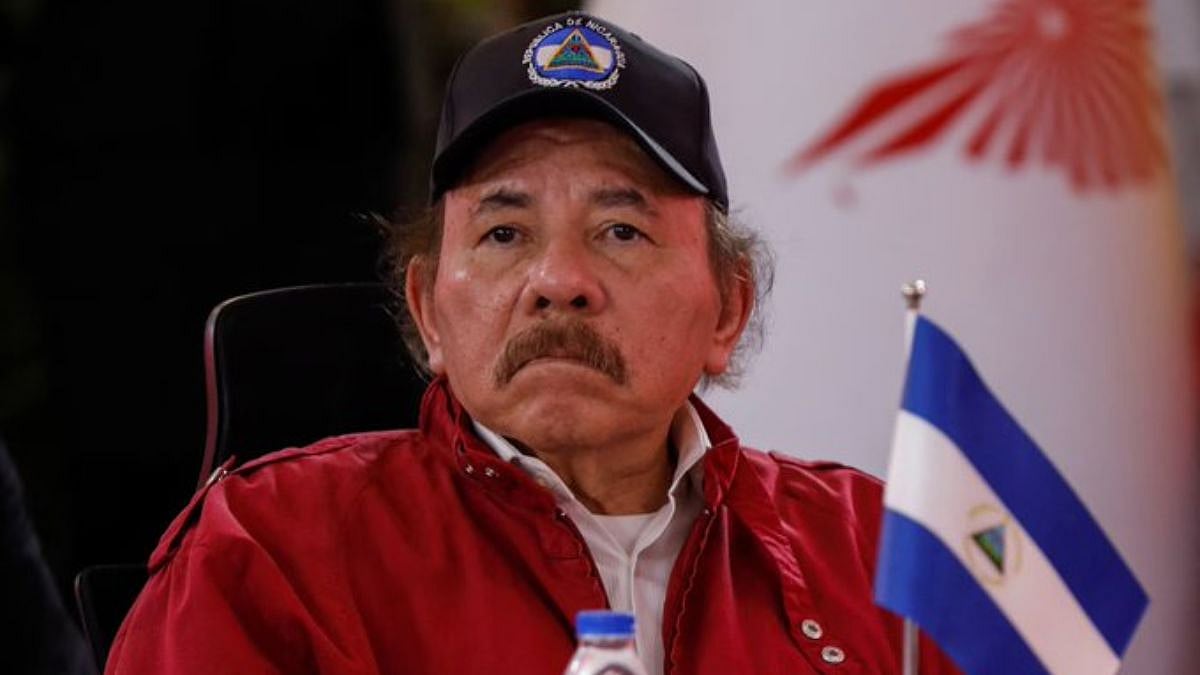
Nicaraguan President Daniel Ortega | X
Managua, July 23: Nicaragua has taken another decisive step away from democracy, with President Daniel Ortega declaring that the country will no longer hold elections to stop the opposition from returning to power.
The announcement marks one of the strongest public admissions yet by the 80-year-old leader that his government no longer intends to maintain even the appearance of electoral competition.
Speaking during the official ceremony marking the 47th anniversary of the 1979 Sandinista revolution on Sunday, Ortega said future elections would not be held because opposition parties could use them to "seize the government" and regain power.
He also said his administration would introduce new laws that would "build a wall" against what he described as coup plotters and traitors, The Guardian reports.
Democracy Under Fresh Scrutiny
Ortega, who has been in office since 2007, made the remarks after a 61-day absence from public appearances. Addressing thousands of state employees, whom local media reported had been pressured into attending the event, he said the government would work with the National Assembly and other institutions to pass laws aimed at preventing the opposition from challenging his rule.
The next presidential election is due next year, but Ortega did not clarify whether it would be formally cancelled or whether opposition candidates would simply be barred from contesting.
In reality, critics point out that competitive elections had already become impossible. Ahead of the 2021 presidential election, Ortega's government outlawed opposition parties and jailed all major opposition presidential hopefuls.
Political analysts say Ortega's latest declaration removes any remaining ambiguity about Nicaragua's political direction. Tiziano Breda, Latin America senior analyst at the NGO Armed Conflict Location and Event Data, said Ortega and his wife, Rosario Murillo, had effectively completed the country's transition into a family dictatorship.
Breda said the leadership appeared unwilling to allow even limited political space for dissent, suggesting concerns about weakening domestic support. Instead of organising another tightly controlled election, he said, the government had chosen to eliminate electoral competition altogether.
International Criticism Mounts
Nicaragua's democratic institutions have steadily weakened over the years. Last year, Ortega pushed through constitutional reforms extending the presidential term from five to six years while elevating Murillo, previously the vice-president, to the newly created role of co-president. The US has repeatedly referred to their administration as the "Murillo-Ortega dictatorship".
During the same speech, Ortega criticised the US over its January operation involving Venezuelan leader Nicolás Maduro. He claimed US forces stormed the presidential palace, killed members of Maduro's security team, many of whom he said were Cubans, and took Maduro and his wife, Cilia Flores, to the US. He described the operation as "monstrous".
Ortega also defended his decision to prevent the opposition from returning to power by blaming what he called coup plotters for the nationwide protests in 2018.
However, organisations including the UN have said the government's crackdown on those demonstrations left more than 350 people dead, wounded hundreds, jailed thousands and forced nearly one million Nicaraguans to flee the country.
International criticism of Ortega's government has continued to grow. Recently, the UN, the US, several human rights organisations and 30 former Ibero-American presidents blamed Ortega and Murillo for the death of Indigenous leader and four-term congressman Brooklyn Rivera, 73, who had spent nearly three years in prison. The US State Department described his imprisonment as unjust.
Also Watch:
ALSO READ
According to Human Rights Watch and other organisations, about 50 political prisoners remain in Nicaragua. Rights groups also say the government has stripped 546 people of their citizenship and shut down more than 5,600 non-governmental organisations, 29 universities and 58 media outlets, further tightening its grip on the country.
To get details on exclusive and budget-friendly property deals in Mumbai & surrounding regions, do visit: https://budgetproperties.in/
RECENT STORIES
-
-
-
-
-