How US-Israel And Iran War Is Offering Pakistan A Chance To Revamp Its Diplomacy From The 'Shadow Of Modi'
As Islamabad coordinates with Turkey and Egypt to secure a fragile pause in hostilities, Pakistan is leveraging its unique backchannel access to Washington and Tehran to rebrand itself as a vital regional stabiliser, stepping out from India’s long diplomatic shadow

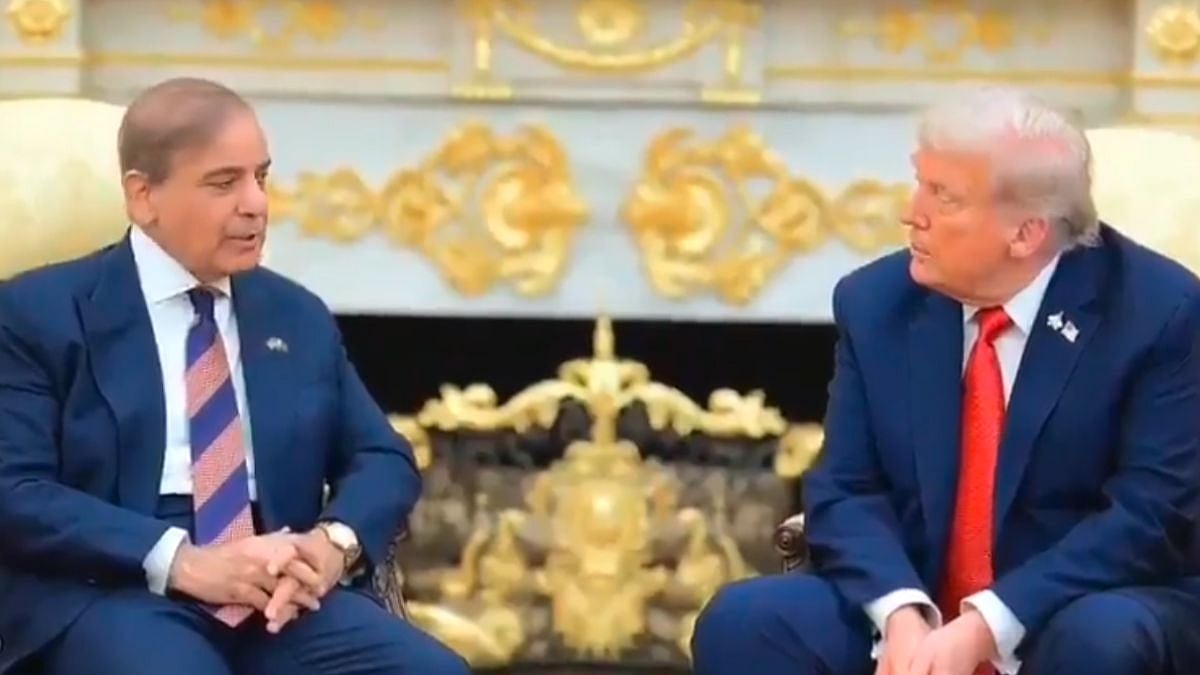
Pakistan PM Shehbaz Sharif and US President Donald Trump | X
For the better part of a decade, Pakistan’s international image has been defined by what it is not, it is not the rising economic powerhouse that India has become under Prime Minister Narendra Modi. While Modi has successfully positioned India with his VishwaMitra (global friend) diplomacy peg with deep strategic ties from Washington to Tel Aviv, Islamabad has often found itself relegated to the "grey zones" of global diplomacy, struggling with internal instability and a reputation for being a crisis-managed state.
However, as the US-Israel war against Iran enters its fourth week in March, Pakistan suddenly sees a rare opportunity to perform a high-stakes facelift. By positioning itself as a "net regional stabiliser," Islamabad is attempting to prove its strategic utility to the West and the Muslim world, effectively seeking to free itself from the long diplomatic shadow cast by its neighbour.
How Islamabad is using the Iran crisis to revamp its image
Pakistan has moved beyond routine rhetoric to take centre stage in a substantive de-escalation effort alongside Türkiye and Egypt. This "trio" has established a vital diplomatic conduit that was instrumental in securing a five-day conditional pause on US plans to "obliterate" Iranian energy and power infrastructure. According to reports from the Financial Times and Axios, this effort is being led by a unified front of Pakistan’s civilian and military leadership.
While Prime Minister Shehbaz Sharif engaged Iranian President Masoud Pezeshkian in multiple phone calls to stress the "urgent need for unity in the Ummah," Pakistan’s Chief of Defence Forces, Field Marshal Asim Munir, reportedly held a direct, "high-level" conversation with US President Donald Trump.
Trump, who has publicly referred to Munir as his "favourite field marshal," announced the delay in strikes after what he described as "very good and productive conversations" relayed through these backchannels.
What makes Pakistan a mediator
Analyst Michael Kugelman told Dawn that the Trump administration is "very fond" of the current Pakistani leadership, believing they "know Iran better than most." Furthermore, Pakistan shares a 900-km border with Iran.
Unlike more distant powers, Islamabad's interest in de-escalation is existential or else a total collapse of the Iranian state would trigger a refugee and security crisis that Pakistan cannot afford. This geographic reality, combined with "tacit prodding" from Saudi Arabia, gives Pakistan a level of regional weight that few others can offer.
Is Islamabad really becoming the "venue for peace"?
The most significant indicator of Pakistan's image revamp is the growing speculation that it could host direct talks between Washington and Tehran, although White House Press Secretary Karoline Leavitt on Monday called reports of Iran-US officials meeting in Pakistan 'speculative'.
Reports from Reuters and Axios suggest that a high-level US delegation—potentially including Vice President JD Vance, Special Envoy Steve Witkoff, and Jared Kushner—could meet with senior Iranian officials like Parliament Speaker Mohammad Bagher Ghalibaf in Islamabad as early as this week.
While the Pakistani Foreign Office officially labels these reports like the White House as "speculative," it has pointedly stated that "if the parties desire, Islamabad is always willing to host talks."
Serving as the site for a breakthrough in one of the world's most volatile conflicts would be a major diplomatic coup for Pakistan. Congress leader Jairam Ramesh in a tweet on Tuesday said that "Pakistan’s diplomatic engagement and narrative management has been markedly superior to that of the Modi Govt".
Is the Modi Factor pushing Pakistan to act so aggressively?
Islamabad recognises that the strategic geometry of the region is shifting. For years, Prime Minister Modi has successfully isolated Pakistan on the global stage by framing it primarily as a security threat and an economic laggard. By taking a lead role in the US-Iran backchannel, Pakistan is attempting to demonstrate that it possesses "strategic synergy" that a larger power like India cannot provide in this specific context.
As noted by scholars like Vali Nasr, this is a calculated move to prove that Pakistan is an "indispensable actor" rather than a "problem child." By successfully relaying messages between Special Envoy Witkoff and Iranian Foreign Minister Abbas Araghchi, Pakistan is proving it can "walk the talk" on global peace, a role that aligns with its desire to be seen as a responsible nuclear power and a stabilising force in the 21st-century trade routes.
What are the risks of this 'war and peace' strategy?
This diplomatic "facelift" is a dangerous tightrope walk. The five-day pause is conditional and limited strictly to energy assets while fighting continues across multiple other fronts. If the backchannel fails and the US proceeds with its threat to destroy Iran's power grid, Pakistan’s mediation efforts could be rendered moot, leaving it vulnerable to the very instability it is trying to prevent.
Additionally, Iran continues to publicly deny any direct negotiations to maintain its "principled positions," even as it reviews points sent through mediators.
For Pakistan, the stakes are high. A successful 'Islamabad Summit' if it materialises would be a definitive rebranding of the nation’s global standing, but a failure could leave it caught in the crossfire of a regional conflagration.
RECENT STORIES
-
-
-
-
-