AI Facial Recognition System In Police Vans At Delhi Jantar Mantar Protest Sparks Privacy Breach Debate - VIDEO
AI-powered facial recognition technology deployed by Delhi Police at Jantar Mantar has sparked privacy concerns after viral videos showed surveillance systems identifying individuals. Police say the technology matches faces only against a criminal database, not Aadhaar, though its data source remains undisclosed. Protesters fear profiling and long-term data storage

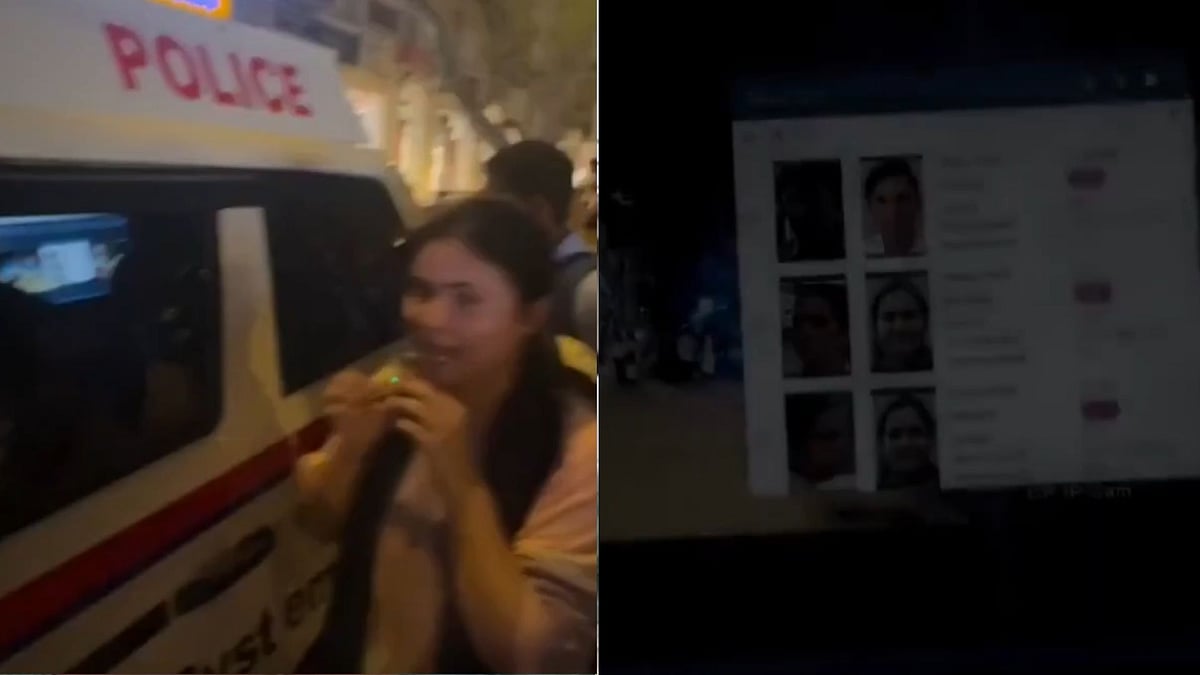
The use of artificial intelligence-powered facial recognition technology at Delhi's Jantar Mantar protest site has ignited a nationwide debate over privacy, surveillance, and the limits of law enforcement technology. Videos circulating widely on social media appear to show Delhi Police operating advanced surveillance vehicles capable of monitoring crowds in real time.
The footage has led to widespread speculation, with many users wondering whether the technology is connected to the Aadhaar database. However, there is currently no official evidence or confirmation that Aadhaar data is being used by Delhi Police for facial recognition at the protest venue.
Viral videos raise concerns over identity tracking
Several videos shared online appear to show a live surveillance setup inside a police vehicle equipped with multiple display screens. The system reportedly receives feeds from high-resolution CCTV cameras and displays photographs, names, and other personal details of certain individuals after scanning faces captured in the crowd.
Although the videos have fueled claims that Aadhaar records are being accessed, nothing visible in the footage confirms such a connection. Authorities have also not stated that the surveillance system is linked to Aadhaar or any other national identity database.
The unanswered question remains: if the information shown on the monitoring screens is not sourced from Aadhaar, which database is powering the facial recognition system?
Delhi police says AI targets criminal database, not every Protester
According to police officials, the technology is designed to identify individuals who already exist in law enforcement records rather than monitor every person attending the protest.
"We have a large database of criminals, with their pictures. So, we run facial recognition on the footage that is received from the various CCTVs in the area, to see if it flags any face the software matches with someone on our criminal database," a senior police officer said.
Officials maintain that the objective is to strengthen security, detect wanted individuals, and prevent potential law-and-order issues during large public gatherings.
Ikshana vehicle at the centre of the surveillance operation
The facial recognition system is housed inside the Ikshana surveillance vehicle, a mobile monitoring platform introduced by Delhi Police ahead of the 2023 G20 Summit.
Two such vehicles have reportedly been stationed near the protest venue. One acts as a mobile command centre, collecting live footage from CCTV cameras installed around Jantar Mantar. The second vehicle processes the incoming video using AI-powered facial recognition software that compares captured faces against images stored in police databases.
The deployment reflects the increasing use of smart surveillance technologies by law enforcement agencies for crowd monitoring and public security.
Protesters fear long-term consequences
Many students participating in the demonstrations say the heavy surveillance has created an atmosphere of discomfort. Some protesters have begun covering their faces, expressing concern that images recorded during the demonstrations could later be stored, analysed, or used in ways that may affect their future.
One UPSC aspirant explained that participants were concealing their identities because they feared being profiled while pursuing careers in government service.
The concerns extend beyond identification. Protesters have also questioned how long video recordings collected during the demonstrations will be retained by authorities and whether the footage could be used in future investigations unrelated to the protest itself.
No fixed timeline for deleting footage
Police officials have indicated that there is currently no predetermined period for deleting surveillance footage gathered during protests. According to a senior officer, recordings may be preserved if they are considered relevant to ongoing or future investigations.
The absence of a publicly disclosed retention policy has added to concerns among civil rights advocates about data storage, transparency, and accountability.
Privacy challenge reaches Delhi high court
The surveillance measures have now become the subject of legal scrutiny. A petition filed before the Delhi High Court argues that continuous video monitoring and facial recognition at protest sites infringe upon citizens' fundamental rights to privacy and peaceful assembly.
Delhi Police has defended its actions, stating before the court that videography at Jantar Mantar is intended solely to maintain law and order, ensure public safety, and assist with security arrangements-not to conduct mass surveillance of peaceful protesters.
RECENT STORIES
-
-
-
-
-