Warming Oceans & El Niño May Have Intensified Cyclone Arnab, Experts Say
Cyclone Arnab reportedly made landfall along the Andhra Pradesh and Yanam coasts on October 28, with winds of up to 135 kmph and gusts reaching 150 kmph. Experts warned that warmer oceans can fuel rapid cyclone intensification and heavier rainfall. They urged stronger disaster preparedness and climate-resilient infrastructure to reduce economic losses and protect vulnerable communities.

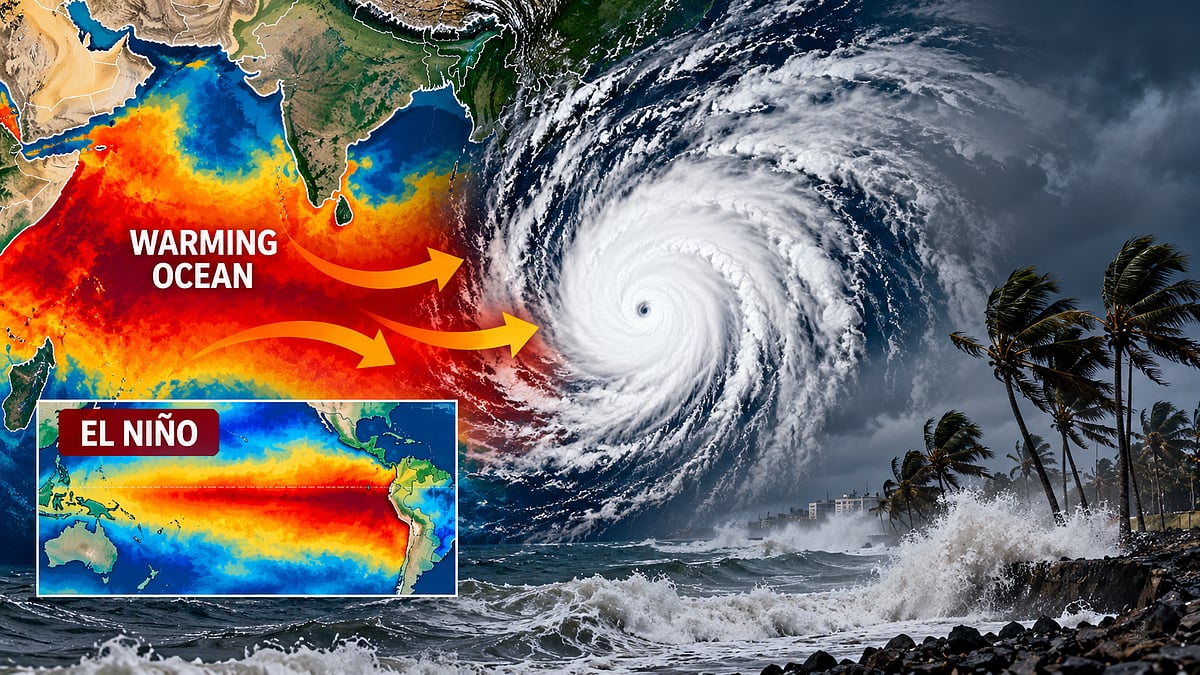
Warming Oceans & El Niño May Have Intensified Cyclone Arnab, Experts Say | Representational Image
Lucknow: Cyclone Arnab's rapid intensification before making landfall along the Andhra Pradesh coast has highlighted the growing risks posed by warming oceans and climate change, with experts warning that rising temperatures can amplify the intensity of storms and the rainfall they bring.
Arnab developed into a tropical depression on October 24 and strengthened into a very severe cyclonic storm by October 26, according to the India Meteorological Department (IMD). It made landfall along the Andhra Pradesh and Yanam coasts in the early hours of October 28, with sustained wind speeds of 125 to 135 kmph and gusts reaching 150 kmph.
Warming Oceans Fuel Cyclone Intensification
Meteorologists said unusually warm sea surface temperatures, along with the possible influence of El Niño, may have contributed to the storm's rapid intensification.
“Warmer-than-normal sea surface temperatures and potential influence of El Niño conditions may have contributed to its intensity,” said KJ Ramesh, former director general of the IMD.
He said global warming does not cause El Niño, but the background warming of the climate system can amplify the effects of extreme weather. Warm ocean waters supply the heat and moisture required for storms to strengthen.
Akshay Deoras, research scientist at the National Centre for Atmospheric Science at the University of Reading, UK, said conditions in the Bay of Bengal were highly favourable for cyclone formation.
A warmer atmosphere can hold more moisture, increasing the potential for intense rainfall, he said, adding that the prevailing conditions could result in more spells of heavy rain.
Record Ocean Temperatures Raise Concerns
The report cited record-high global ocean temperatures in September 2026, when the ocean surface temperature anomaly averaged 1.10 degrees Celsius above the reference average. This was the fourth consecutive month in which the global ocean temperature departure reached a new record.
Sea surface temperatures in the central equatorial Pacific were around 30 degrees Celsius from October 22, according to data from the US National Oceanic and Atmospheric Administration cited in the report. Elevated temperatures were also observed across parts of the Indian, Atlantic and Southern oceans.
Scientists say cyclone intensity depends not only on surface temperatures but also on the volume of warm water beneath the ocean surface. Higher ocean heat content can provide additional energy for storms, while a warmer atmosphere can increase rainfall intensity.
Observations cited in the report indicate that 38 per cent of cyclones in the North Indian Ocean have undergone rapid intensification since 2000, compared with 22 per cent in the north-western Pacific. The report also notes that changes in the location of cyclone formation in the Bay of Bengal can allow storms to spend longer over warm waters before reaching land.
Economic Losses Remain A Challenge
The increasing threat from severe weather has renewed calls for stronger disaster preparedness and climate-resilient infrastructure.
Kirishna S Vatsa, member and head of department at the National Disaster Management Authority, said India had made progress in reducing cyclone-related deaths through improved forecasting and preparedness. However, economic losses continued to be a major concern.
Cyclones are no longer confined to coastal hazards, as their effects can extend into the interiors of states through heavy rainfall, flooding and disruptions to essential services, he said.
Andhra Pradesh Faces High Cyclone Risks
Andhra Pradesh remains particularly vulnerable. According to state government figures cited in the report, around 2.9 million people are vulnerable to cyclones, while 3.3 million live within five kilometres of the coastline. Between 1891 and 2019, 184 cyclones of various categories, including depressions, crossed the state's coast, according to figures attributed to the IMD.
Anjal Prakash, professor of public policy at FLAME University and an author for the Intergovernmental Panel on Climate Change, said the indirect costs of disasters often remain outside immediate damage assessments.
Disruptions to transport, electricity, businesses and livelihoods can continue long after a storm has passed. Informal workers, small businesses and farmers are particularly exposed because many lack insurance and access to formal recovery support.
Prakash called for climate risks to be factored into infrastructure planning, including stronger electricity grids, flood-resistant roads, resilient housing and crop insurance. He also stressed the need to prepare for cascading disruptions, such as power outages and transport failures following a cyclone.
Global Storm Activity Raises Concern
The report also points to heightened tropical cyclone activity worldwide during September 2026. According to NOAA data cited in the document, 19 tropical storms formed during the month, nine reached tropical cyclone strength and six attained major tropical cyclone intensity.
Also Watch:
The eastern North Pacific recorded eight tropical storms, seven hurricanes and five major hurricanes, according to the report.
It also cites a World Weather Attribution analysis of Hurricane Polo, which rapidly intensified to Category 5 strength. The analysis found that climate change had a greater influence than El Niño on the storm's potential intensity.
For India, experts say the challenge extends beyond forecasting a cyclone's path and preparing for landfall. Strengthening infrastructure, protecting vulnerable communities and ensuring support for affected livelihoods will be critical to reducing the economic and social costs of increasingly severe weather.
RECENT STORIES
-
-
-
-
-