In Conversation With Susmit Sen On Data, AI Governance And Trust In Critical Minerals
Susmit Sen discusses the evolution of Data and AI Governance, explaining why trustworthy AI depends on strong data, accountability and oversight. He highlights the growing role of governance in critical minerals, responsible AI, agentic systems and helping businesses innovate while managing risk.

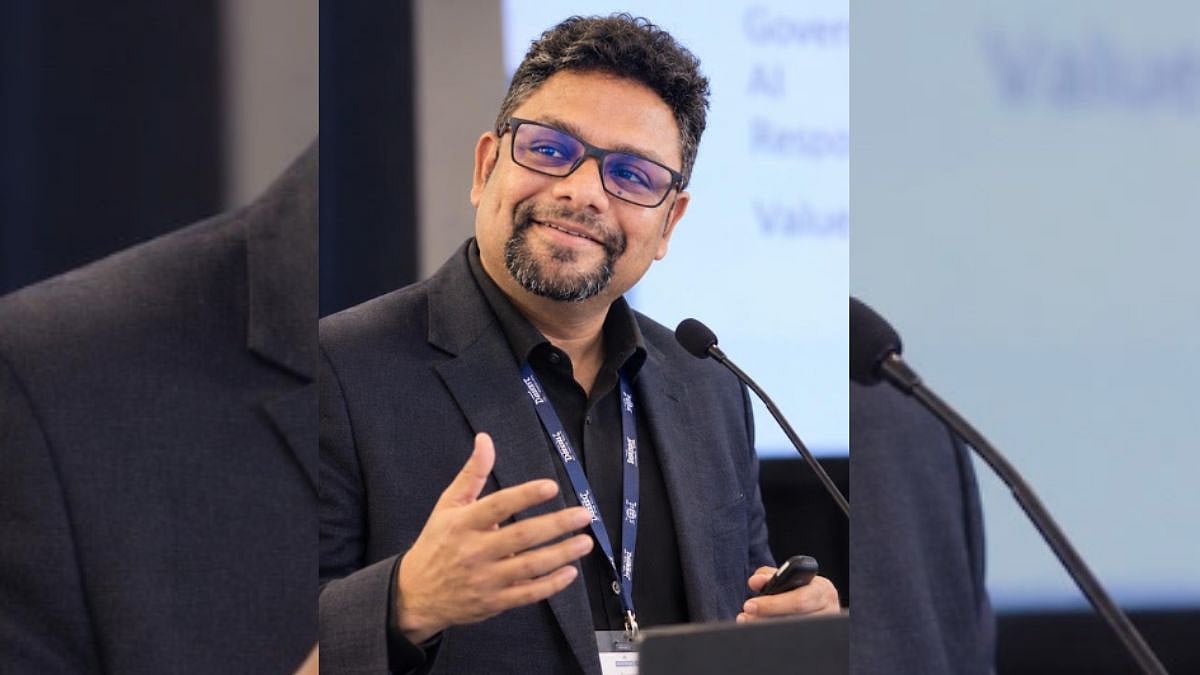
In Conversation With Susmit Sen On Data, AI Governance And Trust In Critical Minerals | File photo
From building enterprise Data Governance at scale to leading Data Management, Data Governance and AI Governance at scale in world’s largest companies, including Albertsons which is one of the largest grocery chains in US, Susmit Sen has spent decades at the intersection of data, technology and business decisions. Having led governance and technology initiatives across diverse sectors — including Supply chain & Grocery at Albertsons and the public sector at ICBC — he now operates in one of the world's most strategically vital industries: critical minerals.
We reached out to him to understand his perspective on trustworthy AI and the future of governance. Here’s what he shared.
Q&A
Question: Susmit, First of all congratulations for your recent FIP designation, you have spent almost two decades working across data, technology and governance, You continue to lead one of the most difficult subject area in this industry called Data & AI Governance initiatives when it comes to aligning stakeholders and today you lead Data & AI Governance at one of the world’s largest mining and critical minerals company. How did this become your area of focus?
Answer: Thank you! I have always worked where data, technology and business decisions meet. AI Governance is a natural progression of that journey. My view is simple: AI is only as trustworthy as the data, processes and controls surrounding it. In critical minerals, where decisions can have operational, economic, environmental and strategic consequences, that principle becomes even more important.
Question: Critical minerals have moved from being an industry topic to a global strategic priority. Where does AI fit into that bigger picture?
Answer: Critical minerals are fundamental to electrification, batteries, renewable energy and advanced technologies, so their importance extends well beyond the resources sector. AI can help organizations extract more value from enormous volumes of geological, operational, environmental and supply-chain data. But there is an important distinction: AI can accelerate a decision; it cannot automatically make the decision trustworthy. That is where governance matters.
Question: You often connect Data Governance with AI Governance. Why can't organizations treat them as separate disciplines?
Answer: Because AI inherits the strengths and weaknesses of its data. Data Governance asks whether data is accurate, understood, appropriately used and trusted. AI Governance extends that question to the decisions and outcomes produced using that data. A data-quality problem that was once inconvenient can become an AI-risk problem when machines start making or influencing decisions at scale.
Question: What is the biggest misconception you see around AI Governance?
Answer: That governance is primarily about creating policies. Policy is necessary, but it is not the outcome. I prefer to start with the use case: What are we trying to achieve, and what could go wrong? From there, governance should determine the right level of controls, accountability and oversight. Good governance should create confidence to innovate — not bureaucracy that people try to avoid.
Question: Your role spans both Data and AI Governance. How is that changing as AI becomes more capable?
Answer: The boundary is becoming increasingly blurred. Traditional Data Governance focused on ownership, quality, lineage, access and lifecycle. AI introduces additional questions around models, training data, explainability, monitoring, human oversight and outcomes. With generative and agentic AI, we also must govern behavior. It is no longer enough to ask, “What did the system produce?” We must ask, “What did it do, why did it do it, and who was accountable?”
Question: What makes AI Governance particularly challenging in mining and critical minerals industry as a whole?
Answer: Complexity. You have operational technology, enterprise platforms, geological and engineering data, environmental information, supply chains and multiple jurisdictions coming together. The governance challenge is therefore not simply controlling AI; it is creating enough trust and accountability across a very interconnected ecosystem without slowing down the business.
Question: Do you think AI is changing what it means to be a data leader?
Answer: Absolutely. Data leaders can no longer focus only on whether data exists. They increasingly must ask whether it is fit for an AI-driven decision. That moves the role closer to strategy, risk and business value. I believe the next generation of data leaders will need to connect data, AI, technology and business rather than manage them as separate domains.
Question: Agentic AI appears to be the next major shift. What concerns you most?
Answer: Agency. When AI moves from recommending an action to taking one, the governance equation changes. We need clarity around authorization, access, accountability, traceability and human intervention. An agent should not simply be intelligent; it should be appropriately bounded. The more autonomy we give AI, the more deliberate our governance needs to become.
Question: We often hear about AI in terms of efficiency and productivity. Do you think organizations are measuring the right things?
Answer: Not always. I think the conversation needs to move from “Where can we use AI?” to “Where can AI create measurable value responsibly?” Efficiency is only one dimension. We should also consider decision quality, risk reduction, resilience, speed, trust and the quality of the business outcome. AI Governance should help organizations measure those outcomes, not simply approve the technology.
Question: Responsible AI is another term that is becoming increasingly common. What does responsible AI mean to you beyond compliance?
Answer: Compliance sets a floor; responsible AI should set a standard. It means understanding the impact of an AI system, knowing where human judgment matters, protecting people and data, being transparent about limitations and having someone accountable for the outcome. Responsible AI is ultimately about making sure that capability does not outrun responsibility.
Question: And where do people fit into an increasingly AI-driven enterprise?
Answer: At the center. Technology can automate decisions, but accountability cannot be automated away. The future isn't necessarily humans versus AI; it is humans working with increasingly capable systems, with the right boundaries and oversight. The organizations that understand that relationship will be much better positioned to use AI responsibly.
Question: You have worked across diverse industries. How have those experiences shaped your thinking?
Answer: They gave me different lenses on the same problem. I worked across different organizations and industries. At Albertsons, I built enterprise Data Governance at scale. At ICBC, I managed technology, automation and emerging initiatives in a public-sector environment. I am now leading Data & AI Governance within a globally significant critical-minerals organization. That journey taught me that governance cannot simply be copied; it must be engineered for the organization.
Question: After more than 20 years in the field, where do you think AI Governance is ultimately heading?
Answer: From policy to capability. Governance will increasingly become part of how AI products are designed, deployed, monitored and retired — not a review that happens after the fact. And I don't see governance as the brake on AI. I see it as the steering wheel. The organizations that get it right will be able to move faster because they understand what can be trusted, where the boundaries are and who is accountable.
RECENT STORIES
-
-
-
-
-