IBM CEO Arvind Krishna Calls For India’s AI Sovereignty At Davos
Speaking at the World Economic Forum (WEF) annual meeting in Davos, Krishna said smaller, specialised AI models are rapidly closing the gap with large foundational models and now account for nearly 95 per cent of consumption.

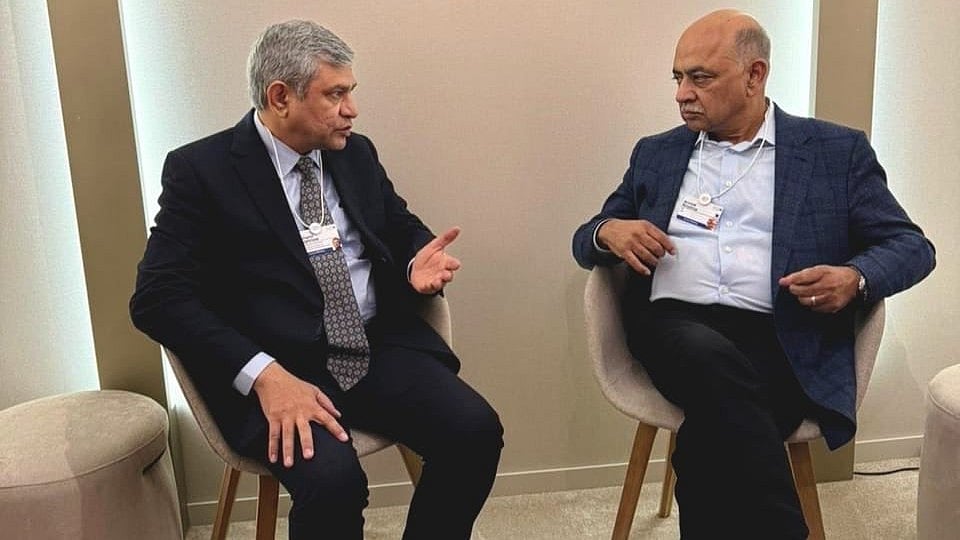
Davos: IBM Chairman and CEO Arvind Krishna has urged Indian entrepreneurs to build local capabilities across semiconductors, model development and real‑world applications to build stronger “AI sovereignty” in India.
Speaking at the World Economic Forum (WEF) annual meeting in Davos, Krishna said smaller, specialised AI models are rapidly closing the gap with large foundational models and now account for nearly 95 per cent of consumption.
“The underlying ecosystem whether it's semiconductors, model building, or usage applications is where the big breakthroughs will come for India,” he told NDTV Profit.
IBM Chairman mentioned China's DeepSeek as an example of how success in the AI sector follows multiple failed attempts. He argued that specialised AI systems trained on local datasets from Indian healthcare, defence and legal domains are necessary for building effective domestic applications, also urging a culture of experimentation and tolerance for failure.
Union IT Minister Ashwini Vaishnaw, speaking at the same event, said that Indian IT companies have already pivoted toward AI boosting the hiring in the sector. India is currently developing 12 AI models, and at least four of them will be launched soon, Vaishnaw said.
India focuses on a suite of focused, sector‑specific small models that can deliver productivity gains across industries, the minister said, adding that the country attracted $70‑billion investment into AI‑enabling infrastructure, including data centres from prominent companies such as Google and Amazon.
The minister further highlighted the progress in India's semiconductor programme. The country has 10 fabrication plants under construction, three pilot projects underway, and four units expected to begin commercial operations in 2026.
The government's recent move to allow private sector participation in nuclear power generation can provide the scale of energy required for large‑scale AI computing, he added.
ALSO READ
A recent report highlighted rapid expansion in electronics and semiconductors, with India’s semiconductor demand projected to grow from $33 billion in 2022 to $117 billion by 2030.
The government's Rs 7,280 crore scheme for Sintered Rare Earth Permanent Magnets (REPM) is expected to act as a force multiplier for India’s broader semiconductor manufacturing ambitions by ensuring secure access to strategic materials.
RECENT STORIES
-
-
-
-
-