KKR Beats MI, CSK To Become IPL’s Most Valuable Franchise In Fanatic Sports-Hurun Report
Fanatic Sports and Hurun India unveiled India’s first multi-league sports valuation report, spanning 55-plus franchises and more than 1,300 athletes across six competitions. The study valued Kolkata Knight Riders at up to ₹22,500 crore, ahead of Mumbai Indians and Chennai Super Kings. Founder Raghav Gupta said India is becoming a sports economy fuelled by rising fan spending and expanding fandom.

Fanatic Sports and Hurun India today announced the inaugural edition of the Fanatic Sports Hurun India’s Most Valuable Sports Teams 2026 — India's first comprehensive report spanning franchise valuations, athlete metrics, ownership ecosystems, and performance data across six professional Indian sports leagues: the Indian Premier League (IPL), Women's Premier League (WPL), Indian Super League (ISL), Pro Kabaddi League (PKL), Hockey India League (HIL), and Prime Volleyball League (PVL). Covering over 1,300+ athletes across 50+ nations competing in 55+ franchises, this report offers an unprecedented, data-driven panorama of Indian sports.
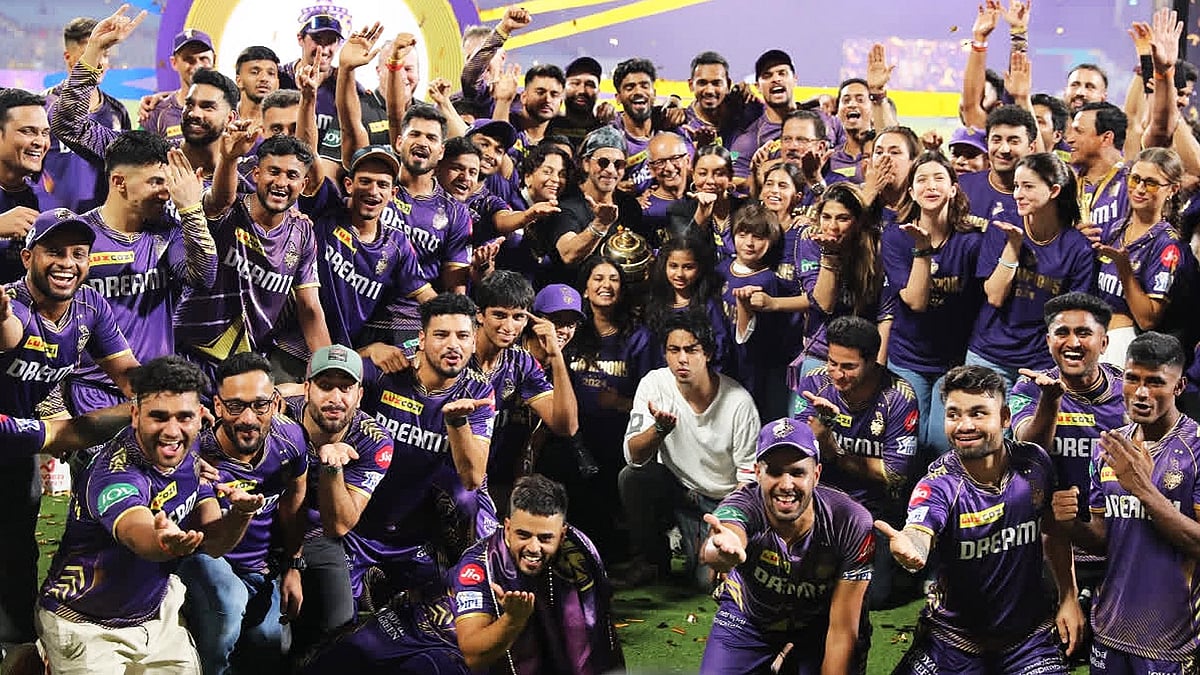
Kolkata Knight Riders leads IPL valuations at INR 19,200 Cr – INR 22,500 Cr, followed by Mumbai Indians (INR 18,400 Cr – INR 21,700 Cr) and Chennai Super Kings (INR 18,400 Cr – INR 20,700 Cr) — each a five-time IPL champion. The average IPL franchise valuation is projected to reach USD 15 Bn by 2032, placing individual Indian teams on par with top-tier NFL franchises.
Mr. Raghav Gupta, Founder & CEO, Fanatic Sports, said: “The Fanatic Sports Hurun India’s Most Valuable Sports Team 2026 Report is an incredible initiative, marking a defining moment for the business of sport in India.”
“Having built Fanatic Sports over the last decade, it has been a privilege to take Indian fans across the globe to experience world-class hospitality at the biggest sporting events. Today, our ambition is equally clear — to bring fans from around the world to India, to witness the country’s biggest franchise tournaments, landmark matches, and defining sporting moments.”
“What this report makes unmistakable is why India is no longer just a cricket country, and with other sports growing on the side, it is becoming a sports-embracing nation. Home to 17.8% of the world’s population, India will not just participate in the global sporting economy — it will reshape it. The business of sport here is becoming its own asset class, with its own audiences, its own economics, and its own heroes.”
“The report also highlights how the Indian leagues are expanding beyond major metros, with Tier 2 & 3 cities embracing it like never before — signalling a future where fan movement, fandom, and sporting culture will reach newer markets.”
“Finally, it is becoming evident how women are central to India’s growing sports revolution, shaping key aspects of it. The future of Indian sport will be built as much in women’s leagues, women’s matches, and women’s fandom, as anywhere else.”
“Fanatic Sports is proud to have partnered with Hurun India on this report, and even prouder to contribute towards India’s sporting revolution.”
Mr. Anas Rahman Junaid, Founder and Chief Researcher, Hurun India, said: "The Fanatic Sports Hurun India's Most Valuable Sports Teams 2026 is the most ambitious sports intelligence initiative we have ever undertaken at Hurun India — and it arrives at the precise moment the Indian sports industry deserves to be treated as a serious asset class, not a cultural footnote. Today, the average Indian's primary entertainment spend still goes to cinema. That is a function of income, not preference. India's per capita income has just crossed the $2,500 inflection point that economists associate with the shift from essential to discretionary spending, and it is projected to approach $5,000 by 2030, with an estimated 165 million Indians earning over $10,000 a year. When discretionary income doubles, spending on sports — tickets, merchandise, OTT subscriptions, fantasy platforms, fan travel, youth academies — does not grow linearly. It compounds. Every mature sporting economy, from the United States to China, has followed the same curve: as the middle class crosses this threshold, sport moves from being something you watch occasionally to something you spend on consistently. India is standing at the base of that curve right now. The democratisation of Indian sport — six professional leagues, 1,323 elite athletes drawn from 504 cities and 181 states and provinces — is what will give this wave its triple-multiplier effect. Talent is being manufactured at the grassroots. Capital is arriving at the top. And a billion-plus consumers are about to have the income to participate in between."
RECENT STORIES
-
-
-
-
-