FPJ Exclusive | 'People Call Me An Old Man': Para Swimmer Shams Aalam Opens Up On Personal Struggles And His Fight To Secure Asian Para Games Selection
Indian para swimmer Shams Aalam opened up to The Free Press Journal about overcoming a spinal tumour, financial struggles and setbacks on his journey to the Asian Para Games. Despite facing criticism, training disruptions and family challenges, Aalam secured his place in the Indian team. He is targeting a medal and personal best in Aichi-Nagoya, while eyeing the 2028 Los Angeles Paralympics.

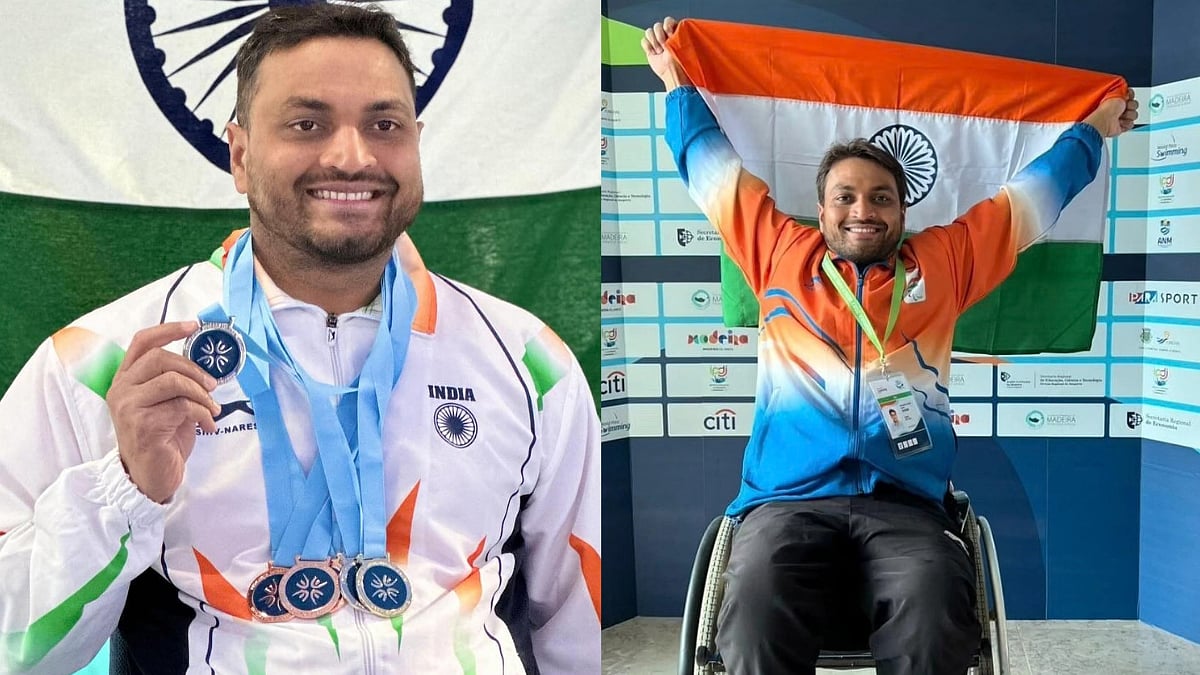
Shams Aalam/Instagram
Indian para swimmer Shams Aalam has endured several hardships on his journey to representing the country at the Asian Para Games. From growing up in a village in Bihar, where swimming was a childhood pastime, to battling a spinal tumour, navigating financial difficulties and overcoming repeated setbacks in training, Aalam’s journey has been marked by resilience and determination.
Speaking to The Free Press Journal ahead of the Asian Para Games in Aichi-Nagoya, Japan, Aalam opened up about his childhood, his sporting journey, the challenges he faced after his injury and his ambitions for the upcoming competition.
Excerpts...
1. Could you tell us a little about your childhood and upbringing? What was Shams Aalam like as a child?
Shams Aalam was a very ordinary boy, just like any other boy of his age. As a child, he was like all the other boys. There was nothing particularly interesting or extraordinary about him. However, one thing was that he was very interested in sports and outdoor activities from childhood. We used to play games like kabaddi, gilli-danda, throwball and other such games.
And, of course, there was swimming, or rather, bathing in water. We didn't know how to swim formally, but there was a pond right next to our house, which is still there. We used to go to that pond to bathe after playing games like kabaddi and other outdoor sports. After playing, we would feel hot, especially during the summer, so we would jump into the pond and bathe to cool ourselves down.
2. You have spoken about how you were fond of swimming from a very young age. What are your earliest memories of swimming, and when did you realise that you had a natural love for the sport?
As I told you earlier, when it comes to swimming, we used to return home after playing games, such as cricket. Whenever we felt hot after playing, we would go straight to the pond and bathe there. At that time, taps and hand pumps were not very common in villages. There were very few hand pumps, and even drawing water from them was quite difficult. So, instead of going through all that trouble, we preferred bathing in the pond right in front of our house. There was already water in it, so we would simply jump in, bathe and come out. That is how it all happened. It was something very natural for us. Many people in our village knew how to swim, and we never needed any special training to learn it.
Speaking of memorable experiences, I now recall something from my childhood. Back then, our houses were made of mud. Whenever some of the mud came off the walls, we had to repair them. For this, we would collect mud from the bottom of the pond. We would take a vessel and use it to scoop out mud from beneath the water. There was a particular kind of smooth, slightly firm clay at the bottom of the pond that gave a shine when applied to a surface. We would use that clay to coat the walls of our houses, almost like polishing them. We would do this whenever there was a special occasion or festival in the village, such as Eid.
In that way, we became even more comfortable spending time in the water. We actually enjoyed being in the water more and more. We also used to catch fish. Whenever there were floods, the entire area around our village would get flooded, and we would catch fish in the floodwaters. I remember that my elder sister, Gulnaz, and I used to go fishing together. There are three rivers in our village, and we would go to these rivers to catch fish. These were some of the ways we spent our childhood. We played a lot in and around the water, and we have always had a strong connection with it.
3. You also developed an interest in martial arts after moving to Mumbai. What attracted you to martial arts, and how important was sport in your life growing up?
Absolutely. Martial arts have played a very important role in my life. I come from a family with a sporting background. My grandfather was a wrestler himself. My mother used to tell me stories about him, including his achievements, successes and various experiences. Listening to those stories inspired me a great deal.
Unfortunately, when I was in Mumbai, I couldn't find the kind of opportunities I was looking for. Around that time, martial arts and action films were becoming increasingly popular. Films starring Akshay Kumar and Ajay Devgn were being released, and we also used to watch Bruce Lee's films. I was greatly inspired by these films, and that motivated me to start learning karate.
In 2006, I officially earned my black belt in the Shito-Ryu style of karate. I have won more than 50 medals at national and international competitions. I have been a university champion, a champion at the school games and a national champion as well.
Karate was something I was extremely passionate about. I would wake up early in the morning to train. There is a place called Sion Fort in the Dharavi area of Mumbai, where I used to go for my training sessions. We also had karate classes at Our Lady of Good Counsel High School, located right next to Sion railway station. Our coach was Rumesh Murkar, and I trained under his guidance. During that period, I also participated in numerous competitions. Karate was a major part of my life, and I devoted a great deal of time and effort to training and competing.
4. During your training, you started experiencing severe back pain, which eventually led to doctors discovering a tumour in your spine. How difficult was it to suddenly see your sporting dreams put on hold?
Yes, absolutely. I started experiencing difficulty walking sometime around 2010. At that time, I was also a national karate champion and had been selected for a karate competition. However, I was experiencing severe pain and discomfort because of a tumour. When I consulted a doctor, I was told that the tumour could be removed through surgery and that I would be perfectly fine within a week.
Naturally, we trust doctors, so I went ahead with the operation. Unfortunately, I had no idea that the surgery would be mishandled. The operation was not successful. As a result, I had to undergo a second operation almost two or three months later. A post-operative MRI scan revealed that the tumour was still in the same place. So, I would say that because of the doctors' negligence or mismanagement, my life became much more difficult.
But overall, I am happy now. At least I am able to do things and remain active. I believe that all the training and practice I had undergone during my karate days helped me tremendously in my recovery. The physical fitness, discipline and training I had developed through karate played an important role in helping me recover. And, of course, swimming also helped me a great deal.
5. How supportive have your parents and family been throughout your journey, especially during the most difficult phases of your career?
This is a very tough question. Yes, some members of my family supported me. But I want to be honest about something. When you go through a difficult situation like this, some of the first people to distance themselves from you are often members of your own family. That happened to me as well.
If there was one person who helped me selflessly, without expecting anything in return, it was my mother. She genuinely helped me a great deal. As for my father, I have to be honest. He did not really support me. Rather than helping me, he mostly demoralised me. My other brothers also discouraged and demotivated me, and eventually they left me. These were some of the difficulties I had to face.
However, my elder sister supported me a lot. Her children also helped me. So, it was a mixed experience. Some people stood by me, while others did not. But when it came to financial support, nobody really helped me. Whatever little money I had, I used it to manage things myself. Emotionally, though, my elder sister, her children and her husband supported me. I am very thankful to them. That is pretty much it. There is nothing more to add.
6. Did swimming feel different to you after your injury, or did being in the water give you the same sense of freedom you had experienced as a child?
Absolutely. Swimming makes me feel free. Whenever I swim, I feel really good, and it reminds me of my childhood. Swimming has given me so many things in life. First of all, because of my condition, I lost control over my bladder and bowel functions. Swimming has helped me regain some degree of control over them. Of course, I cannot say that I have recovered 100% control, but whatever improvement I have experienced has been very helpful. In particular, practising the butterfly stroke has helped me regain some control over these functions.
Secondly, even today, whenever I am in the water, I feel much more comfortable. Sitting in a wheelchair for long periods or even lying in bed for too long becomes extremely uncomfortable and irritating for me. This is because my nervous system and blood circulation do not function as they normally should. As a result, I experience burning sensations in my legs, which cause considerable discomfort and difficulty.
However, when I am in the water, I feel much freer and more comfortable. I do not experience those burning sensations. My legs also remain flaccid, which means I do not experience excessive spasms or spasticity. All these things make swimming extremely beneficial for me. More importantly, beyond winning medals, swimming plays a much bigger role in my life. It helps me stay fit and keeps me in a good condition, both mentally and physically. So, for me, swimming is not just a competitive sport. It is also an extremely important part of my rehabilitation. It has helped me tremendously in maintaining my physical fitness, mental well-being and overall quality of life.
7. You have now been selected for Asian Para Games. What does it mean to you to represent India at the Asian Para Games once again?
Obviously, selection is a very big achievement for any athlete. Every athlete works extremely hard, and getting an opportunity to compete on a major platform like the Asian Games is a matter of great pride and happiness. However, if you look at the selection process this time, things have become much more difficult. Last time, we had a contingent of around 390 people at the Asian Para Games. But this time, the number has been reduced significantly. There are only around 150 athletes, and approximately 180 people in total, including escorts, team officials and others.
So, the size of the contingent has been reduced considerably. The Government of India has become very strict about the selection process. Only those athletes who have finished among the top six in the qualifying competitions over the past one-and-a-half years have been selected. This has made the selection process extremely tough. In fact, getting selected itself is now a major achievement. I would say that the athletes who have been selected are not simply lucky. They are genuinely excellent athletes who have earned their places through outstanding performances. They have made it into the team because of their performances. Otherwise, they would not have been selected. This time, there is no question of sending someone simply because they are involved in para sports. That is absolutely not how the selection process works anymore.
This time, I mean, I have faced a lot of tragedies and difficulties in my life. I remember when I first qualified for the Asian Games in 2018. I was in Mumbai at the time, practising at a swimming pool in Dharavi. Unfortunately, the pool management stopped me from training there. A video of mine had been shot at the pool, and I had obtained all the necessary permissions for it. Despite that, the management refused to allow me to continue practising there because of the video. After that, I faced tremendous difficulties. I was living in Dharavi, near Sion, and had to travel all the way to the Mahatma Gandhi Swimming Pool in Dadar for training. I would travel there in my wheelchair, which was extremely difficult.
Despite those challenges, I qualified and participated in the Asian Games. Something similar happened to me this time as well. In March, I suddenly encountered difficulties again. I was removed from the place where I had been training. However, this time, I was in a slightly better financial position. Although my training was interrupted for almost a month, I eventually found another swimming pool in Delhi and rented a house nearby. I then resumed my training. So, I faced difficulties this time too, but the difference was that I was financially more stable. I used my own money to cover my training expenses. Even now, I am funding my training entirely on my own. I do not have any sponsors. Whatever savings I had accumulated have helped me continue my preparations. My wife, Saba, has also been a tremendous source of support. She prepares my meals and helps me with my dry-land exercises, while I focus on swimming.
This time, the situation became particularly difficult just a few days before our selection trials in June. I suffered severe burns across my back. I had been undergoing speed training, which caused pain in my back. To relieve the pain, I placed a hot pad on it. My wife was not at home at the time. Because I have no sensation in that part of my body, I could not feel the heat and did not realise that my back was burning. As a result, I suffered extensive burns and could not swim for almost two to two-and-a-half weeks. Eventually, I recovered and resumed training. Even now, life continues to be difficult.
After that incident, my father suffered a head injury in our village and became unwell. I had to travel there to see him. When I returned, my mother-in-law suffered a stroke. My wife is currently not with me because she is taking care of her mother. And that is what is important. Despite all these difficulties, I have been selected for the Indian team. I am extremely thankful to God that I have been able to achieve this. I am also grateful to everyone who supported me throughout this journey. At the same time, I must admit that many people have tried to demotivate me. There are several people here who call themselves coaches or administrators, but instead of encouraging athletes, they act as major sources of discouragement. I have been bullied many times because of my age. People call me an old man and make fun of me. There have been plenty of taunts, insults and negative comments. People say all kinds of things.
But I put all those things aside and concentrate on my sport. I am extremely happy that I have continued to improve my performance, slowly but steadily. No matter what people say, my performance is the reason I am in the Indian team. Nobody here gives anyone anything for free. I have earned my place. It is not because of someone's influence, connections or any special arrangements. There is no such favour involved. I am in the Indian team purely because of my performance. People can call me an old man or say whatever they want. It makes absolutely no difference to me. I am a champion, and that is why I am in the team.
8. What are your specific targets for Aichi-Nagoya? Are you looking at a medal, a personal best, or both?
Absolutely. My training is going well at the moment, and I am aiming for both a medal and a personal best. Most importantly, that is my immediate target. At the same time, I believe that my current swimming classification is not appropriate for my condition. I feel I should be placed in a lower classification. Right now, I compete in the S5 category. I am hopeful that after these Asian Games, I will be able to get my classification reviewed. Hopefully, I will be placed in a lower category that better reflects my physical condition. Looking ahead, I am preparing for the 2028 Los Angeles Paralympic Games and the World Championships. I am determined to give my best and try to win a medal for my country.
9. Finally, if you could go back and meet the young Shams from Rathos who loved swimming and martial arts, what would you tell him about the journey that lies ahead?
I think, honestly, I miss my childhood a lot. When I was a child, I had no particular ambitions or expectations. I never thought about becoming a state champion, a national champion or an international champion. I didn't even know much about such things. We simply played sports because we enjoyed them. We played for fun, without worrying about achievements or results. And I believe those childhood experiences have actually helped me reach where I am today.
The swimming I did as a child, without any technical knowledge, formal training or professional guidance, has helped me tremendously in my life. If I could go back to my childhood and speak to my younger self, I would tell him, "Shams, stay exactly the way you are. Keep playing with the same carefree attitude you had as a child. Enjoy every moment." Because, honestly, these days I sometimes feel that I am not able to enjoy my life the way I used to. There is so much pressure now. There are family responsibilities, worries about my loved ones, concerns about my performance, the pressure of getting selected for the Indian team, and the constant criticism and taunts from people.
There are so many things to worry about. None of these pressures existed during my childhood. Looking back, I feel that the experiences I enjoyed as a child were among the happiest moments of my life. I genuinely believe childhood was the best time. So, if I could give some advice to the younger Shams, I would say, "Keep enjoying life the way you always have. Have fun, play sports and be happy." I would also tell him to continue helping his friends, just as he used to. Keep helping your family, your mother, your father, your brothers and your sisters, just as you did when you were young. Stay happy, listen to your parents, even when they scold you occasionally, and continue enjoying life.
RECENT STORIES
-
-
-
-
-