Six Reasons The Pawar Family Lost Control Of Pune & Pimpri-Chinchwad Municipal Corporations
Until 2017, the family enjoyed multiple dominant stints in both the Pune Municipal Corporation (PMC) and the Pimpri-Chinchwad Municipal Corporation (PCMC)

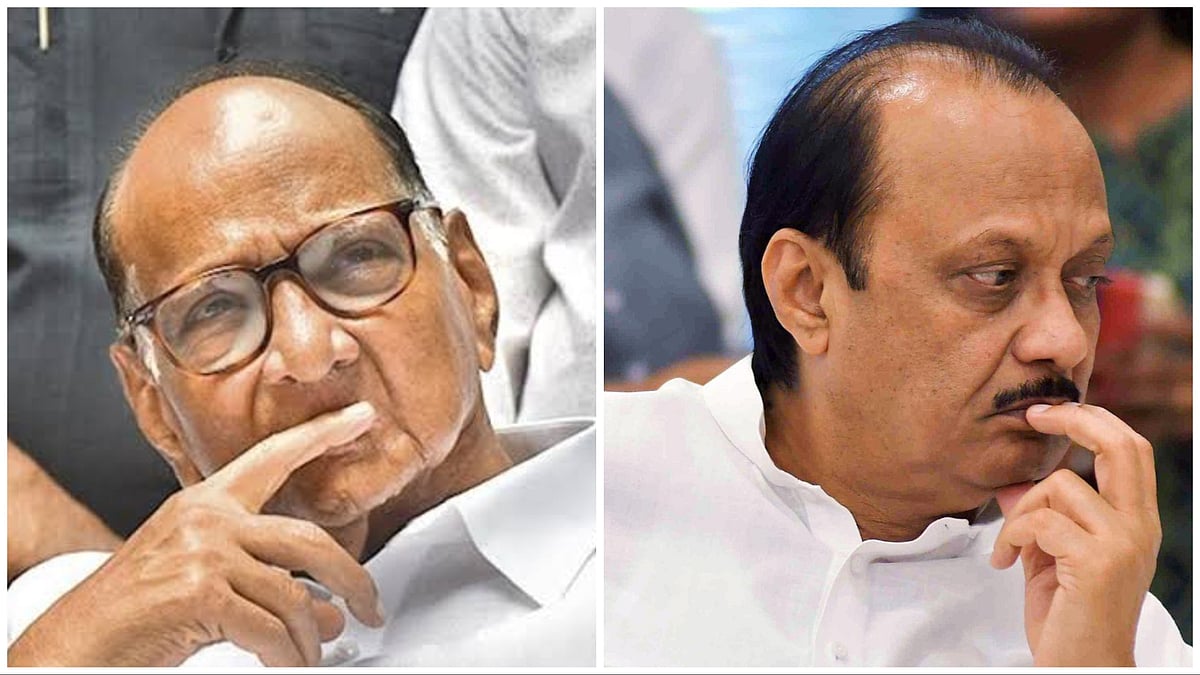
Six Reasons The Pawar Family Lost Control Of Pune & Pimpri-Chinchwad Municipal Corporations | Sourced
Pune: Pune and Pimpri-Chinchwad, the twin cities, were once firmly under the control of the Pawar family, led by former Maharashtra Chief Minister and former Union Minister Sharad Pawar. Until 2017, the family enjoyed multiple dominant stints in both the Pune Municipal Corporation (PMC) and the Pimpri-Chinchwad Municipal Corporation (PCMC).
However, the Bharatiya Janata Party (BJP), implementing its ‘Operation Lotus’ strategy across Maharashtra, has managed to wrest control of both civic bodies from the Pawar family for two consecutive terms.
The loss of influence unfolded in phases -- first with the Lok Sabha seats, followed by the Maharashtra Legislative Assembly constituencies, and eventually the urban civic bodies. Although the Pawar family continues to retain a presence in the rural parts of the Pune district, the BJP has steadily begun breaching those strongholds as well.
Ahead of the 2026 municipal corporation elections, despite the NCP and BJP being allies at the state and central levels, both parties announced a “friendly contest” in Pune and Pimpri-Chinchwad.
In a significant political development, the estranged uncle-nephew duo of Sharad Pawar and Ajit Pawar came together, with both NCP factions uniting against the BJP. Despite the reunion, an aggressive campaign, and a concentrated focus on the twin cities, the NCP delivered an underwhelming performance.
While the Congress managed a partial revival in Pune by winning a respectable number of seats, the NCP -- which had targeted a majority in both civic bodies -- fell far short of expectations and was nowhere close to securing control. A closer look reveals familiar patterns from both the 2017 and 2026 elections.
Although the polls were held after nearly nine years -- and with civic bodies remaining without elected representatives for four years -- the NCP failed to break the BJP’s grip. In PMC, the BJP secured a massive 119 seats out of 165, while in PCMC it won 84 of the 128 seats.
The Ajit Pawar-led NCP faction emerged as a major disappointment, collectively managing just 30 seats in Pune. In Pimpri-Chinchwad, Ajit Pawar’s faction won 37 seats, while Sharad Pawar’s faction failed to win a single seat. In comparison, during the 2017 elections, the NCP had won 37 seats in Pune against the BJP’s 97, while in PCMC the NCP had secured 36 seats compared to the BJP’s 77.
With it now clear that the Pawar family’s influence over the civic bodies has waned -- at least for the time being -- here are the key reasons behind the decline:
1) BJP’s Growing Influence: The political character of Pune and Pimpri-Chinchwad has changed significantly since the 2010s. With a large influx of migrants and outsiders moving to the Twin Cities for employment and education, many people have settled here permanently. Since 2014, the BJP has emerged as the single largest political force in the region.
With a growing population of non-local voters participating in the city’s electoral process, familiarity with traditional local power centres diminished. Many of these voters were less connected to established regional leaders. Instead of that, they gravitated towards a party with a stronger national presence. This shift in voter demographics worked in the BJP’s favour, and it helped the party consolidate its dominance in both Pune and Pimpri-Chinchwad civic elections.
2) Defections Within the NCP: Ahead of the 2017 civic elections, the NCP suffered major setbacks in Pune with the exit of key leaders. It included former Rajya Sabha MP Sanjay Kakade and former MLA Sunil Tingre. Kakade was subsequently appointed as the BJP’s election in-charge for Pune in 2017, while Tingre contested the polls on a Shiv Sena ticket. The departure of both leaders significantly weakened the NCP’s organisational strength in the city. Although Tingre later returned to the NCP, his absence during the crucial election period was keenly felt. In Pimpri-Chinchwad, Ajit Pawar lost two of his most trusted lieutenants -- the late MLA Laxman Jagtap and Bhosari MLA Mahesh Landge. Both leaders joined the BJP ahead of the 2017 elections and went on to register victories.
Even in the run-up to the 2026 elections, the BJP continued its strategy of what many term “influx politics”. Several leaders from the NCP and other parties are switching sides in both Pune and Pimpri-Chinchwad.
3) The Cost of the NCP Split: The split within the NCP in 2023 inflicted serious psychological and organisational damage on the party in Pune. It could not be undone by a last-minute reunion ahead of the 2026 civic polls. For nearly two years, cadres loyal to Sharad Pawar and Ajit Pawar were locked in open confrontation. This included incidents from street-level clashes and battles over party offices to sustained attacks on social media. When both factions reunited for the PMC elections, the bitterness at the grassroots level remained unresolved.
This resulted in poor coordination on polling day, with workers from both factions reluctant to cooperate, share voter data, or mobilise support for each other’s candidates. The lack of booth-level synergy led to a significant erosion of the traditional “Pawar vote” in several wards. Simultaneously, prolonged infighting created a leadership vacuum, and it allowed the BJP to consolidate floating voters well in advance.
4) Ajit Pawar’s Dual Personality: The confusion among Punekars was further compounded by Ajit Pawar’s dual political positioning. As a Deputy Chief Minister in a BJP-led government at the state level, he was contesting the BJP (rather aggressively) in the civic elections. Voters perceived this as political inconsistency. Although many might not have liked the national party, they preferred the BJP's clear ideological stance.
NCP’s tactical and convenience-driven alliance was deemed unstable. On top of that, Ajit Pawar aggressively targeted BJP leaders, including Union Minister of State and Pune MP Murlidhar Mohol, Maharashtra Minister Chandrakant Patil and Bhosari MLA Mahesh Landge. Although some thought he had a point, people remembered it too well that Ajit Pawar will be their ally after the elections.
5) Ward Formations -- The Underrated Reason: Since 2017, both the PMC and PCMC have followed a four-member ward system. Until 2002, both civic bodies had a single-member ward system, mirroring the broader trend across the state at the time. In 2007, the then Congress–NCP government benefited from the introduction of a three-member ward system. No clear political advantage emerged from the two-member ward system implemented in the 2012 elections.
Explaining its political impact, a senior journalist, speaking on condition of anonymity, said, “When a ward elects four corporators, nearly 70,000 to 80,000 voters are choosing the same four candidates. With such a large electorate and multiple contenders, it becomes extremely difficult for individual candidates to reach out personally to voters. As was evident in 2017 and again in 2026, voters tended to choose the party symbol rather than the individual. Since the BJP is currently the largest party at both the national and state levels, the four-member ward system has worked to its advantage.”
6) Urban Voters Feel Anti-Incumbency to Date: Congress has ruled the nation for years. NCP, along with Congress, had ruled the state for years until 2014. The urban voters still have the anti-incumbency sentiment against them. In major urban corporations in Maharashtra, including Mumbai, Navi Mumbai, Thane, Nagpur, and now Pune and Pimpri-Chinchwad, the BJP has a share in power. This anti-incumbency sentiment and the strategy with which NCP contested these elections didn't move urban voters in their favour.
While Ajit Pawar remains a powerhouse in rural Pune, as he controls various rural local government bodies and sugar cooperatives, his style of "direct administration" has been less effective in the rapidly expanding urban and IT corridors of Pune. It has been seen that the voters here prioritise global-standard amenities over traditional patronage politics.
RECENT STORIES
-
-
-
-
-