Pune Auto Fare To Increase From September: Drivers Say Hike Is Long Overdue, Commuters Fear Higher Travel Costs
The minimum autorickshaw fare in Pune and Pimpri-Chinchwad will increase from ₹25 to ₹30 from September, following the Regional Transport Authority's (RTA) approval of a revised fare structure based on the recommendations of the Khatua Committee. The fare for the first 1.5 kilometres will be ₹30, while the charge for every additional kilometre will increase from ₹17 to ₹20

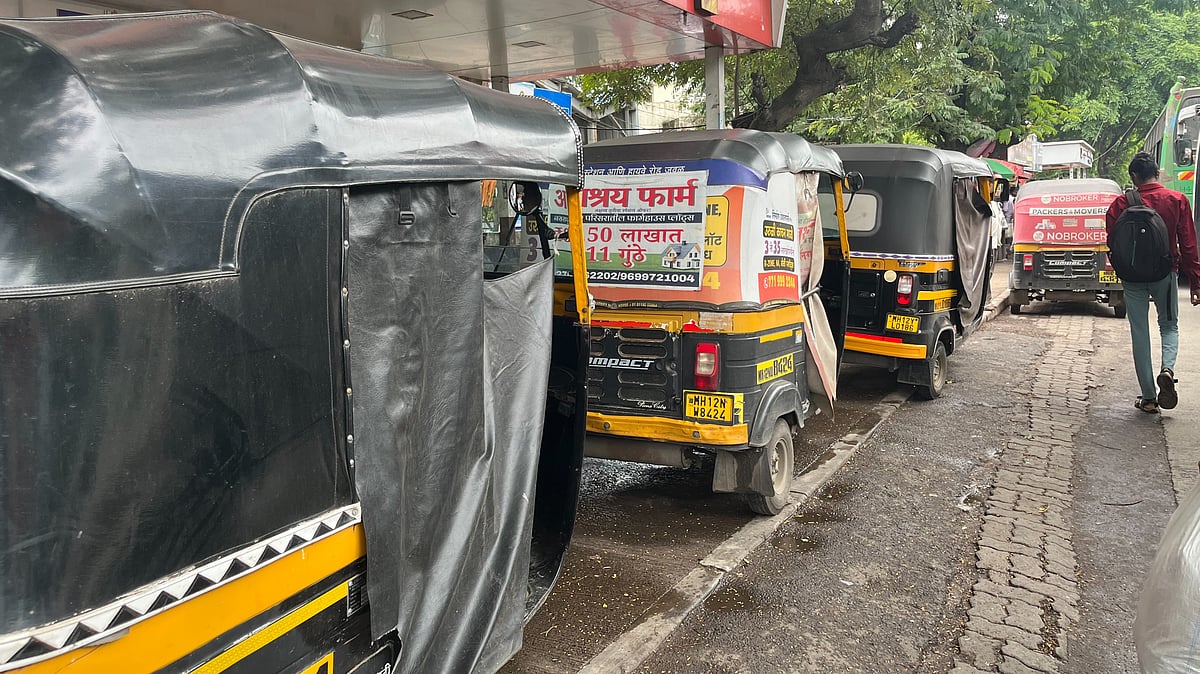
Pune Auto Fare To Increase From September: Drivers Say Hike Is Long Overdue, Commuters Fear Higher Travel Costs | FPJ
Pune: The minimum autorickshaw fare in Pune and Pimpri-Chinchwad will increase from ₹25 to ₹30 from September, following the Regional Transport Authority's (RTA) approval of a revised fare structure based on the recommendations of the Khatua Committee. The fare for the first 1.5 kilometres will be ₹30, while the charge for every additional kilometre will increase from ₹17 to ₹20. The last fare revision was implemented in August 2022.
The fare hike comes at a time when autorickshaw drivers say rising operating costs, particularly CNG prices, have reduced their earnings. As of Wednesday, CNG in Pune was priced at around ₹91 per kg, with drivers saying a full refill now costs between ₹350 and ₹370, depending on the quantity. While many drivers believe the revision was long overdue, several commuters feel the burden should not be passed on to passengers and instead want fuel prices to be reduced.
Nitin Lokhande, 44, an autorickshaw driver near Pune Station, said, "For me, ₹30 as the minimum fare is acceptable. It is not a huge benefit, but at least it is a small step. Everything has become expensive over the last few years. I usually make between 10 and 18 trips a day and earn around ₹600 to ₹700. Out of that, I spend nearly ₹600 to ₹800 on CNG every alternate day. Whatever remains goes towards supporting my family."
Tukaram Bande, 49, another autorickshaw driver near Pune Station, said, "The fare hike was necessary because our expenses have increased significantly. I earn around ₹800 to ₹1,000 on a good day, but fuel takes away a large portion of that. I mostly drive between Swargate and Wakdewadi, Pune Station and Pune Municipal Corporation (PMC), and sometimes on longer routes, but traffic and waiting time reduce the number of trips we can complete."
Not all drivers are happy or convinced that the increase will benefit them. Salmi Shaheed, 48, an autorickshaw driver near Wakdewadi ST Bus Stop, said, "Personally, I feel ₹25 was enough. If the minimum fare becomes ₹30, many passengers may think twice before taking an auto, especially for short distances. People already compare fares with bike taxis and app-based cabs. Fuel and engine oil prices have definitely increased, but I don't think the entire burden should fall on passengers. If customers stop coming, even higher fares won't help us earn more."
Husan Shake, 57, another autorickshaw driver near Wakdewadi ST Bus Stop, said, "Instead of increasing auto fares, the government should first reduce CNG prices. Today, filling around 3.7 kg of gas costs me nearly ₹340. Even at the current ₹25 minimum fare, passengers bargain over ₹10 or ₹20. If the fare becomes ₹30, arguments with customers may become even more common. We need support, but we also don't want to lose passengers because, without them, we have no income."
Supporting the revision, Shayeed Aslam, 52, an autorickshaw driver at PMC, said, "I support the ₹30 minimum fare because our operating costs have gone up over the years while fares have remained the same. Vehicle maintenance, spare parts and fuel have all become more expensive. People often think auto drivers earn a lot, but after paying for fuel and maintaining the vehicle, the income is not as high as it appears."
Commuters, however, expressed concern over the additional cost. Priya Deshmukh, 31, an IT professional, said, "I don't support the fare hike because every small increase affects people who depend on autos every day. Office-goers, students and senior citizens use autos regularly, and these costs add up over a month. If the government wants to help drivers, it should reduce CNG prices or provide some subsidy instead of passing the burden on passengers."
Soham Joshi, 23, a college student, said, "Drivers also have genuine problems because fuel prices have increased, but increasing fares is not the only solution. The government should look at reducing gas prices or providing them with some relief. As passengers, we are already spending more on transport and other daily expenses. A fare hike will make many people choose buses or shared transport instead of autos."
Meanwhile, despite repeated attempts, officials from the Regional Transport Authority (RTA), Pune, did not respond to The Free Press Journal till the time the article went to press.
RECENT STORIES
-
-
-
-
-