Nashik: 13 Talukas Declared Drought-Hit, Administration Prepares Village-Level Action Plans
Instead of limiting drought management to tanker-based water supply and relief measures after a crisis develops, the administration needs to adopt a preventive approach by identifying vulnerable villages in advance and implementing mitigation measures. Coordination among district, taluka and village-level authorities will be crucial to ensuring that essential services reach affected

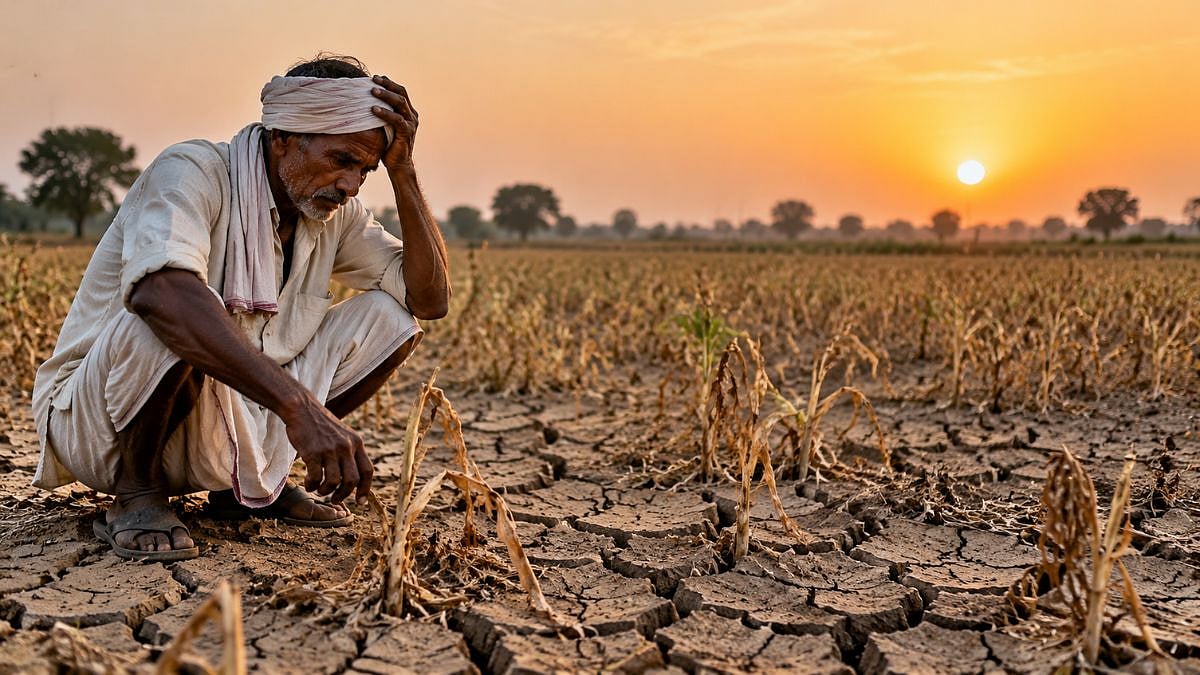
Nashik: 13 Talukas Declared Drought-Hit, Administration Prepares Village-Level Action Plans | AI Generated Representational Image
Nashik: With erratic rainfall, the possibility of water scarcity and growing concerns over fodder availability for livestock, administrative micro-planning has emerged as a key component of drought management in Nashik district. The focus is on assessing the water requirements of individual villages, availability of water sources, groundwater levels, livestock population and fodder stocks to prepare targeted action plans.
Instead of limiting drought management to tanker-based water supply and relief measures after a crisis develops, the administration needs to adopt a preventive approach by identifying vulnerable villages in advance and implementing mitigation measures. Coordination among district, taluka and village-level authorities will be crucial to ensuring that essential services reach affected communities on time.
The state government has directed the administrative machinery to prepare action plans to address potential water scarcity from October 2026 to June 2027. The proposed measures include identifying vulnerable villages through the Groundwater Surveys and Development Agency (GSDA), strengthening existing water sources and completing pending works under the Jal Jeevan Mission. Effective implementation will require close coordination among the departments concerned.
Village-level assessment of water scarcity
The first step in drought management is to identify villages likely to face water shortages. A village-wise assessment should cover drinking water sources, groundwater levels, the condition of wells, the functioning of rural drinking water schemes, population and anticipated summer demand.
According to information reported about the district's groundwater monitoring arrangements, Nashik has 80 identified primary watershed areas and 185 observation wells used to monitor groundwater levels. Comparing rainfall, October groundwater levels and records from the preceding five years can help estimate the likelihood of water scarcity.
Drought relief measures in 13 talukas
According to reports on the state government's decision dated Oct 14, 2026, 13 of Nashik district's 15 talukas have been included in the list of drought-affected areas. Chandwad, Niphad and Trimbakeshwar were added to the original list of 10 talukas. Nashik and Dindori talukas were reportedly excluded.
Relief measures for eligible beneficiaries in drought-affected areas include concessions in land revenue, restructuring of crop loans, deferment of loan recovery where applicable, concessions on agricultural electricity bills under the relevant government orders, examination fee waivers for eligible students and employment generation under approved rural employment schemes.
Tanker-based drinking water supply will also be necessary wherever local sources become inadequate.
The major administrative challenge is to ensure that these concessions reach eligible beneficiaries rather than remaining confined to official announcements. Taluka-wise records of beneficiaries, funds sanctioned, assistance distributed and pending applications should be reviewed regularly.
To prevent irregular tanker supplies, complaints about water quality and unequal distribution, village-level registers, delivery schedules and grievance-redressal mechanisms must remain operational. Particular care should be taken to ensure that women and residents of remote hamlets do not have to travel long distances to collect drinking water.
Mission fodder: Support for livestock
Drought affects not only drinking water availability but also the supply of fodder for livestock. The district administration has prepared a time-bound fodder management plan extending until June 2027.
According to figures reported in connection with the district's fodder action plan, Nashik has approximately 18.02 lakh livestock, with a monthly fodder requirement of around 2.07 lakh tonnes. The available fodder stock was reported at 53,977 tonnes, while an allocation of ₹3 crore was reported for fodder seeds.
These figures indicate the need to increase fodder production and storage before the peak summer months.
Foodgrain distribution and food security
According to reports, approval was granted to distribute 4,27,400 quintals of wheat, rice and jowar during October and November 2026 to eligible beneficiaries in the 10 talukas initially classified as drought-affected.
Approximately 36.62 lakh beneficiaries in Nashik district were reportedly receiving free foodgrains under the National Food Security Act (NFSA) framework.
The administration must ensure timely lifting of foodgrains from government warehouses, transportation to fair-price shops and distribution through the electronic point-of-sale system. Portability facilities should also be used wherever applicable to ensure that eligible migrant beneficiaries can access their entitlements.
Taluka-wise monitoring will be necessary to prevent supply disruptions and ensure that no eligible household is deprived of foodgrain assistance.
ALSO READ
Financial relief for farmers and employment generation
Drought-related crop losses can reduce farmers' incomes and affect employment opportunities for agricultural labourers. Timely implementation of relief and rehabilitation measures will therefore be essential.
Crop damage assessments: Conduct field inspections and prepare records, including photographs and Global Positioning System (GPS) coordinates where required, before submitting reports under the prescribed procedure.
Loan-related relief: Facilitate restructuring of crop loans and deferment of recovery for eligible farmers in accordance with the relevant government orders.
Electricity and revenue concessions: Ensure that eligible beneficiaries receive concessions on agricultural electricity bills and land revenue as prescribed.
Employment generation: Undertake approved watershed development, soil conservation and other rural employment works to create local livelihood opportunities.
Key administrative priorities
Village-level drought registers: Maintain updated records of population, drinking water sources, livestock, fodder stocks, crop conditions, migration and the anticipated period of scarcity.
Clear allocation of responsibility: Assign a responsible officer, budget, implementation deadline and reporting schedule to every major intervention.
Regular review meetings: Monitor tanker trips, repairs to drinking water schemes, foodgrain distribution, fodder availability, rural employment works and the status of farmers' relief applications.
Grievance redressal: Record complaints through gram panchayats, talathi offices and the relevant departments, and ensure action within prescribed timelines.
A consolidated monitoring system would help the district administration identify emerging shortages and redirect resources to villages facing the greatest difficulty.
RECENT STORIES
-
-
-
-
-