Ministry Of Tribal Affairs Holds 'Chintan Shivir' At Patanjali University To Boost Tribal Development
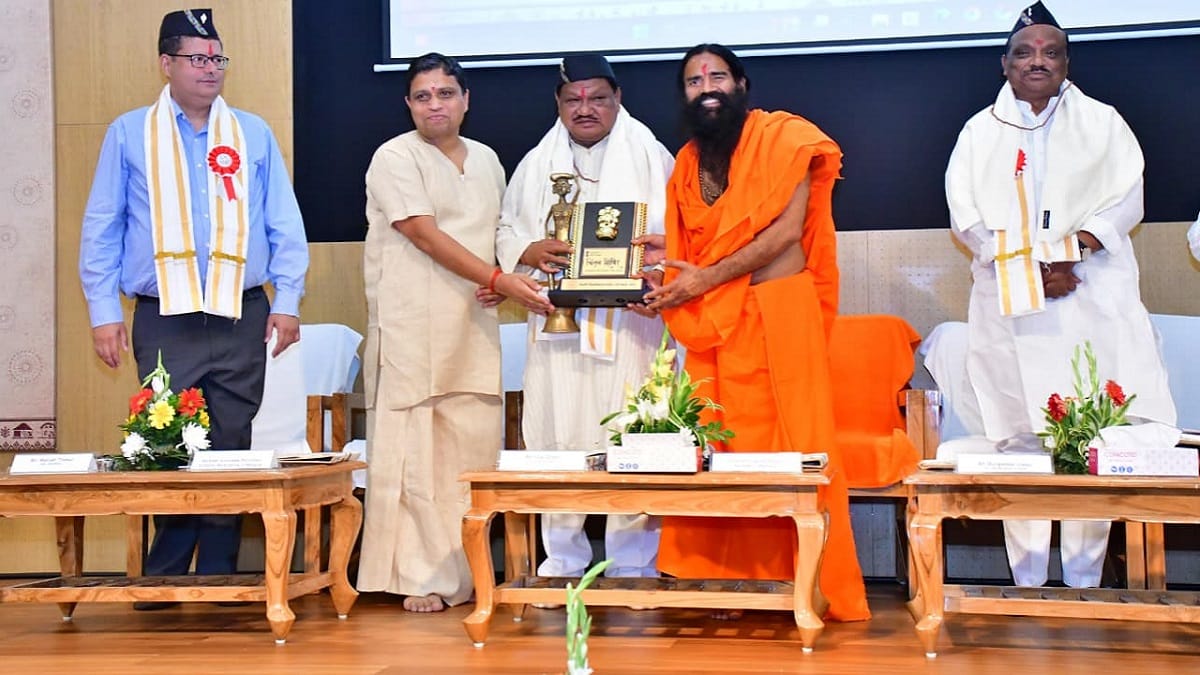
It is being attended by Principal Secretaries from various states, senior ministry officials, experts, and other representatives from tribal regions. Vice-Chancellor of Patanjali University, Param Pujya Acharya Balkrishna Ji Maharaj, welcomed the chief guests by presenting shawls, garlands, and mementos.

Ministry Of Tribal Affairs Holds 'Chintan Shivir' At Patanjali University To Boost Tribal Development |
Haridwar, April 30: A two-day ‘Chintan Shivir’ of officials from the Ministry of Tribal Affairs, Government of India, is being held at Patanjali University, Haridwar. The camp has been organised with the aim of holistic development and empowerment of tribal communities.
It is being attended by Principal Secretaries from various states, senior ministry officials, experts, and other representatives from tribal regions. Vice-Chancellor of Patanjali University, Param Pujya Acharya Balkrishna Ji Maharaj, welcomed the chief guests by presenting shawls, garlands, and mementos. The programme began with the lighting of the lamp, the national song, and a group performance by Dr Archana Tiwari and her team.
Union Minister Shri Jual Oram said that the culture, traditions, and lifestyle of India’s tribal communities are very rich. For their overall development, a balanced use of traditional knowledge and modern policies is needed. The Government of India is continuously working in this direction to empower tribal society and integrate them into the mainstream. He added that the Ministry is taking comprehensive initiatives to bridge development gaps among various tribal groups.
This Chintan Shivir reflects a collective effort to take concrete steps for their welfare. He stressed that development should take place without harming their identity and cultural heritage. Highlighting the achievements of the Ministry, he said that based on the success of the Prime Minister Janman Yojana, efforts will continue to ensure holistic and sustainable development of tribal populations in villages while preserving and promoting their cultural traits.
Minister of State Shri Durgadas Uike referred to the story of Lord Ram and Shabari to highlight the values of pure devotion, love, and equality. He also cited Birsa Munda to underline the historical role, rights, and struggles of tribal communities as symbols of religion, culture, and national protection. He said that under the leadership of Narendra Modi, the pride of tribal society has increased, and the elevation of Droupadi Murmu as President reflects this honour.
Explaining the Gurukul tradition, he highlighted the importance of faith, dedication, and discipline through examples of Chanakya and Eklavya, and described Indian culture as inclusive of diverse human values. In his address, Secretary Shri Manish Thakur described inclusive development as the foundation of broad progress, ensuring respect and equal opportunities for all while protecting natural resources and ensuring sustainability.
Secretary, Ministry of Tribal Affairs, Ranjana Chopra, said that tribal communities are guardians of nature who maintain environmental balance, conserve resources, and protect cultural heritage, contributing to humanity. She also noted that tribal development efforts driven by “Janman” were mentioned by the Prime Minister in Mann Ki Baat.
Revered Ayurveda Shiromani Acharya Balkrishna said that Ayurveda is an important and ancient solution for the health and well-being of tribal communities. Reviving traditional medical systems and integrating them with modern science can strengthen them physically, mentally, and socially, while also bringing balance and prosperity to their lifestyle.
He emphasised that balancing modern medicine with traditional knowledge can form a strong foundation for tribal welfare. He added that everyone should work together with the spirit of “Sarvabhuteshu.” Students from backward classes and tribal communities are receiving education at Patanjali, which is an example of educational equality across India.
Revered Yogrishi Swami Ramdev said that yoga and Ayurveda are effective tools for the physical, mental, and spiritual empowerment of tribal communities. Society needs to become active and aware, and people should work with dedication. Reviving ancient knowledge and practices is essential so that tribal communities can experience balance, health, and prosperity.
He also said that widespread efforts are needed to spread awareness and introduce youth to the importance of yoga and Ayurveda. This will not only improve individual lives but also establish collective peace and prosperity in society. Highlighting Patanjali’s efforts, he said that it has taken major steps to give global recognition to Indian traditional knowledge, yoga, and Ayurveda.
The aim is not only to make people healthy and empowered across the country but also to bring this knowledge to tribal communities so they can lead healthier and more prosperous lives. He added that sustainable development in tribal areas is possible through natural products and yoga, and Patanjali is continuously working in this direction.
During the programme, speakers discussed issues such as tribal education, livelihood, health, cultural preservation, and digital empowerment. The objective of the camp was to review the effectiveness of ongoing schemes and prepare stronger strategies for future action plans. Representatives of the Government of India and experts shared collective efforts towards better policies and programmes for tribal communities.
Experiences from ground-level implementation were also discussed, and practical solutions were presented. Key themes of the Chintan Shivir included ensuring active participation of tribal communities, respecting their traditions while exploring new development paths, and recommending policies suited to them.
The Ministry believes that such dialogues are an important step towards inclusive development of tribal society across the country and will continue in the future. It is noteworthy that the Ministry of Tribal Affairs, Government of India, is a key ministry responsible for the development and protection of the rights of Scheduled Tribes in the country.
At the conclusion of the programme, Ganesh Nagarajan expressed thanks and appreciated Patanjali’s initiatives for the health and welfare of tribal communities. Senior officials, experts, and other representatives visited Patanjali Food Park, the herbal garden, and the research centre, and appreciated the efforts. The programme ended with a vote of thanks to the guests and participants.
RECENT STORIES
-
-
-
-
-