Women's Day 2022: UNICEF works towards promoting women's health in Nashik

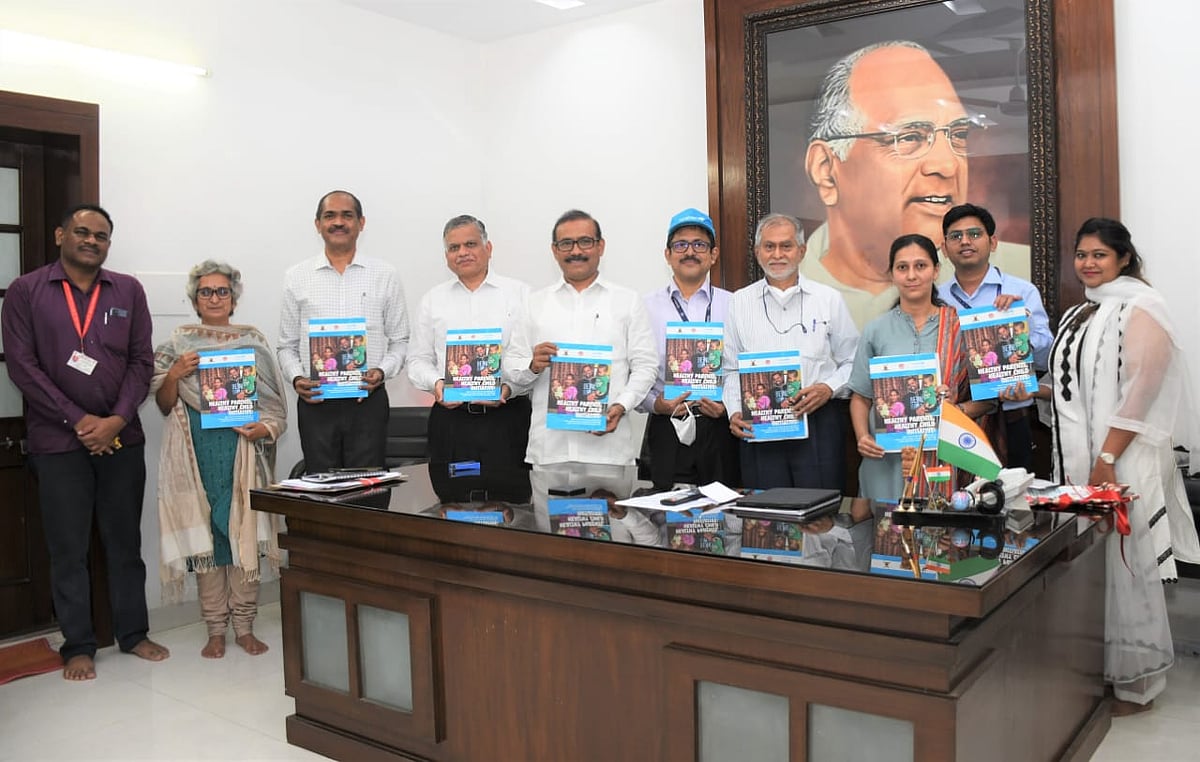
Sanjay Jog
Promoting health of adolescent girls and women not only promotes their fundamental human right to health and wellbeing but also promotes health of the newborn, prevents low birth weight, preterm birth and newborn deaths as shown by a study in Nashik district of Maharashtra.
The Public Health Department rolled out the first ever primary health care innovation for promoting health of women desiring in Peth and Sinnar blocks, Nashik district.
UNICEF office of Maharashtra and Bharati Vidyapeeth Medical College, Pune supported Public Health Department in developing the technical guideline, behaviour change communication materials and for conducting the assessment of this complex public health intervention.
The planning for this innovation was started in 2017-18 and actual implementation was started from April 7, 2018 and the follow up of women planning their families was completed during August 2018 to October 2020 (27 months).
Health and nutrition status of women including the weight and haemoglobin level, age at conception, levels of multiple micronutrients during pre-conception period are critical determinants for health of the offspring.
Pre-conception health promotion and care (PCC) in women prevents death and morbidity among them and prevents still birth, newborn death, low birth weight, prematurity, poor cognitive development in children.
“You are what you eat. But latest evidence highlight that you are what your mother (and father) ate at the time of conception. I am proud that Department of Public Health pioneered the Primary Health Care Innovation for empowering women and when you empower women, you empower the entire family and possibly entire generation. We should scale up this intervention to the entire state” said Public Health Minister Rajesh Tope.
Based on success of Primary Health Care innovation for promoting health of women and newborn in Nashik, Government of Maharashtra has already scaled up the programme in districts of Gadchiroli, Nandurbar, Washim, Osmanabad, Palghar, Nashik, Yavatmal, Chandrapur, Gondia and Amravati (Melghat).
The improvement in women’s health and reduction in adverse pregnancy outcome is a remarkable achievement in the background of slowdown in economic growth in Maharashtra during last few years, COVID-19 pandemic and evidence of economic distress impacting household income and food security.
The proportion of women aged 15-49 years with low Body Mass Index (BMI) remained at 25.8% and 25.6%; and proportion of non-pregnant women aged 15-49 years who are anaemic (< 12 gram/dl) remained at 55.4% and 54.6% during 2015-16 and 2019-20 respectively in Nashik district.
“UNICEF is committed to promote primary health care and universal health promotion of women and children for achieving health and wellbeing for all by 2030. For promoting health of new born and prevention of low birth weight and prematurity, it is very important to promote health of adolescent girls and women in the reproductive age group,” said Luigi D’Aquino, Chief of Health, UNICEF Delhi.
ALSO READ
RECENT STORIES
-
-
-
-
-