Tata Sons Listing Row Hits Close To Home For Mumbai’s Parsi Community As Concerns Grow Over Jamsetji Tata’s Philanthropic Legacy
Six Parsi-Zoroastrian organisations have jointly written to PM Narendra Modi, seeking his intervention to preserve Tata Sons' ownership and governance structure. The bodies fear a public listing could undermine the Tata Group's philanthropic ethos. Bombay Parsi Punchayet Chairman Viraf Mehta said the associations stand with Tata Trusts Chairman Noel Tata in opposing a public listing.

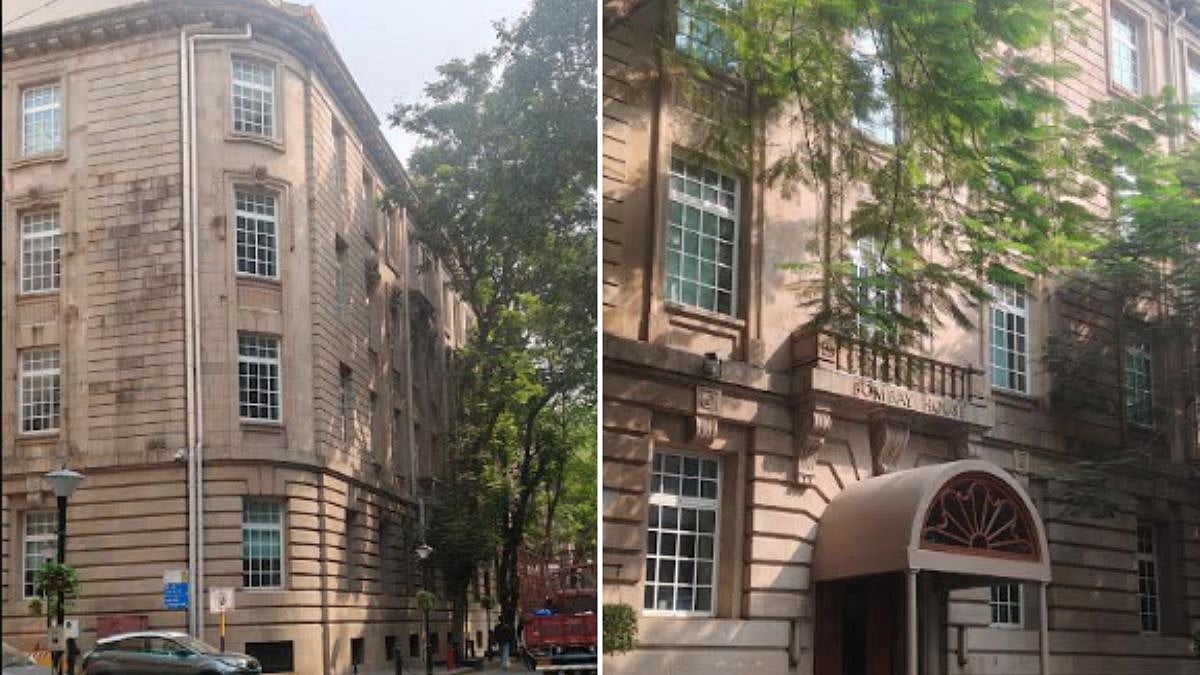
Bombay House, Tata HQ | Pics |Manoj Ramakrishnan
Mumbai: Is the Tata tussle feeling almost personal for the microscopic Parsi community in India?
A significant cross-section of community members are expressing dismay at recent events. They see the Tata Group as the cornerstone of the Parsi ethos of philanthropy, probity and public good—values the community holds dear. Founder Jamsetji Tata was a Parsi priest from an illustrious lineage of priests, and his personal crest—later incorporated into the Tata logo—bore the Avestan scripture 'Humata, Hukhta, Hvarshta' (Good Thoughts, Good Words, Good Deeds).
Battle For Bombay House Raises Questions Over Tata Legacy
The battle for control of Bombay House is increasingly viewed as a clash between those who see themselves as custodians of the Tata legacy and those seeking to redefine the group’s future.
Earlier this month, six global and domestic Parsi-Zoroastrian organisations wrote a joint letter to Prime Minister Narendra Modi, urging intervention to preserve the unique ownership and governance structure of Tata Sons, which is majority-owned by public charitable trusts. The concern arises from Tata Sons’ classification as an upper-layer non-banking financial company (NBFC), which requires listing its shares. The organisations fear a public listing could fundamentally alter the group’s philanthropic ethos and traditional governance.
Global Zoroastrian Organisations Unite Over Listing Concerns
In an unprecedented move, the Bombay Parsi Punchayet (BPP), Federation of Parsi Zoroastrian Anjumans of India, Federation of Zoroastrian Associations of North America, Zoroastrian Trust Funds of Europe, Global Council of Zoroastrians Trust and World Zoroastrian Chamber of Commerce signed the letter, representing a broad spectrum of the community in India and abroad.
Jehangir Patel, who edited the bi-monthly magazine 'Parsiana' for more than 50 years until it closed in October 2025, said the dispute went beyond a routine corporate disagreement.
Parsi Community Leaders Back Noel Tata’s Opposition To Listing
Viraf Mehta, chairman of the BPP, said the associations stood with Tata Trusts chairman Noel Tata, who strongly opposes a public listing of Tata Sons. He warned that an expanded public shareholder base could pressure the group to prioritise short-term profits over its philanthropic mission.
“The Tata legacy has been built over a couple of centuries. It is unfortunate that this situation has reached a boiling point and is being splashed across the media. We have approached Tata Trusts and Tata Sons to find an amicable solution and keep the Tata group private,” Mehta said.
Zoroastrian Principles Remain Central To Tata Identity
Xerxes Dastur, president of the Bombay Parsi Association and a BPP trustee, noted that the Tata group had always been guided by Zoroastrian principles of charity. “Humata, Hukhta, Hvarshta—good thoughts, good words, good deeds—it is in their logo,” he said.
Homiar Vakil, a solicitor with a major law firm, said Tata companies are known worldwide for Parsi values such as integrity. “These are the qualities of Parsis which are very common. And today if the Parsis are not at the top, that fragrance will go away,” said Vakil, who fears public listing could end the philanthropy.
Concerns Over Jamsetji Tata’s Founding Vision
Independent Zoroastrian researcher Firoza Punthakey Mistree summed up the majority feeling: “For the Parsi community, it’s a tragic situation because it is the battle for what Jamsetji Tata represented: the ethos, the charity, the vision to look after India through a company that grew so it could serve the poor and the disenfranchised. We fear this would possibly be in danger.”
Patel pointed out that Tata Sons is a corporate entity and does not belong to the community in a legal sense. Nevertheless, the group came to exemplify certain values, particularly during JRD Tata’s tenure (1938–1991). “With JRD Tata, you felt those values were there,” he said. He added that several things appeared to change during Ratan Tata’s tenure, although JRD had given him considerable freedom. The successive stages of the dispute—including the tussle between Ratan Tata and Cyrus Mistry (2012–2016)—could perhaps have been handled differently. The community also fears the government could bring in other groups and dilute the Tata trusts’ holdings.
Questions Raised Over Tata Sons Board Composition
Mehta questioned the composition of the Tata Sons board, arguing that those without a direct stake were making decisions that could determine its future. “The only person who actually has a stake in the Tata group among all the Tata Sons trustees is Noel Tata. So you have people who are neither Tatas nor stakeholders making decisions for a company where they have absolutely no skin in the game.”
He said the community opposes the government forcing Tata Trusts to list the holding company. The issue was not raised even during Ratan Tata’s tenure, and several present board members had earlier supported keeping the company private. “The entire Parsi-Zoroastrian community is standing by Noel Tata and Tata Trusts. Continue what you are doing. Legalities must be adhered to, but let it be done privately. There is no need for a listing,” he said. Mehta added that Noel Tata had suggested measures to avoid a listing and that the Reserve Bank of India would have to consider whether those arrangements could meet regulatory requirements.
Punthakey Mistree said the parallel battle between the Mistry and Tata groups was also distressing. “It is like an epic 'Shahnameh 'episode where Rustam kills Sohrab and later discovers Sohrab is his son. It cuts deep into the heart of the community. We would like the whole Tata conglomerate to continue the way it has since Jamsetji Tata formed it. That would be the wish of all the Parsis.”
Dastur said the community wanted Tata Sons to retain its existing manner of functioning, with charity remaining central. “We think it is important for Tata Sons to maintain its manner of functioning as a charity. We just hope wiser counsel prevails so the Tata empire can continue doing the good it has been doing for the community and the country.”
Vakil suggested the community file a public-interest litigation to prevent any change in the identity of the companies and hold a peaceful protest to protect their interests. “The community will lose charity. The Tata Cancer Hospital was built with Tata philanthropy. We hope the government intervenes and finds an amicable solution,” Mehta said.
At the core is the concern that founder Jamsetji Tata’s vision—“to do good for India”—be upheld. Would forcibly listing the company achieve that, or would it dilute the founder’s mission by turning the Tata Group into a listed entity that chases profits quarter on quarter?
Your voice matters. If you have a community story, issue, or inspiring local experience to share, send it to community@fpj.co.in and be a part of the conversation.
To get details on exclusive and budget-friendly property deals in Mumbai & surrounding regions, do visit: https://budgetproperties.in/
RECENT STORIES
-
-
-
-
-