Mumbai: BMC's Bal Drishti Drive Detects Severe Myopia, Cataract Among Schoolchildren; Over 40,000 Screened
The BMC's Bal Drishti drive screened 40,270 students across 227 municipal schools between February and September 2026, detecting severe myopia, including readings of -16 SPH, and a cataract case. So far, 361 students have received spectacles and four have undergone squint correction surgery. Only 549 of 1,950 referred students have visited the specialist clinic.

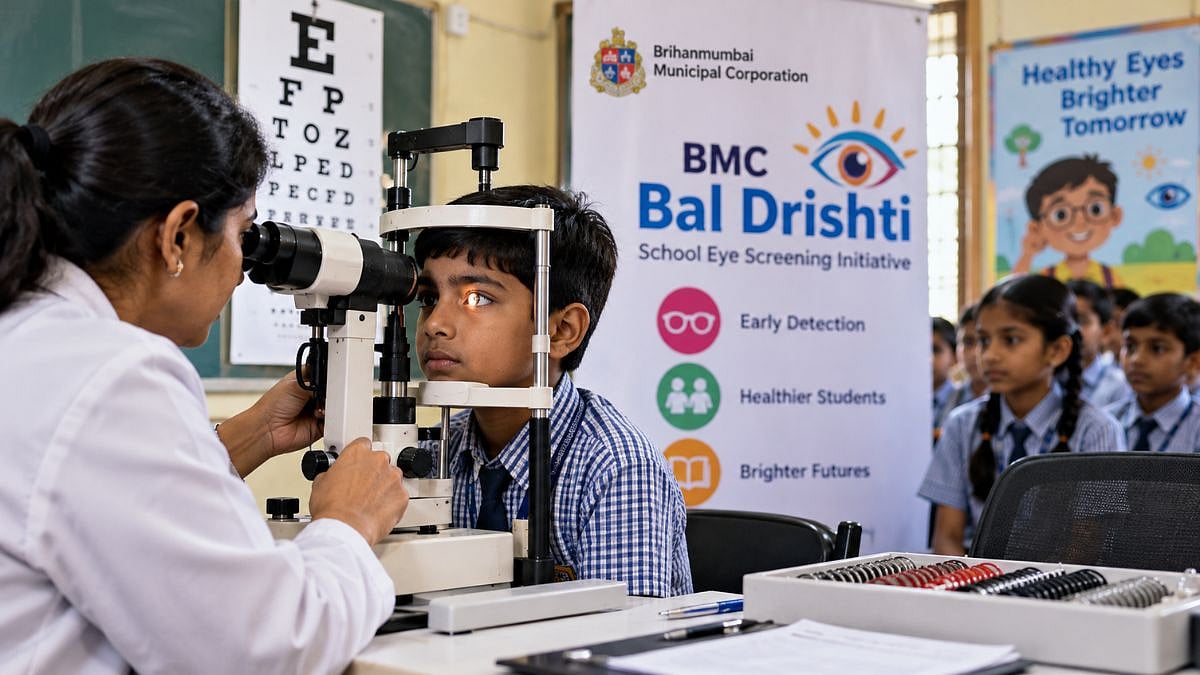
Mumbai's municipal school eye-screening initiative has provided spectacles and corrective treatment to children while identifying students needing further specialist care | AI Generated Representational Image
Mumbai, October 13, 2026: Severe vision problems, including myopia as high as -16 SPH and a case of cataracts, have been detected among students in BMC schools under the ‘Bal Drishti’ initiative.
Between February and September 2026, 40,270 students across 227 municipal schools were screened, with the Brihanmumbai Municipal Corporation (BMC) targeting three lakh students in 1,200 schools over three years.
The initiative, undertaken with Vision Foundation of India with the support of Chief Minister Devendra Fadnavis, focuses on early detection and treatment of eye disorders and is aligned with the School Health and Wellness Programme under Ayushman Bharat.
Screening Reveals Severe Vision Problems
Of the 59,150 students enrolled in the schools covered so far, 68% underwent screening, including 20,390 boys and 19,880 girls. One student was found to have myopia of -11.50 SPH in one eye, while readings for some reached -16 SPH. A student was also diagnosed with cataracts.
So far, 361 students have received spectacles and four have undergone free squint correction surgery. Colour vision deficiency was detected in 31 students. Although it cannot be corrected, early diagnosis helps teachers adapt teaching methods and enables informed educational and career guidance.
Follow-Up Remains A Concern
However, follow-up remains a concern. Of the 1,950 students referred for further assessment at Vision Foundation of India’s Community Eye Clinic in Tardeo, only 549 (28%) have visited the clinic.
The programme plans to intensify home and school visits to ensure students complete examinations and receive spectacles or further treatment, including surgery where necessary.
Treatment Improves Classroom Confidence
The initiative has also helped children whose vision problems affected their studies. Nine-year-old Vedant Nerulkar, a Class IV student at Ganpatrao Kadam Municipal School in Lower Parel, underwent free squint correction surgery in July after struggling to read the blackboard even from the first row. He can now read the board clearly and participate more confidently in class.
Also Watch:
ALSO READ
BMC Plans To Expand Screening
Over the next three years, the BMC aims to expand screening to 1,200 schools and strengthen follow-up from initial diagnosis to completion of treatment, preventing undetected vision problems from affecting students’ learning and confidence.
To get details on exclusive and budget-friendly property deals in Mumbai & surrounding regions, do visit: https://budgetproperties.in/
RECENT STORIES
-
-
-
-
-