Ammonium Nitrate, Key Component In Delhi Terror Attack, Was Also Used In 5 Blasts In Mumbai
Forensic records reveal that between 2002 and 2011, ammonium nitrate, when blended with other materials, was involved in at least five major blasts in Mumbai, including the Ghatkopar BEST bus blast, the Vile Parle market blast, the Mulund ladies’ compartment explosion, the serial train blasts on the Western Railway line, and the triple blasts at Zaveri Bazaar, Opera House and Dadar.

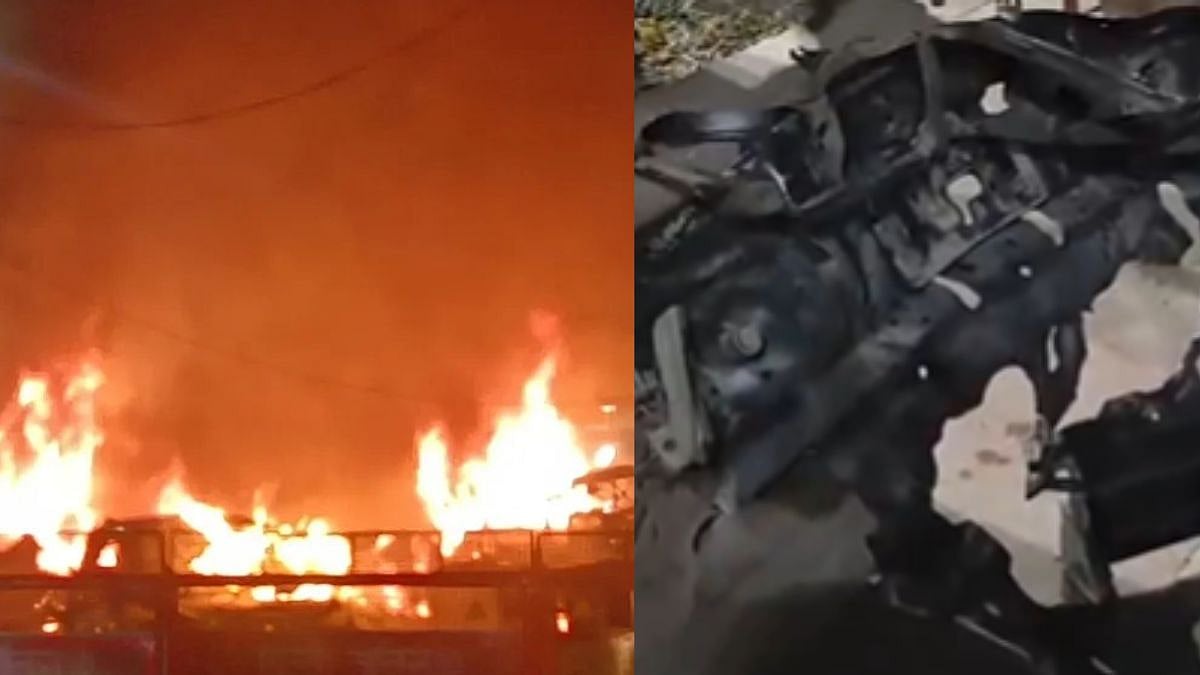
Delhi Car Blast | X
Mumbai: Ammonium nitrate, the chemical identified as one of the substances behind the November 10 Delhi car blast, has once again drawn attention to its long history of dangerous misuse. Just before the Delhi blast, nearly 2,900 kilograms of ammonium nitrate, detonators, timers and assault rifles were recovered by a joint team of the Jammu and Kashmir Police and Haryana Police.
According to a Times of India report, forensic records reveal that between 2002 and 2011, ammonium nitrate, when blended with other materials, was involved in at least five major blasts in Mumbai, including the Ghatkopar BEST bus blast, the Vile Parle market blast, the Mulund ladies’ compartment explosion, the serial train blasts on the Western Railway line, and the triple blasts at Zaveri Bazaar, Opera House and Dadar. These attacks collectively claimed more than 240 lives.
What Is Ammonium Nitrate?
Ammonium nitrate is a white crystalline compound widely used in the manufacture of fertilisers, cold packs and certain medical gases. It also plays a key role in the production of explosives, making its regulation crucial. After repeated instances of its misuse in improvised explosive devices (IEDs), the Directorate of Forensic Science Laboratory (DFSL), Mumbai, had recommended tighter controls more than a decade ago. The advisory called for the sale and distribution of ammonium nitrate to be regulated and for mandatory documentation of every purchase or usage.
ALSO READ
Experts Warn Of Its Destructive Nature
Experts point out that the compound’s risk lies in how easily it can be converted into an explosive mixture. Dr Rukmani Krishnamurthy, former DFSL director, noted that ammonium nitrate mixtures can be detonated with relatively simple initiation techniques. In many cases, detonators leave little or no physical trace after an explosion, complicating forensic reconstruction and hampering efforts to identify the perpetrators.
Even small quantities of the compound can be highly destructive. Dr Krishnamurthy explained that half a kilogram of ammonium nitrate, when mixed with a substance such as fuel oil and placed inside a confined container, can cause several injuries depending on the level of confinement, presence of additional materials and the victims’ proximity to the blast.
Also Watch:
Forensic science has advanced considerably since the early 2000s. Today, experts can detect ammonium and nitrite ions on clothing or on metal fragments such as blades, ball bearings or nails recovered from victims or the crime scene, helping determine the composition of the explosive used.
Under the Ammonium Nitrate Rules, 2012, the manufacture, transport, sale, possession or use of ammonium nitrate requires a licence from the Petroleum and Explosives Safety Organisation (PESO).
To get details on exclusive and budget-friendly property deals in Mumbai & surrounding regions, do visit: https://budgetproperties.in/
RECENT STORIES
-
-
-
-
-