Why Do Roads Melt In Europe Heatwave? But Indian Roads Survive Extreme Heat; Here's The Science Behind It
Roads are primarily built using asphalt, a petroleum-based material that becomes softer as temperatures rise. In Europe, road infrastructure has traditionally been designed for a temperate climate where average summer temperatures remain much lower than those in India. As a result, the asphalt mixtures used there are often formulated for moderate weather rather than prolonged extreme heat.

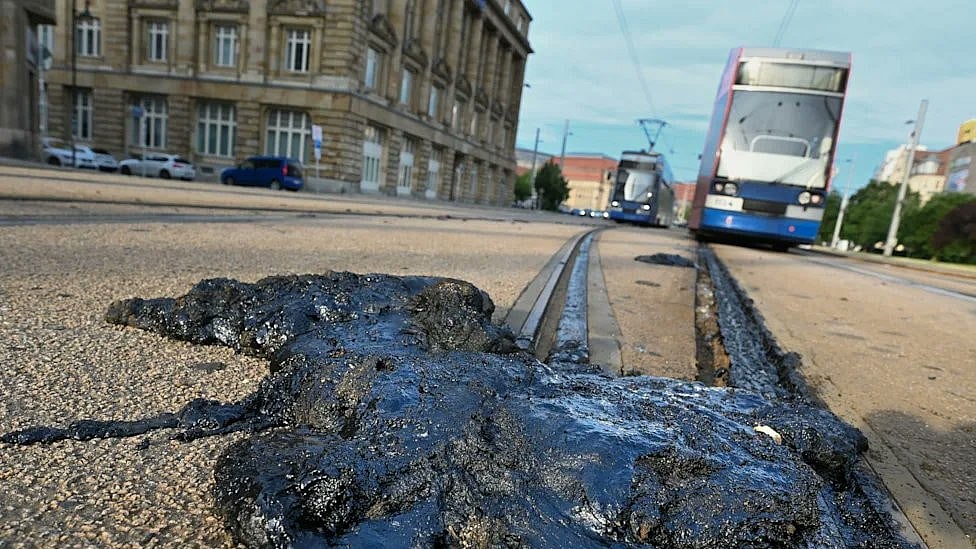
Europe has been witnessing intense heatwaves this summer, with temperatures crossing 40°C in several countries. The extreme weather has caused an unusual problem: roads have started softening, warping and even melting in places across the UK, France and Italy. This has raised a common question: if India experiences similar or even higher temperatures every year, why do Indian roads not melt as often? Read the article for further details.
Heatwave in Europe
People in Europe are facing scorching temperatures as the continent battles intense heat waves. This rapid change in climate is mostly affecting senior citizens. So far, hundreds of people have died, and many of the excess fatalities are among those aged over 65. These sudden changes have led to the melting of roads and other public infrastructure. The record-breaking heatwave is caused by the heat dome effect.
The answer lies in climate, engineering and road design.
Roads are primarily built using asphalt, a petroleum-based material that becomes softer as temperatures rise. In Europe, road infrastructure has traditionally been designed for a temperate climate where average summer temperatures remain much lower than those in India. As a result, the asphalt mixtures used there are often formulated for moderate weather rather than prolonged extreme heat.
When unexpected heatwaves push road surface temperatures above 50°C or even 60°C, the bitumen in asphalt softens significantly. Heavy vehicles then create ruts, cracks and deformations, making roads unsafe for traffic.
Road design difference
Talking about infrastructure in any country, it depends on its weather and climate. India sits just north of the equator, which means the country is more exposed to sunlight and heat from the sun. Therefore, India's roads and highways are built to endure prolonged periods of extreme heat. According to the National Highways Authority of India (NHAI), the country uses viscosity grade (VG) bitumen, which is a classification standard used in road construction.
The standard measures the material's resistance to flow at specific temperatures. In India, NHAI uses viscosity grade (VG) bitumen, including VG-30 and VG-40, which remain stable even when temperatures cross 60°C. It also uses polymer modified bitumen (PMB) and crumb rubber modified bitumen (CRMB), aimed at increasing resistance to heat.
ALSO READ
Different climate in Europe
Europe lies in the Northern Hemisphere. Beyond it lies the Arctic region, which is part of the frigid zone. Europe falls in the temperate zone, where average temperatures generally hover between 5°C and 15°C. The continent receives more sunlight but not direct overhead rays, as the Earth is tilted at an angle of approximately 23.5 degrees. As a result, the climate is colder than in equatorial or tropical regions.
Roads in Europe rely on softer penetration-grade bitumen. These binders are designed to remain flexible during freezing winters and reduce frost-related cracking. During prolonged heat waves, however, they begin to soften, causing roads to deform or “bleed” bitumen.
RECENT STORIES
-
-
-
-
-