Tulsi Vivah 2026: Why Is Sugarcane Used In The Sacred Wedding Ceremony Of Goddess Tulsi?
Sugarcane is used to build the ceremonial mandap (pavilion), and it also reflects gratitude towards nature and the harvest season. Kartik falls during a period associated with agricultural abundance in several parts of India. Therefore, offering sugarcane is also considered a way of expressing gratitude for nature's blessings and seeking prosperity for the household.

Tulsi Vivah 2026: Why Is Sugarcane Used In The Sacred Wedding Ceremony Of Goddess Tulsi? |
Tulsi Vivah is one of the auspicious days in Hinduism as devotees observe rituals associated with the symbolic celebration of the marriage of Goddess Tulsi (the holy basil plant) with Lord Vishnu, who is worshipped in the form of Shaligram. It is observed on the Dwadashi Tithi of Shukla Paksha in the Hindu month of Kartik. But did you know that one of the ceremonies associated with the ritual is the use of sugarcane? Apart from flowers, fruits, sweets and traditional offerings, sugarcane holds a special place in the mandap (wedding pavilion) prepared for the divine wedding. Let's understand the significance.
Why is sugarcane used during Tulsi Vivah?
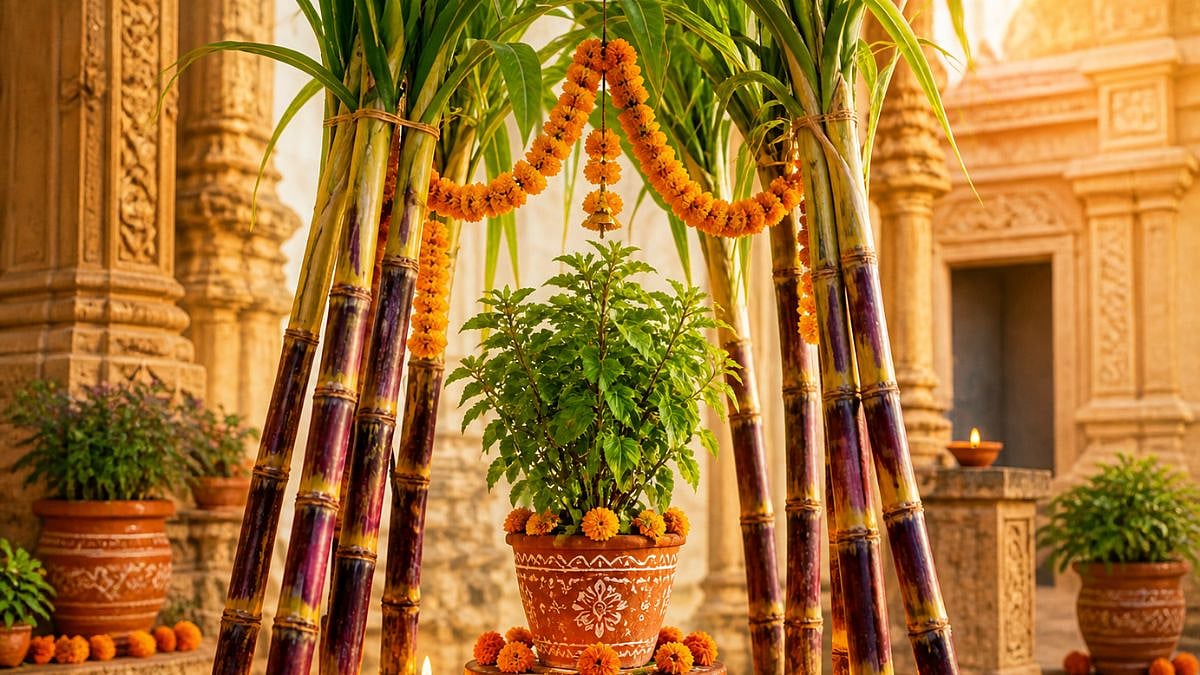
Sugarcane is considered an auspicious symbol of prosperity, sweetness, fertility and abundance in Hindu traditions. Its natural sweetness is believed to represent happiness and sweetness in marital life. During Tulsi Vivah, sugarcane stalks are often used to prepare the mandap, under which the ceremonial wedding rituals take place.
Sugarcane is used to build the ceremonial mandap (pavilion), and it also reflects gratitude towards nature and the harvest season. Kartik falls during a period associated with agricultural abundance in several parts of India. Therefore, offering sugarcane is also considered a way of expressing gratitude for nature's blessings and seeking prosperity for the household.
Significance of sugarcane in the ritual
In many households, four sugarcane stalks are placed around the Tulsi plant to create a symbolic wedding pavilion. The plant is decorated with flowers, a red chunari, ornaments and other traditional items before the wedding rituals begin. During Tulsi Vivah, the plant is also decorated with mango leaves.
ALSO READ
Devotees believe that performing Tulsi Vivah with devotion brings marital happiness, peace and prosperity to the family. The ceremony also holds special significance for married couples and those seeking a suitable life partner.
Sugarcane in Hindu traditions
Meanwhile, sugarcane is not only used in Tulsi Vivah, but it remains an important traditional element for any traditional worship, observance and weddings as well, as it symbolises auspicious beginnings.
Level up your brain the fun way. Play daily games and quizzes on FPJ Smart!
RECENT STORIES
-
-
-
-
-