Sky Turns Red In Western Australia: What Caused The Phenomenon?
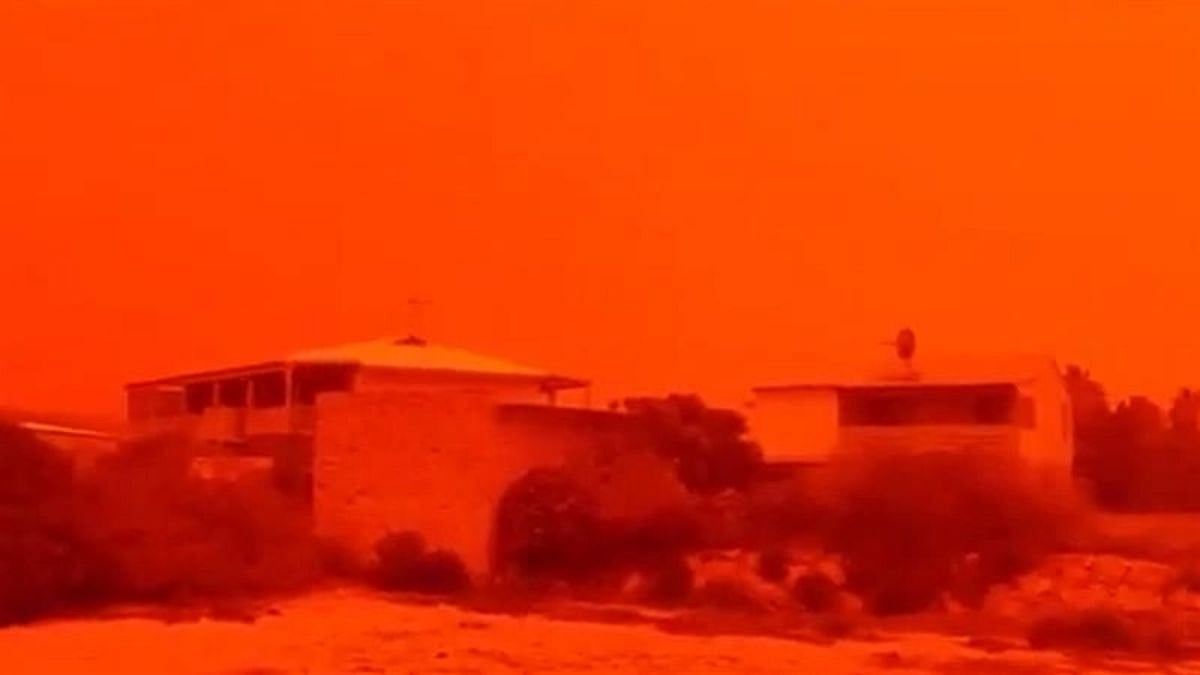
The sky above Western Australia transformed just like the Upside Down world in the Stranger Things series on Friday, March 27, 2026. According to meteorologists, the red sky is a result of atmospheric conditions linked to the incoming storm system. People living in the region of Western Australia experienced something different when the sky turned scarlet, giving everything a rather dark glow.

Sky Turns Red In Western Australia |
Residents across parts of Western Australia were left stunned after the sky turned a dramatic shade of red. The unusual phenomenon quickly caught public attention, with photos and videos circulating widely on social media, prompting many to wonder what caused the striking change in colour. On March 27, 2026, the horizon in regions like Shark Bay and the Pilbara transformed into a deep blood-red hue. This wasn't a cinematic event but an impact of a powerful atmospheric event which is triggered by Cyclone Narelle.
Sky in Western Australia turned Red
The sky above Western Australia transformed just like the Upside Down world in the Stranger Things series on Friday, March 27, 2026. According to meteorologists, the red sky is a result of atmospheric conditions linked to the incoming storm system. People living in the region of Western Australia experienced something different when the sky turned scarlet, giving everything a rather dark glow. Everything, including roads and buildings, was painted in red.
Reason behind the Red Sky
According to meteorologists, as the tropical cyclone named Narelle approached, strong winds lifted dust, moisture, and fine particles into the air. When sunlight passes through this dense layer of particles, shorter wavelengths of light such as blue are scattered away, allowing longer wavelengths like red and orange to dominate the sky. The intensity of the red colour increases with the heaviness of dust particles in the atmosphere.
What is Cyclone Narelle?
Cyclone Narelle is a tropical cyclone that forms over warm ocean waters, typically in the Indian Ocean region near Western Australia. Like other cyclones, it develops when warm sea surface temperatures, moist air, and favourable wind conditions combine to create a rotating storm system.
Cyclone Narelle is characterised by strong winds, heavy rainfall, and rough seas. As it intensifies, it can lead to severe weather conditions, including flooding, storm surges, and coastal damage. The name “Narelle” is part of a list of cyclone names used by meteorological agencies in the region.
RECENT STORIES
-
-
-
-
-