Singer Akriti Kakar Says, ‘I Can’t Bank On Streaming Money To Live'
As she drops her new single Oh Jaanu with Palash Sen, the singer on the return of OG indie pop, why live shows remain the only real revenue model for independent artistes and doing fewer film projects

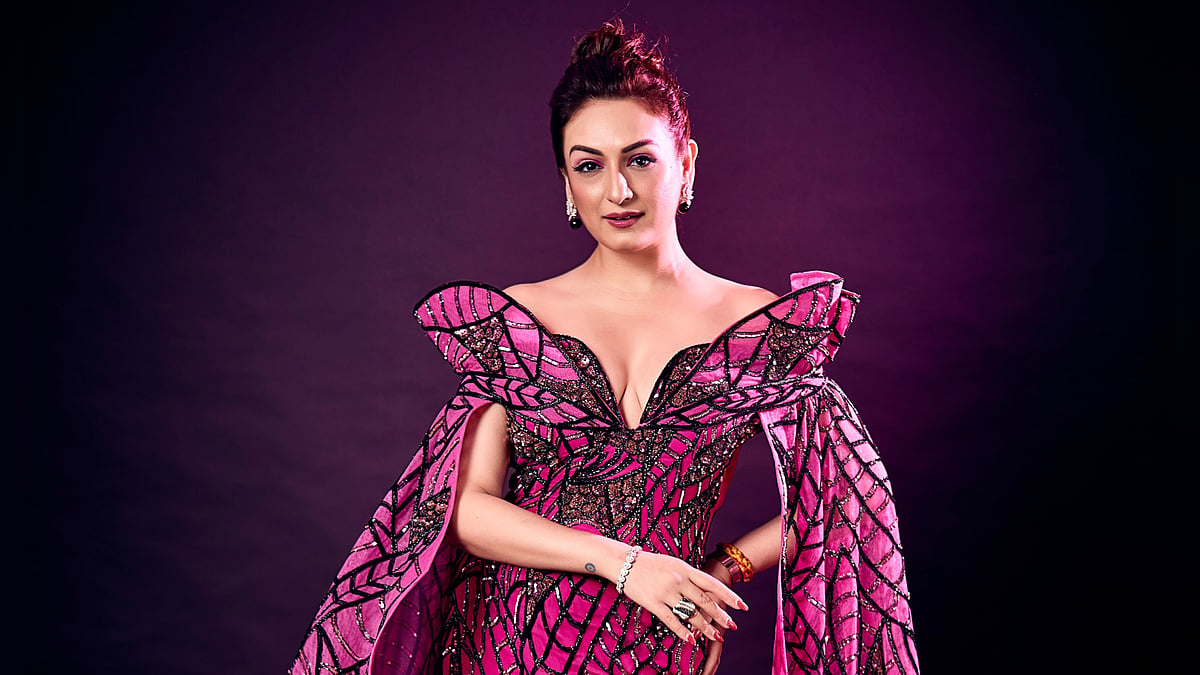
In an era where independent releases outnumber film songs, Akriti Kakar has consciously refused to be defined by playback alone. The singer, who has straddled film, folk, ghazals and bhajans, is betting big on her own compositions at a time when streaming pays little and algorithms demand relentless output. It is a tough economy — one where making a music video costs more than what streaming returns, and where live shows have become the only sustainable revenue model. Her new single Oh Jaanu with Euphoria’s Dr Palash Sen is both a throwback to the MTV-era indie pop she grew up on and a reminder of why that culture needs a 2.0.
Excerpts from the interview:
Alongside playback, you’re also an independent composer and singer. How liberating does that feel?
It is very liberating, but also scary, because everything rests on your shoulders. The joy is in the freedom to express what you really want. An artist should not be defined by a particular genre. I have so much fun singing folk, ghazals, bhajans and film songs like Lag Jaa Gale. If I keep waiting for film songs to happen to me, I will have a very small discography to show my grandchildren.
Did Bollywood never offer you enough space as a singer and composer?
I needed to go out and hunt for opportunities. It is predominantly a male-driven world and sometimes it makes you question whether you are good enough. When nobody is controlling your creativity, it’s so much better. I had composed a song called Jobless a few years ago and given it to my team as part of their bank. One day I was called to composer Suhail Sen’s studio thinking it was for singing. Filmmaker Tigmanshu Dhulia walked in and started singing that very song — I had forgotten about it. He wanted to buy it. It was used in Milan Talkies. It was a great feeling. I never went door-to-door asking for work. Hopefully my independent music will become the channel through which people realise I can compose.
What is the brutal truth about money in indie? Can you survive without films or shows?
There is no way an independent artist without many successful releases can run a home on YouTube and streaming money alone. What you spend on making a song and video is way higher than what you normally recover, unless the song does shockingly well with lakhs of streams and millions of views on YouTube. Then some money starts coming back. But in the absence of events, I don’t think one can survive, especially in a city like Mumbai.
Are live events the only real revenue model left for indie artists then?
Yes, live events are truly my bread and butter. I cannot bank on streaming money. That’s very uncertain. I don’t release music month on month. If I did, maybe I would have something that consistently pays me back. But the amounts are not what we are used to living on. To live a decently comfortable life, you have to churn out music every few weeks so the algorithm, listeners and platforms know you will be consistent. But even then, it is not possible without live shows. It is very important to keep doing them.
When you sing your independent songs at events where people only want Bollywood hits, do you feel disrespected?
Not really. Not all Bollywood songs are hits either; same with independent numbers. I do sing a few of my independent songs on stage. I tell the audience this is closer to my heart because I created it, please give it some extra love, and they do. We really underestimate our audiences. The system is crooked in a way that money drives popularity and reach. If independent music had that kind of budget and muscle power behind it, it would give everyone stiff competition. That’s the only missing component. Everyone wants Bollywood, but I try to sneak in my own music and they happily accept it.
You’ve said indie is tougher. Is Bollywood actually easier than being independent music in 2026?
When you get a confirmed Bollywood song, singing it is easy. A song is a song, you have to give it your all. Bollywood is harder because once you sing it, you don’t know if your voice will be retained. Indie has its own challenges — its reach, whether radio will play it, whether people will talk about it. Both have their own pros and cons.
Your new single with Dr Palash Sen, Oh Jaanu — Euphoria defined indie pop in the 90s. Is this indie pop 2.0?
I really hope the OG indie pop comes back. When we cracked Oh Jaanu, I felt it wasn’t like the 100 other songs happening right now. I have never thought, ‘Is it reel-worthy?’ I can’t work backwards in music. It has to come from excitement. Visually, it was challenging, but audio-wise I knew it had to be a duet with someone who has that madness, zest and positive spirit and believes in the whole indie pop ideology. Indie pop today for the youth is about using words like baarish and barsaat with a guitar. But indie pop in the 90s was a whole culture that later got dissolved into film music. Younglings today have no idea about it. Many people told me the Oh Jaanu video took them back to the MTV era.
What did Palash bring to the studio?
He is more than 100% present when he says yes to something. I told him I don’t hear anybody else on this song apart from you. Today people ask 100 questions before doing a song. He didn’t even hear the track and just said, ‘Chalo, I’m going to do it.’ That trust meant so much. His niceness shows in his persona and voice. That’s why he has sustained for so long and will continue to live in people’s hearts. For the video, we had six looks and he did them so enthusiastically. He brought so much energy to the set.
Speaking of looks, from Parveen Babi and Zeenat Aman to Marilyn Monroe and Bajirao Mastani — the video is quite unique.
I’m a deeply filmy person. When you hear Oh Jaanu, you instantly think of the disco era. The lyrics by Geet Sagar are quirky, so we wanted the video to be quirky too — what if Gabbar and Basanti were a thing? Music videos let you take those liberties to pay tribute to icons. If there is a costume party, people dress up as Marilyn Monroe, Michael Jackson, Gabbar, Basanti, Monjulika, Parveen Babi, Zeenat Aman, Amitabh Bachchan’s Don look or Bajirao-Mastani. These are iconic characters. I thought it would be cool to dress up as them and play with their body language.
ALSO READ
A lot of playback singers are turning composers. Is it because film music doesn’t give creative control?
As a playback singer, you are not supposed to have creative control. You are an instrument executing the composer’s vision. You can offer creativity in how you sing, but if you disagree with the composer, you are not the right fit for that song. If you want to do something beyond that, do your independent music. If the songs are truly great, they will find their way to the same composers, directors and producers who will then want you to create.
Would you rather be remembered as a film hit singer or as Akriti the independent composer-singer?
I would just like to be remembered as a singer and performer. If people remember my songs, that’s sone pe suhaaga.
What are you working on next?
My dream project, the third season of The Big Band Theory, is in the works. We plan to shoot it at the end of September. It’s a precious IP.
RECENT STORIES
-
-
-
-
-