Sheep’s Wool Instead Of Plastic? Swiss NGO Tests Woollen Blankets To Reduce Glacier Melt
Sheep's wool blankets are being tested in a Swiss glacier as a possible alternative to synthetic covers used to slow melt, with early results showing a similar protective effect. This experiment is being conducted by The Summit Foundation, who placed two 100-square-metre wool blankets on Glacier 3000 in Les Diablerets, in western Switzerland, in late June.

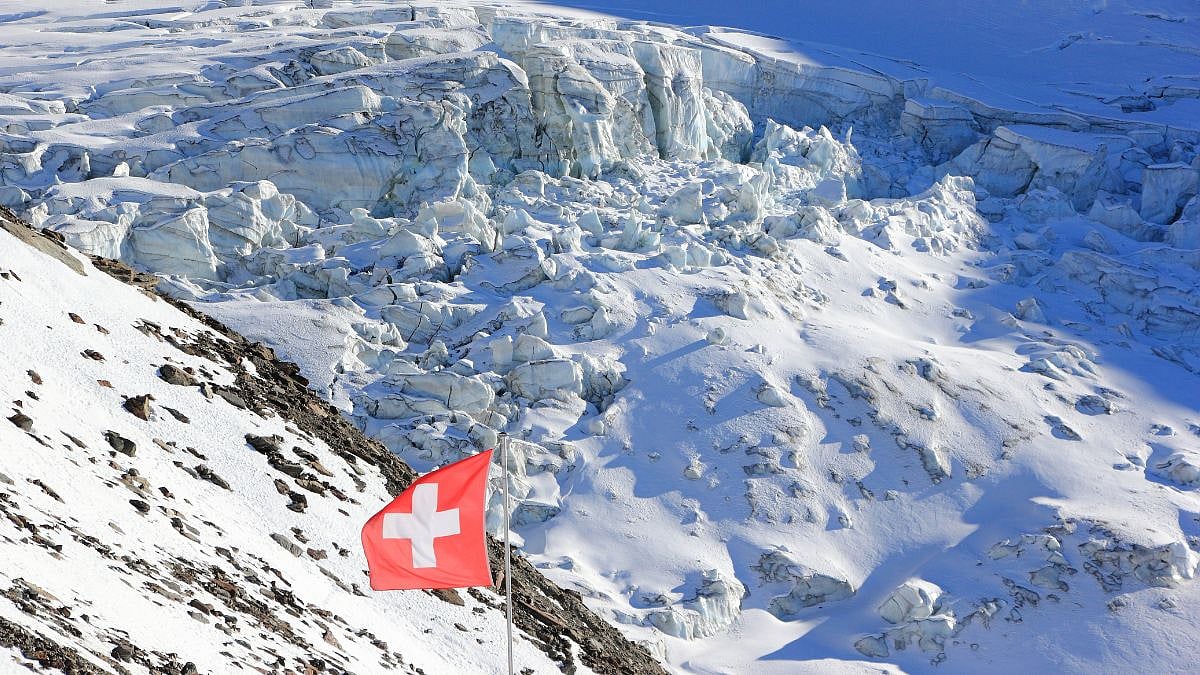
Swiss NGO Uses Woollen Blankets To Reduce Glacier Melt | Photo Attribution: Canva
As glaciers around the world continue to shrink due to rising temperatures, a Swiss environmental organisation is experimenting with an unusual but natural solution - sheep’s wool blankets. The initiative aims to protect vulnerable glacier surfaces while reducing dependence on plastic-based protective sheets commonly used in some glacier conservation efforts. For the Keep It Wool experiment, two blankets made of sheep's wool, each measuring 100 square metres, were laid out at Glacier 3000 in Les Diablerets, and the experiment is done by The NGO Summit Foundation.
Swiss conducted woollen blankets experiment to reduce glacier melt
Sheep's wool blankets are being tested in a Swiss glacier as a possible alternative to synthetic covers used to slow melt, with early results showing a similar protective effect. This experiment is being conducted by The Summit Foundation, who placed two 100-square-metre wool blankets on Glacier 3000 in Les Diablerets, in western Switzerland, in late June. The NGO carried out the experiment in collaboration with the University of Lausanne.
The idea is based on the insulating properties of wool, which can help reduce heat transfer and slow the melting of ice beneath it.
Similar effect to synthetic tarpaulins
According to the NGO, the protective effect of the sheep's wool material is said to be very similar to that of synthetic tarpaulins. These are large and flexible sheets which are made from plastic polymers like polyethylene, vinyl, or PVC. They are mostly used to cover glaciers to prevent them from sun rays. However, their usage is not environmentally friendly, as plastic particles flow downstream into valleys and contaminate water, creating pollution.
As per the NGO, the wool cover has a similar effect; these reduce glacier melt in the covered areas by 50 per cent to 70 per cent. The wool-based approach offers a potentially more sustainable alternative. Sheep’s wool is biodegradable, renewable and naturally insulating, making it an interesting material for climate adaptation experiments.
ALSO READ
Use of glacier blankets
Glacier blankets are generally used in areas where melting is particularly rapid, such as ski resorts and glacier tourism sites. Traditionally, large white sheets made from synthetic materials are placed over sections of ice to reflect sunlight and keep the surface cooler. While effective in slowing seasonal melting, these materials can create environmental concerns because they are largely plastic-based and require transportation and maintenance.
The wool-based approach offers a potentially more sustainable alternative. Sheep’s wool is biodegradable, renewable and naturally insulating, making it an interesting material for climate adaptation experiments.
RECENT STORIES
-
-
-
-
-