'Priyanka Chopra Carries An Indian & International Sensibility...': Designers Rohit Gandhi & Rahul Khanna On Dressing The Modern Woman
Rohit Gandhi and Rahul Khanna's 'Abyssal' collection channels the calm intensity of the deep sea. Rooted in personal experiences of observing underwater life, the line reflects stillness, control and quiet luxury. The designers say each piece reveals itself slowly, creating a layered, immersive aesthetic that moves away from boldness towards understated elegance.

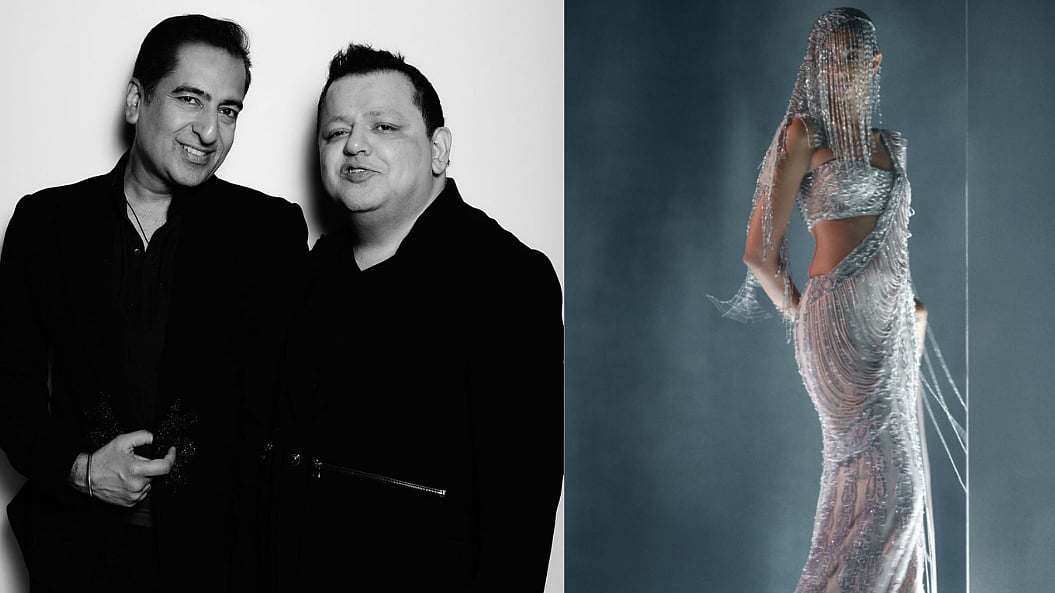
Rohit Gandhi & Rahul Khanna's Abyssal is rooted in stillness and subtle luxury. Through their new collection, the fashion designers have attempted to capture a sense of quiet depth inspired by the ocean. The pieces are not loud, but quite captivating and have the ability to hold an incredible presence. They don't reveal themselves instantly; they unfold slowly.
"Spring Summer 2026 for us became about stillness, control and a kind of understated glamour that feels immersive rather than dramatic," reveal the designers in an interview with FPJ. "We were drawn to the feeling of observing life underwater, and revisiting those real experiences helped us translate that mood into the collection."
Abyssal features a tonal palette of blues, ivory and sandstone and fabrics like organza, tulle and silk have helped maintain a light, fluid feel. The designers also spoke about dressing celebrities in their mermaid saree, while addressing misconceptions about Indian fashion and comparing the style sensibilities of Delhi and Mumbai.
Excerpts from the interview
Which are the colours that you have played around with and how do they lend themselves to present-day occasion wear?
We worked with a palette of blues and soft hues of ivory and sandstone. These colours feel very relevant today, because they photograph beautifully and adapt well across occasions. They allow the silhouette and texture to stand out, rather than relying on high contrast.
Working within a tonal spectrum also lets the embroidery feel more integrated offering detail and depth without the need for overt, heavy embellishment.
What are the fabrics used in the collection?
There's a mix of structured and fluid textiles like organza, tulle and silks for a subtle sheen. The idea was to create depth through layering rather than weight. These fabrics allow light to pass through, which adds dimension without making the garment feel heavy.
If you were to dress a celeb in your mermaid sari, who would it be?
Priyanka Chopra comes to mind immediately. She carries both an Indian and international sensibility very naturally, which feels right for the piece.
Margot Robbie has an ease about her that would work beautifully with the fluidity of the mermaid sari, and Anne Hathaway brings a certain softness and restraint that would translate well into that silhouette.
Veils have been incorporated beautifully in the collection. The central piece features a veiled creation with pearls. How many hours went into creating that masterpiece?
The pearl cascade veil took over a hundred hours to complete and passed through several hands in the process. The veil is paired with a mermaid-fit lehenga and V-neck blouse. The lehenga is built with vertical broken lines and floral medallion motifs, which add rhythm and structure to the surface. The detailing is intricate, featuring metallic sequins, tonal pearls, and crystal beading with subtle emerald highlights, allowing the piece to feel refined while still maintaining movement.
According to you, what would you say is the biggest misconception about Indian fashion?
A common misconception is that Indian fashion is only about heavy embellishment.
What is the strongest truth about Indian fashion?
The truth is that it's incredibly versatile and evolving. There is as much focus today on tailoring, fabric innovation, and modern silhouettes as there is on craft.
You have designed for men and women.... Is it easier to design for women than men? Or vice versa?
We don't think one is easier than the other. With menswear, everything comes down to cut, proportion and how the garment sits on the body, and there is very little room for error. With womenswear, there's more room to experiment, which can sometimes become a paradox of choice.
The selection of silhouette, technique and drape has to be considered, while always keeping the wearer and the audience in mind.
How important is the element of fantasy or theatrics for you?
Theatrics has its place; it helps tell the story and bring the vision to life. But it should never overpower the garment. It's not a substitute for authenticity or good design; it should only amplify what's already there. Even the nature of theatrics matters. This season for instance, it
came through in the way we used light, not to dramatise, but to create an atmosphere around the garment and allow it to reveal itself more gradually.
ALSO READ
As fashion designers, have you used AI in the new collection? Is it handy or something that you'd stay away from?
AI can be useful in certain areas, especially when it comes to storytelling and communication. But couture for us remains a very human process and we're quite purist about that. The making, the handwork, the fittings, all of it is deeply tactile. That said, this season was the first time we explored AI in a small way, primarily to extend the narrative of Abyssal on social media.
How different is the fashion scene in Delhi vs Mumbai?
Both cities have different energies. Delhi tends to favor occasion and scale, while Mumbai leans toward ease and versatility. Each city dresses for its own pace and priorities.
RECENT STORIES
-
-
-
-
-