'Music Is Like A Flowing River—If It Stops, It Stagnates': Singer And Composer Kutle Khan On Keeping Folk Alive At The Sacred Amritsar Festival
Ahead of his performance at the Sacred Amritsar Festival, the folk maestro speaks about blending tradition with contemporary sounds and representing Rajasthan on global stages

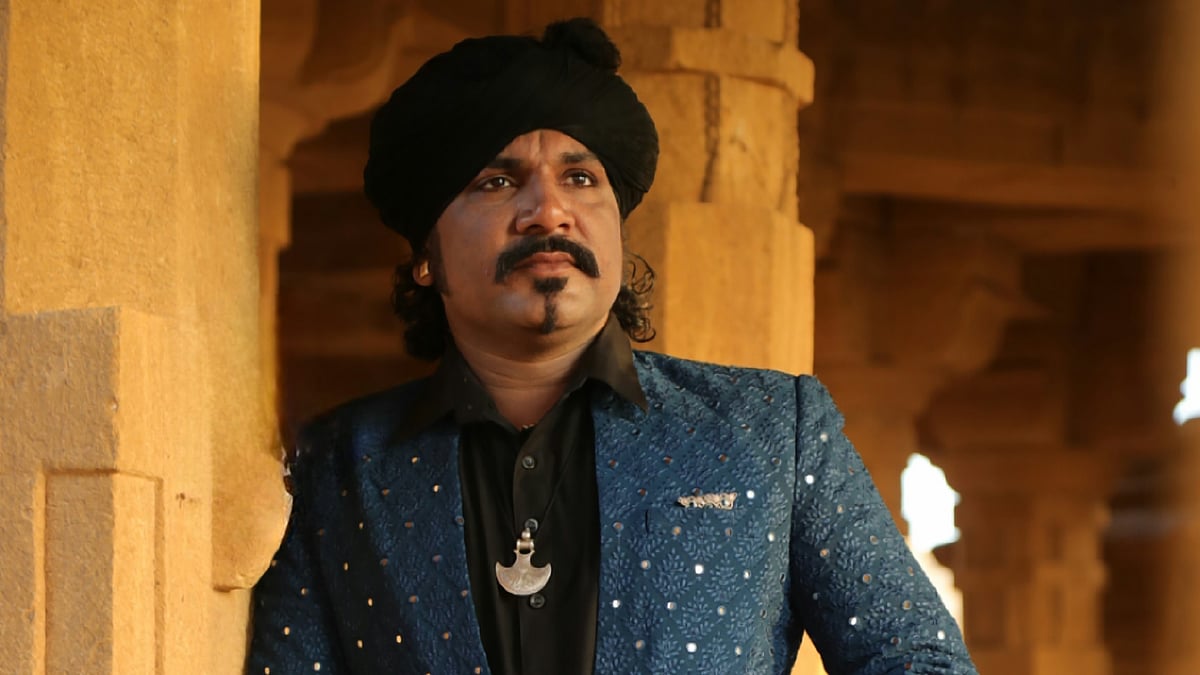
Ambassador of Rajasthan’s folk traditions, Kutle Khan, talks to us about his global journey and his performance at the Sacred Amritsar Festival. The Kutle Khan Project by singer and composer Kutle Khan embodies the rich melodic and sophisticated rhythmic traditions of Rajasthan’s folk music and his performances are informed by his understanding of contemporary Indian and Western musical traditions. Ahead of his performance at the Sacred Amritsar Festival, Khan who is a true ambassador of Rajasthan’s folk traditions, spoke to us about his music and future projects.
Excerpts from the interview:
Rajasthani folk is your base style, but you also sing Classical and Sufi. How do you transition between these different genres so effortlessly?
I still consider myself a student of music first. Rajasthani folk is my root and identity; classical music taught me the discipline and structure of notes (sur), and Sufi gave my singing spiritual depth. I also play about ten instruments; all of this is the result of regular riyaaz (practice).
To me, styles aren't separate boxes but different expressions of the same tradition. When the devotion (saadhna) is honest and the emotion is true, moving between Folk, Classical, and Sufi becomes natural. Ultimately, my goal is for music to come from the heart and reach the heart.
Purists often dislike mixing other styles with folk. How did you incorporate Western and contemporary sounds into your music? Why do you feel this is necessary?
I fully respect the sentiments of purists because folk music is tied to our roots. My attempt has never been to change its soul, but to take it accessible to more people. Rajasthani folk is my foundation—its soil, its fragrance, and its simplicity remain at the centre.
Including Western and contemporary sounds isn't 'adulteration' to me; it's a dialogue between tradition and the present. Today’s listeners hear all kinds of music. If we want to keep folk alive and relevant, we must connect it with the language of modern times. When experiments are done with honesty, the soul of folk becomes even more expansive. Music is like a flowing river—if it stops, it stagnates. To ensure it reaches new generations, adding new colours while preserving tradition is essential.
Your music has attracted listeners worldwide. Why do you think people from different cultures connect with it?
The greatest strength of folk music is its truth and its soul. It isn't bound by one language or country. The emotions within Rajasthani folk—love, devotion, separation, joy, and pain—are universal human experiences. Often, listeners don't understand the words, but they feel the emotion. Its true appeal lies in that human connection which is greater than any border or distances.
Do you prefer performing on international stages? Is there a particular performance close to your heart?
Representing India internationally makes me proud. Along with the music, we promote Rajasthan's attire (the turban), language, and culture. I have performed in over 85 countries and received great respect everywhere. However, when I perform in India, it generates a different level of energy. I often prioritise Indian shows if dates clash. My performance in Canada remains the best moment of my international career.
You are very selective about film projects. What are your criteria? What has been your favourite project so far?
Every project is a responsibility. My first criterion is honesty and a connection to the story. I look for space for the 'soul' of folk music. I don't work just to increase the number of projects. I say yes only when the story, thought and music are in the same direction.
Last year, during the IIFA Awards in Jaipur, the Rajasthan government chose me to represent the state’s folk art. Although I had performed at IIFA twice before, performing in Jaipur was a huge responsibility because I wasn't just representing 'Kutle Khan'—I was representing all of Rajasthan. I prepared a project that made Bollywood artists and musicians realize that Rajasthani folk is on a different level. The government and Chief Minister Bhajan Lal Sharma congratulated me on this successful performance.
You’ve worked with artists like Midival Punditz, Ranjit Barot, and Karsh Kale. What do you find interesting about collaborating?
Collaboration is interesting because every artist brings their own world. Working with artists like Karsh Kale or Ranjit Barot, I realised that when different cultures and sounds meet, something is born that isn't possible alone. It’s a creative dialogue where we push each other's boundaries and build a bridge between tradition and modernity.
Folk artists often don't get the recognition they deserve. What are your hopes for them?
Folk artists are the true ambassadors of a state's culture, and it hurts when they don't get respect equal to their art. The government should set up training schools and pensions for elderly artists. Successful artists should also provide guidance.
Through the Kutle Khan Project, I have helped over 100 Langa, Manganiyar, and Kalbelia artists reach international stages, and over 700 artists perform across India. Many of them now have their own independent bands.
You are performing at the Sacred Amritsar Festival. Have you been to Amritsar before?
Yes, I have been to Amritsar, and I will always remember it for its warmth. The peace and spiritual energy of the Golden Temple touched me deeply. The audience there truly appreciates music. Performing in such a city is a memorable experience for any artist.
Tell us about your upcoming projects.
I am very excited about my upcoming projects. Several albums based on folk music are ready, where I've blended Rajasthani tradition with contemporary sounds. My focus remains on keeping our roots strong while making folk music relevant and vibrant for future generations.
RECENT STORIES
-
-
-
-
-