Kanya Puja During Navratri: Meaning, Significance And Traditions Explained
The word ‘Kanya’ means a young girl, while ‘Puja’ refers to worship. During this ritual, devotees invite young girls, traditionally between the ages of two and ten, to their homes and worship them as forms of the nine manifestations of Goddess Durga, known as Navdurga.

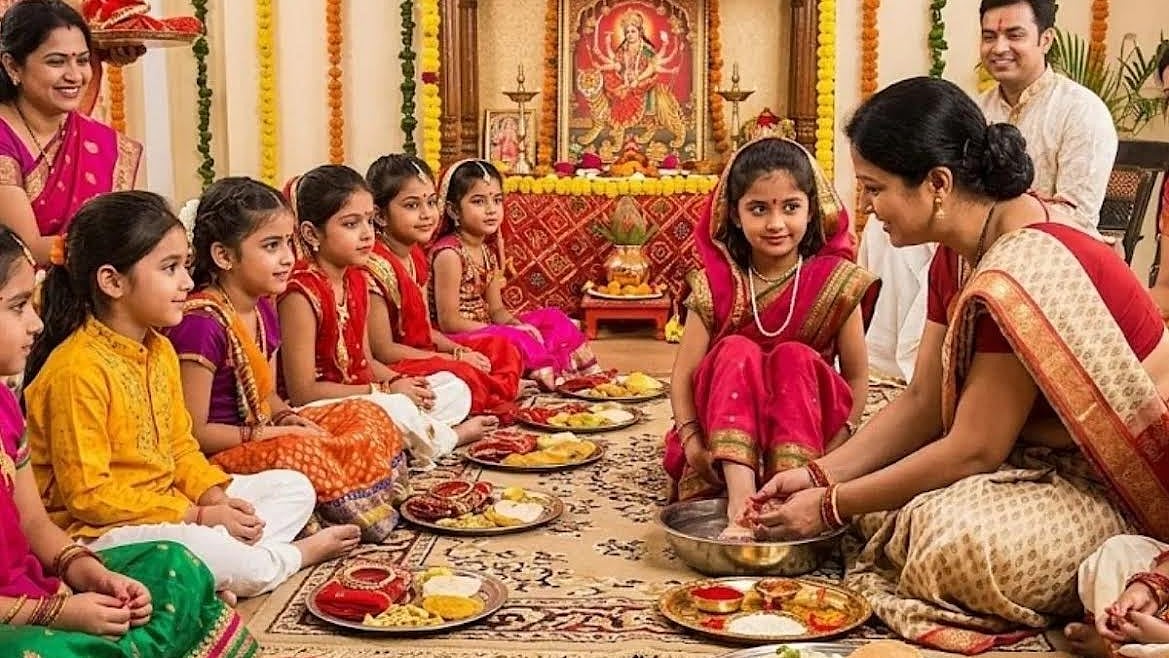
Kanjak Or Kanya Puja During Navratri: Meaning, Significance And Traditions Explained | AI
Kanjak Puja, also known as Kanya Puja or Kumari Puja, is an important Hindu ritual observed during Navratri, particularly on Ashtami and Navami. However, some follow the ritual on Saptami or other days of Navratri, depending on one's observance and household rituals. Kanjak Puja involves worshipping young girls as manifestations of Goddess Durga and seeking their blessings. It symbolises the divine feminine energy, purity, innocence and the power of Shakti. This year, Shardiya Navratri started on October 11 and runs until October 20, 2026. Let's understand the ritual and its symbolism.
What is Kanjak or Kanya Puja?
The word ‘Kanya’ means a young girl, while ‘Puja’ refers to worship. During this ritual, devotees invite young girls, traditionally between the ages of two and ten, to their homes and worship them as forms of the nine manifestations of Goddess Durga, known as Navdurga.
In many households, nine girls are invited to represent the nine forms of the Goddess. However, the number of girls and specific customs may vary according to regional traditions and family beliefs. Kanya Pujan is mostly observed on the last day of Navratri, which is dedicated to Goddess Siddhidatri.
Who is Siddhidatri?
Chaitra Navratri culminates with the worship of Maa Siddhidatri on the ninth day, also known as Maha Navami or Navami. This day holds immense spiritual importance and is marked by the ritual of Kanya Pujan, where young girls are revered as manifestations of the goddess. Goddess Siddhidatri is the ninth and final form of Goddess Durga. Siddhidatri is a combination of two Sanskrit words: Siddhi means divine powers and perfection, and Datri means giver. The goddess is believed to have originated from the left side of Lord Shiva, manifesting as Shakti. She represents spiritual completion and is worshipped by humans and gods.
Significance of Kanya Puja during Navratri
Kanya Pujan is one of the most important rituals, which is performed mostly on the ninth day of Navratri. Although some people perform the Kanya Pujan ritual on Ashtami or Saptami. Some do it on day six or five of Navratri. This is the day when devotees who observe a nine-day fast break their fast after performing havan, puja and feeding young girls, that is, Kanjak or Kanya Pujan.
ALSO READ
How is Kanjak Puja performed?
The ritual begins with welcoming the girls into the home and washing their feet as a mark of respect. Devotees then apply tilak to their foreheads, tie sacred threads in some traditions and offer prayers.
A special meal is prepared, usually consisting of puri, kala chana and halwa. The girls are served the food and given gifts, fruits, sweets or money as a token of devotion. Devotees then seek their blessings before bidding them farewell.
RECENT STORIES
-
-
-
-
-