Israel Beyond The Headlines: A Journey Through Its Many Contradictions
From Tel Aviv’s nightlife to Jerusalem’s religious streets and the ancient landscapes of Masada and the Dead Sea, a first international assignment reveals a country where tradition and modernity exist side by side

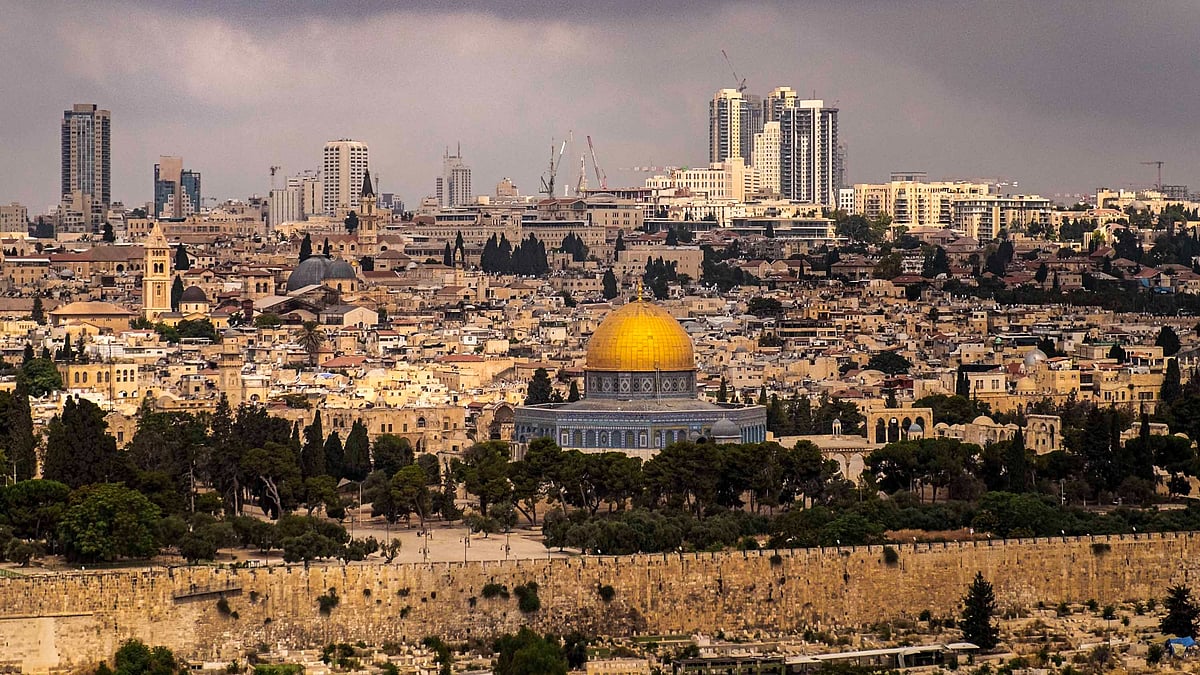
Everyone's firsts hold a special place in their memory, be it a first job, a first heartbreak or a first journey away from home but for me, it was my first international work assignment, and it happened to be in Israel.
The decision of going to Israel wasn't an easy one or without hesitation, the moment I told friends and family where I was headed, I was bombarded with a lot of questions, and rightfully so. Was it safe to go? Was this really the right time for the trip? Why choose a destination so frequently associated with conflict and uncertainty? The questions didn’t seem to have an end and their concerns were understandable, as for a lot of us around the world, Israel existed primarily through headlines, breaking news alerts, and images broadcast from afar.
I believe that curiosity has a way of overpowering caution, and the same happened to be as well. I boarded my first international flight carrying not only a camera and notebook, but also years of assumptions that was shaped by consuming news from a distance. I expected to witness tension, a country consumed by war, religion to be everywhere, and modern life to exist only somewhere in the background.
Instead, I found myself confused with what I saw. Not because the reality was almost opposite to everything I had assumed, but because it was far more complicated.
My first real encounter with that contradiction came in Tel Aviv, a city determined to stay awake. I saw Gen Zs dressed for a night out, hop between bars, cafés and clubs, while the Mediterranean cool breeze filled the whole city. Some venues in the city were hard to locate, hidden behind unmarked doors with password-protected entrances where the ambiance felt distinctly young, energetic, and unapologetically modern. And then, suddenly, I saw signs of yet another Israel that existed parallelly. The very same youngsters who were moving from one bar to the other were buying religious texts on faith and morality, which was being sold on the streets right outside night clubs.
It was my first encounter with a patten that was about to repeat itself more often. As I entered Jerusalem, the change in atmosphere was evident. The pace felt calmer, the streets got older and wider, and religion was no longer something that appeared on the margins of everyday life, it was everywhere I looked. I remember watching Ethiopian orthodox monks walk around the old city of Jerusalem wearing their traditional black robes, while others, in their summer outfits, walked past them glued to their phones and cameras.
The more I travelled into the country, the more these contradictions began to feel less like exceptions and more like its defining characteristic.
History and contemporary culture came together on the same stage at Caesarea, as a semi-circular Roman amphitheatre built nearly 2,000 years ago, out of local limestones, now hosted rock concerts. About 50 minutes from Caesarea in Acre(Akko), one of the world’s oldest continuously inhabited cities, I met Ghaneh Fananapazir, a radiologist from California and a member of the Bahá'í Faith, the youngest religion in the World, with its headquarters in Israel, a country which is the very centre of some of the oldest monotheistic traditions in the world. And so once again I saw the old and the new becoming the part of the same space rather than competing for it.
Then came the Judaean Desert, where the country’s contradictions are not just limited to its people or everyday life but they become a part of its landscape as well. As I travelled across the desert to Masada, the ancient fortress built by King Herod on top of an isolated rock plateau, I crossed several date plantations and Ein Gedi, an oasis with year-round waterfalls and wildlife. Not very far from it, at the centre of the harsh and almost barren land, I slowly descended into the Dead Sea which has been transformed into a destination for modern wellness, with resorts, spas and visitors floating in its mineral-rich waters.
As my journey concluded, I realized that the most interesting story was not whether Israel matched or contradicted the image I had in my mind before arriving. It was that neither image alone could truly capture what the place really is. To me Israel revealed itself not as a country defined by a single identity, but as one continually negotiating between multiple cultures, beliefs, and aspirations. It is a place where people carry multiple histories at once, sometimes inherited, other times chosen, but often existing side by side.
For my first international assignment, I was taught a surprising lesson, that travel does not always provides answers so much as it challenges pre conceived notions. And in Israel, it was precisely those complexities, the spaces between apparent opposites, that proved most revealing.
RECENT STORIES
-
-
-
-
-