From Stone Carving To Folk Motifs: Bihar’s Pattharkatti, Bavan Booti And Pidia Painting Earn GI Tag Status
Pattharkatti Stone Carving, practiced in Gaya district, is renowned for its intricate sculptures and idols carved from black stone. The craft traces its origins to skilled artisans who were brought to the region centuries ago. Today, Pattharkatti is known for producing finely detailed religious idols, decorative pieces, and architectural carvings that are admired across India.

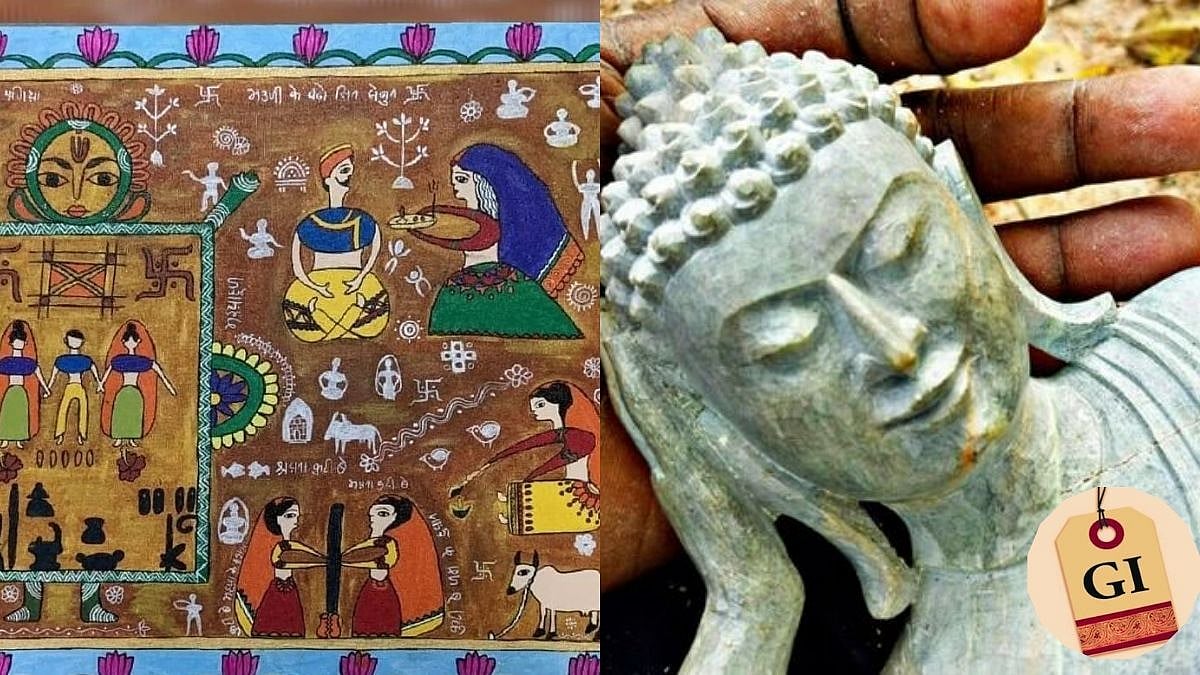
Bihar's Traditional Art Receives GI Tag |
Bihar has added three more traditional crafts to its cultural heritage and it received Geographical Indication (GI). The list of the art includes Pattharkatti Stone Carving, Bavan Booti Textile Weaving, and Pidia Painting received the prestigious Geographical Indication (GI) tag. The recognition highlights the state's rich artistic traditions and is expected to boost the livelihoods of local artisans while preserving centuries-old craftsmanship.
Pattharkatti stone carving
Pattharkatti Stone Carving, practiced in Gaya district, is renowned for its intricate sculptures and idols carved from black stone. The craft traces its origins to skilled artisans who were brought to the region centuries ago. Today, Pattharkatti is known for producing finely detailed religious idols, decorative pieces, and architectural carvings that are admired across India. The ancient and unique craft is crafted by using hammers and chisels to carve black granite stone. These stones are used to make deities sculptures and decorated items.
Promoted by Ahilyabai Holkar
The traditional carving is a 300-year-old traditional craft was reportedly promoted in the area by Queen Ahilyabai Holkar, who discovered black granite hills while travelling. In 1787, Queen Ahilyabai Holkar brought skilled craftsmen from Rajasthan to Gaya, Bihar to construct the historic Vishnupad temple. The temple was built using black granite/basalt stones carved in the village of Patharkatti.
The Bavan Booti: A forgotten woven gets GI tag
The Bavan Booti or Bawan Buti craft originates from Bihar's Nalanda district and is famous for its distinctive handwoven textile designs. The name "Bavan Booti" literally means "52 motifs," referring to the unique patterns woven into the fabric. These motifs often depict symbols inspired by nature, culture, and Buddhist heritage. Traditionally woven on handlooms, Bavan Booti products include sarees, dupattas, stoles, and dress materials that showcase Bihar's rich weaving traditions. Bavan Booti is a 600-year old handwoven textile which originated in the Nalanda district of Bihar. The name of the craft translates to 52 motifs. It reflects 52 tiny patterns which are traditionally woven into a fabric.
Pidia painting
Pidia (or Pidhiya) is a centuries-old folk art and mural style native to the Bhojpur district of Bihar. It is crafted by rural women during festivals. The paintings showcase the rural traditions, village life, vibrant culture, nature and local rituals.
RECENT STORIES
-
-
-
-
-